Voice & Tone

What is Tone? Unpacking the Secret to Your Story’s Vibe
Tone is one of the most powerful tools for writing a novel that hooks readers and keeps them engaged until the very last page. Discover what it takes to nail your narrative tone.

How to write third-person omniscient POV: The all-seeing narrator
Third-person omniscient narrators are powerful storytellers, but are not always easy to write. In this article, we will decode the secrets of third-person omniscient POV.

This Article is About Writing Unreliable Narrators. Or is It?
How can you write an unreliable narrator without making your readers crazy? And why would you want to write one in the first place? This article covers everything you ever wanted to know about telling a story through a less-than-credible voice.

Letters, Journals, and Texts: Writing in Epistolary Format
Epistolary is basically the practice of conveying a narrative story through the use of letters, journal entries, or other documents. Once upon a time, that probably meant handwritten notes or mail between characters. These days, it can mean a lot more when you factor in the advent of electronic communication.

What Tense Should I Write In? It’s a Controversial Question.
Not sure what tense you should write in? Opinions about, but only you know best. This article will help you choose the best tense for your story.

A Make or Break Decision: What POV is Best for Your Novel?
One of the most important decisions you can make regarding your novel is deciding what point of view you choose to tell it in. In fact, it might be considered the most important decision you make, second only to perhaps picking whose points of views you’re going to tell your story through.

Third-Person Limited: When It’s All About That One Character
The third-person limited point of view is extremely popular in novels of all genres. Learn why and how to master this narrative style yourself.
Can You Hear That? The Difference Between Voice and Point of View
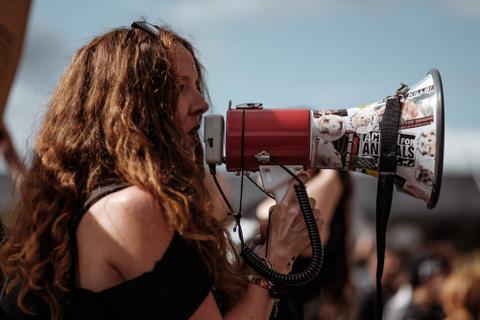
Voice versus point of view. These are terms that get bandied about a lot when we talk about our writing. But what do they mean, and are they the same thing?In short, they aren’t the same thing, though it’s easy to see why some people get them confused. Voice is the style the author chooses to tell the story and point of view is the perspective from which the story is told.

Writing Nail-Biters: How to Write Suspense in Horror
When it comes to making your reader's heart beat in fear, few things are more effective than adding suspense to your horror story. In this article, we discuss the ins and outs of adding suspense well.

Second Person POV: Choose Your Own Adventure
So what is second person, you wonder? Well, it’s when you remove the fourth wall between the reader and writer, bringing your audience into the action. It can be used to make your story more interactive.

How to Write An Awesome Story With Multiple Perspectives
Writing with multiple perspectives can elevate your story from good to great, but it's not as easy as it might seem. Join us as we cover everything you need to know about writing from multiple points of view.

First-Person Narrative: How to Make It All About Me, Me, Me
Should you use a first-person narrative in your novel? What are the benefits? And how do you do it well? Find the answers right here.

An Utterly Electrifying Guide to Finding a Character’s Voice
When you’re finding a character’s voice, you’re basically Dr. Frankenstein trying to source the electricity that will bring the monster to life. Here's how to turn a pile of character traits into a living, breathing being.

Author’s Tone: The Sneaky Li’l Secret to Roping Them In
Author's tone is an abstract, slippery concept. But once you've mastered this skill in your writing, you'll have a powerful tool for captivating readers.

Active vs. Passive Writing: What’s the Difference?
In this article, we’ll explore what active and passive writing is and when you should use them. Contrary to some beliefs, sometimes passive voice does make sense. Not everything you write should or needs to be active (though it should be most of the time).

Finding Your Narrative Point of View
3rd-person limited or 1st-person epistolary? Here is what you need to know about narrative point of view and your story.