
How Much Do Authors Make? Here's the Honest Answer


Every fledgling writer wonders, at least at some point, “How much do authors make?” Yes, many of us write because of the burning passion and creativity in the scary place that is our thoughts. But who hasn't dreamed of their book being in the hands of hundreds or thousands of fans?
I'm going to make you mad at me right away, though: There is no way to determine exactly how much money an author will make from their book. There are so many different factors that contribute to a book making money that it would be impossible to give you a solid answer.
That, and I don't want people emailing me to say I lied to them about the exact dollar amount they're going to make from a book. No thank you.
What I have done, however, is break down a lot of great info to give you an idea of what you could earn and how you can get there. So, in this blog, you will learn about:
- How authors get paid
- How income works for a book
- Self-publishing vs traditional publishing income
- What a brand new author can earn
- How an established author's income grows over time
- Ideas for diversifying your book income
The one thing you'll learn pretty quickly is that building a financially stable career as an author takes a lot of time. You've got to be resilient, and that's much easier to do with a strong community surrounding you.
Come find your people in DabbleU Campus. It's a free online community where writers get together to share resources, victories, disappointments, and word sprints. You'll be invited to join us for fun activities and engage directly with the Dabble team. Come hang out with us!
You can even take it a step further and join DabbleU Academy, where you get exclusive access to live workshops, Feedback Fridays, self-guided Curriculums on both the craft and business of writing, and loads more. Check it out at this link.
For now, I just want to put some of your worries at ease and make life a little bit easier. Let's demystify how much an author makes per book.
How Do Authors Get Paid?

There are four different ways a book can turn into a paycheck for you: advances, royalties, flat-rate payments, and commissions.
Book Advances
Many (but not all) traditionally published authors receive an advance, which is a lump sum payment from the publisher. These are usually divided into three or more payments: when the contract is signed, when the manuscript is accepted, and upon publication. Advances must be paid back via royalties before you make money from royalties. This is known as earning out.
Book Royalties
Book royalties are a percentage that you earn off every book sale, minus the costs associated with producing that book (i.e., editing, cover, and printing costs). If you publish traditionally, your publisher pays you the royalties. If you self-publish, this money comes from the publishing and/or distribution platform you use.
Payment schedules for royalties vary based on who is paying them. They could be paid monthly, quarterly, annually, etc. Again, traditionally published authors don't receive royalties until they have earned out their advance.
Flat-Rate Payments
These are less common in the industry. Getting a single payment (or multiple payments for one rate) is more common for ghostwriters and those writing smaller nonfiction.
Commissions
Commissions are like royalties earned from those reselling your book. If you buy a whole bunch of author copies and then sell them at a book signing or a convention, you might earn a commission from the venue/retailer that's hosting you.
How Much Do Authors Make Per Book?

Like I said at the beginning, a lot goes into how much authors make per book. You need to think about printing costs, marketing costs, production costs, advances, royalty rates, the format of the book you're selling, and more.
What we can look at for certain is the larger industry. Though it's a few years old now, a survey conducted by the Authors Guild in 2022 found that the median income for authors based solely on their books (i.e., no speaking gigs, teaching, etc.) was $2,000 USD.
I know, I know. That's not very reassuring. There are plenty of authors on both sides of that spectrum, though. Some authors sold millions of books last year and bought a vacation home. Some authors earned $5 from their books in the same 365 days.
Stay tuned to the end of this article for some tips on landing on the right side of that median income. Right now, I'm going to show you how traditionally published and self-published authors make money, including some concrete rates. Note that, for the sake of convenience, I'm using paperback books in these examples.
Traditional Publishing Earnings
Here are some things you can expect in terms of moolah if you worked hard (and got a little lucky) with your first book and it got picked up by a publisher.
Most first-time authors who get an advance can expect it to max out at $10,000. Yes, there are first-time authors who get more than that. There are also first-time authors who don't get any advance at all. If you have millions of devoted fans before you publish your first book, we'll talk then. For most authors, $10,000 is the limit.
You'll also be looking at something like 10% royalties on books sold. I'm going to say this every time because, again, I don't want angry responses: this rate varies. It can be 5%, it can be 12%. If you have a really good agent or have a few books under your belt, maybe it can be around 15%.
If the cost to produce one of your books is $4.50 (an average that larger publishers can lower) and it sells for $14.99, then you'll be making about $1.05 per book sold. That means you're looking to sell just over 9,520 copies to earn out your advance and reap the royalties that come after.
That's a lot of books, right? One of the advantages of being published by a traditional publisher is the marketing force that comes with it. Still, very few first-time authors earn out their advances. This doesn't mean that you'll have to pay the publisher back, but don't expect to be a millionaire from one book.
The publishing industry is so competitive these days, a new name like yours will only have limited time in the sun before stores and publishers have to make way for something new.
Again, I know that sounds sad. But then you write your next book, which earns you a bigger advance and more sales. Rinse and repeat.
Self-Published Earnings
Self-publishing is a different beast. I always tell people that self-publishing is a form of entrepreneurship; you have to work hard, bootstrap it, and make your own success.
That means no advance. If you're self-publishing, there's no one to give you an advance!
Don't fret too much, though. Higher royalties than those offered to traditionally published authors can offset your lack of advance. In self-publishing, you can expect to earn 35-70% royalties, depending on the platform, format, distribution, etc. And you earn them from your very first book sale.
Being a self-published author means you're responsible for absorbing all the production costs. This means printing costs for physical copies and delivery costs for digital copies. You should also factor in the cost of cover art, editing, and formatting when looking at the profitability of a book.
If we use the same numbers as before ($14.99 book, $4.50 printing cost) and a 60% royalty rate, which is standard on Amazon, you would only need to sell 1,590 copies of your paperback to earn your first $10,000.

Now I know what you're thinking: that is literally ⅙ the amount of books. Why wouldn't you go the self-publishing route?
Realistically, you don't have the connections and marketing muscle of a traditional publisher behind you when you self-publish. That's what leads us to these statistics…
Traditional Publishing vs. Self-Publishing Income
Based on the same Authors Guild report, full-time, traditionally published authors are, on average, higher earners than self-published authors.
However, established, full-time self-published authors saw their median book-related income more than double between 2018 and 2022, while established, full-time traditionally published authors only saw an increase of 11 percent. It's also worth noting that, while traditionally published authors earn more on average overall, self-published authors are the bigger earners among the established, full-time set (a median of $19,000 versus $15,000 for traditionally published authors).
To be clear, though, they also tend to have a bigger backlist. Because self-published authors never have to wait on a publisher's timeline, they tend to release books faster.
The income gap varies widely even within the same category of authors. The top 10% of established, full-time authors across the board earned a median book income of over $250,000. Meanwhile, the bottom 50% had a median income of $1,300.
All of that is to say: there is opportunity in both industries. Yes, traditional publishing is getting more competitive and needs to adapt to the current environment, but the strength of publishers still allows trad authors to earn, on average, more money than self-published authors. At the same time, there is an incredible amount of potential for those willing to work hard in the self-publishing industry.

How Much Can a Debut Author Expect to Make From Book Sales?
Honestly, big names like Stephen King, Nora Roberts, and James Patterson have skewed the perception of a new author's potential earnings. These authors, among many others, are worth hundreds of millions of dollars. Sorry, but your first book won't do that for you.
The reality is that your first book will not make enough to turn you into a full-time writer. If you want to be an author, it's something most people will work on around their day jobs. I know, it stinks to read that.
Being an author requires a lot of patience and time. Writing a book takes a lot of time. Learning how to market your book takes a lot of time. Seeing your book make enough money to recoup the costs of editing and your cover takes a lot of time.
It's not even possible to predict how much time it will take to earn a living with your books. There are so many factors at play. For example:
What genre do you write? You may have noticed that, for the most part, the wealthiest authors write trade fiction. That's stuff like crime, thrillers, science fiction, and fantasy, with romance topping the list as the highest-grossing genre. If you write literary fiction, it'll likely take longer to go full-time, and if you're poet, it'll be even more of an uphill battle.
What format are you writing in? That's going to impact your book's retail price. A 400-page novel is going to have a bigger price tag than a novella, which means higher royalties.
If you're traditionally published, who's publishing your book? A major publisher will often pay more for an advance than a small press. They'll likely have wider distribution, too.
Then there are other factors that are completely out of your hands. Maybe your travel guide launches the same day an unexpected disaster makes travel to your chosen destination impossible. Maybe it turns out your quirky orc romance was exactly what the public needed, and even your publisher is shocked by your first-quarter sales volume.
There is no way to know for sure how much money an author will make from a book, and making a full-time income is not something that comes quickly in this industry (if it ever comes at all).
But there are things you can do to improve your odds of meeting your financial goals. Here are three quick tips to help you get closer to making a living as an author (honestly, I could write a whole blog about these three things):
Write More Books
No one can live off the earnings of a single book. Your readers can provide you with repeated income, but only if you have more than one book under your name. The more books you have, the easier it is for a new reader to find you, too.
Learn How to Market
Even if you only want to pursue traditional publishing, you need to know what readers are looking for. You need to be able to capture the appeal of your story in a few catchy lines, write a quality query letter, write sales copy, manage a community of fans, and build your sacred email list.
(And if that last one scares you, we have a whole DabbleU Academy workshop that helps you build your most important marketing tool).
Start Building Your Fan Base Before You Release Your First Book
Every writer needs fans, and when you get your first fan—whether through your newsletter, social media, or some other creative means—it will be the best feeling in the world. Your fans will champion your books amongst their friends and family. They'll rave about you on social media. They'll buy everything you publish. But you need to cultivate that fan base and keep them engaged for the long term.
The Costs of Being an Author

I vowed to give you a realistic picture of your potential book earnings, and that means delivering some tough news about your business expenses: They exist.
That means you don't even get to keep all the money we talked about. You have to share some of it with the people who helped you get where you are (and probably also the people who build your roads and public schools).
Be sure to factor in these expenses as you set expectations for your author income:
Commission (Traditional Publishing)
The vast majority of traditionally published authors depend on a literary agent to help them land and negotiate a book deal. That individual makes their money by charging the author a commission—a percentage of the advance and royalties.
Most agents charge 15% for domestic sales and 20-25% in foreign markets.
Production and Marketing Costs (Self-Publishing)
As we discussed, an indie author is responsible for their own production and marketing costs. Depending on your unique needs and business plan, you might have to pay for:
- Professional cover design
- Copy editing
- Line editing
- Developmental editing
- Proofreading
- Formatting
- Sensitivity reading
- Book coaching
- Publicity
- Paid marketing
Most of these things are optional, and as a first-time author, you can keep it simple to keep your expenses low. That said, copy editing and cover design are essential for everyone at every stage, and while the cost of both those things can vary quite a bit, you're looking at an investment of at least $1,500.
Taxes (Both Publishing Processes)
As an author, you're self-employed. No one is deducting tax from your advance or royalties, which means you'll likely have to pay a fraction of that income to your government.
It's also worth noting that in many places, self-employed individuals are responsible for paying business taxes, which means your tax burden might be a bit higher than it would be if you were simply an employee. Of course, this varies depending on your local tax laws and applicable business deductions.
Of course, those deductions come from other expenses you incurred to build toward author success, including writing tools and supplies, any courses you took or conferences you attended, or professionals you hired, like a writing coach or publicist.
This stuff can get complicated, so I recommend snagging the author finances spreadsheet linked in this Deep Dive article. It's really going to save your life when you start seriously tracking profits from your book. (It also happens to be a great example of the type of resources you get when you join DabbleU Academy.)
All this to say, if you make $20,000 in royalties, you don't necessarily get to keep all of it.
Fortunately, you also don't have to depend exclusively on book sales to make a living, not even as a full-time author. We should talk about that.
Author Earnings Beyond Book Sales

You've probably heard stories about debut novels that spark bidding wars and land massive advances. After all, those stories make for good headlines. No one's scrambling to read about the diligent author who eventually earned a middle-class income by publishing consistently for several years.
That's how it usually happens, though. Successful authors are patient authors. The more books you publish, the more you're likely to earn, not just because you have more product to sell but also because your IP and growing reputation open the door to additional income opportunities.
Ask any successful author where their money comes from, and you'll find that they rely on a combination of book sales, creator economy platforms like Patreon or Substack, live events, licensing, and more.
Here are some key areas where your income grows as you get further along in your writing career:
Subsidiary Rights
Subsidiary rights are the rights you grant an entity allowing them to publish or adapt your work. When you sign with a publisher, your agreement allows them to produce your book in specific formats and specific markets.
This is why it's usually a good idea to have a literary agent. An agent will help make sure you don't sign away any rights that you'd be better off selling to someone else. You could have a chance to make serious money licensing your work for merchandise, screen adaptations, and translations for foreign sales.
Heck, you could be an almost-successful indie author in your home country, then sell the foreign rights to your self-published book and suddenly become a bestselling author on another continent. You never know where the really juicy checks are going to come from.
Libraries
The payouts here depend on where you're from and, in the case of e-books and audiobooks, how the material is licensed to the library.
For digital content, publishers might license a book for a limited time period or number of uses, which means if your book is wildly successful, you could get paid multiple times for continuous circulation of your e-books and audiobooks.
Then there are several countries that have Public Lending Right, a government program that provides payment to authors for every time their book is checked out, including both physical books and digital materials. There's a cap on this compensation, but it's still a big perk for authors in places like Canada, Britain, and Denmark.
As for countries that don't have PLR (sorry, U.S.), the author is compensated for the library's initial purchase of a physical book, and then the library can loan the book indefinitely without additional payment.
Speaking Engagements and Public Appearances
Some authors are able to book speaking engagements early in their career, especially those who write non-fiction books, as they already have expertise in an area audiences want to learn about. But any author who's comfortable in front of a crowd has the potential to beef up their earnings with speaking gigs and public appearances, especially once they become well-known.
It's simply a matter of nailing down a valuable message that aligns with your author brand, whether you're an expert on productivity techniques or a poet who can help people heal old wounds through a unique journaling method.
Diversify Your Income Streams

These days, authors have so many more options to add to their income while still embracing their passion. Even as a new author, there are several things you can do to diversify your income streams now and set yourself up for bigger paydays in the future. Here are some of the most reliable methods for building the life of a full-time author:
Multiple Books
Yes, I know I just told you about this, but I need to repeat it for the folks in the back. To be a successful author, you need more than one published book. You need a lot of them. As soon as your manuscript is out to beta readers, editors, agents, etc., you should be working on your next one.
Publishing Alternatives
Authors aren't confined to only writing books, publishing them, then repeating. You can put your books on Kindle Unlimited, start a Patreon, publish through Substack, and much more. There are a ton of opportunities out there to fit your writing and marketing style.
Write to Market
Maybe your book is about a long-lost underwater civilization that needs to go to space to save their princess. It could be one of the best books ever written. Tragically, there isn't a huge market for that specific story. You can embrace your creativity to write more marketable stories that buff your income to let you write the stories you are super passionate about. I'm still trying to come up with a romance pen name for myself.
Write a Series
This is a lot like writing multiple books, but they're all related. This will hopefully drive most readers to buy the next book in your series because they need more of that story.
Sell Books in Person
Book signings and conventions won't make you rich, but they are an additional avenue to sell your books. They also let you interact with fans or connect with new ones. Get creative with in-person or virtual events you can host that can increase your income.
Self-Publish and Traditionally Publish
Get the best of both worlds! By going both publishing routes, you can get exposure and marketing power from traditional publishing to help drive more traffic to your self-published work that provides higher royalties. Just make sure that any contract you have with a publisher doesn't exclude you from self-publishing.
And, as a side note, the data shows us the most successful authors (at least in terms of income) embrace both indie and trad publishing.
Teach Writing
Similar to speaking gigs, people want to learn from you. You can teach in a traditional institution like a college or create online courses that you sell to those visiting your website.
Ghostwrite
Some people want to tell a story but don't have writing skills like yours, so they hire a ghostwriter to write it for them. Ghostwriting can be very profitable, and some contracts even include ongoing royalties.
Start Your Writing Career
You aren't going to lose your official writing license if you say you want to make money off the blood, sweat, and tears you put into your passion. And, since this blog is filled with hard truths, here's another one: You won't make any money if you don't finish your book.
Now that we've reached the end of this article, I want you to make a commitment to write. Write every day if you can. Don't just say, “Yeah, I'll start writing more.” Open up your calendar and block some time off. That's the only way you're going to make a dime on your current project.
And if you're struggling to make that commitment, let me tell you how Dabble makes it easier. With an awesome Goal Tracker that breaks your bigger goal into manageable pieces—plus fun confetti when you reach your daily goal—that makes holding yourself accountable a breeze.
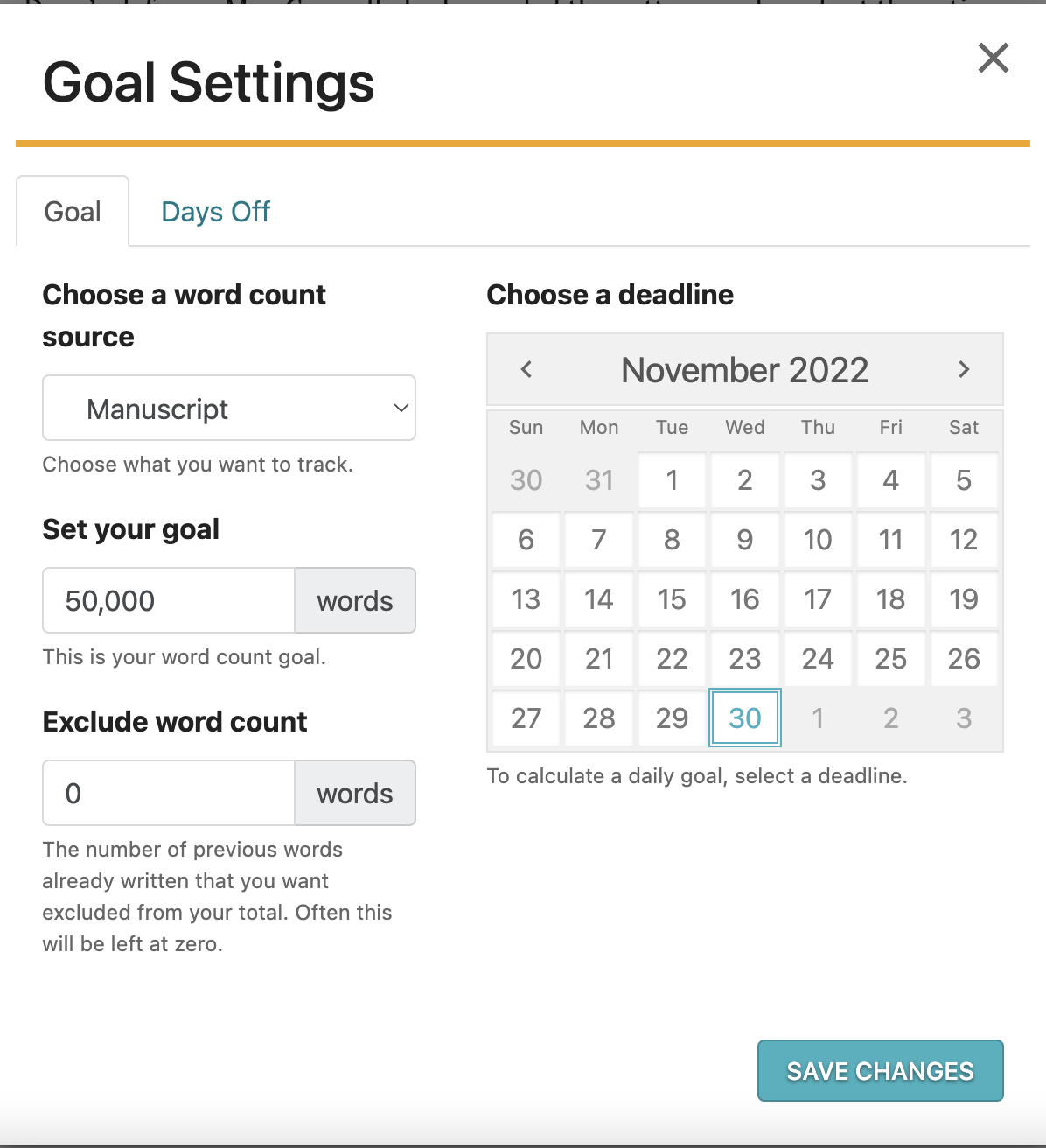
Tack on a clean, clutter-free workspace, our famous Plot Grid, and places to house all your character, worldbuilding, and any other notes you might make (plus oodles more features), and you've got a platform built for authors who are serious about their writing.
The best part? We don't even ask for your credit card to let you try Dabble free for fourteen days. Honestly, you've got nothing to lose. Get started with your trial by clicking here and write your book in Dabble!
Happy writing!
SHARE THIS:


TAKE A BREAK FROM WRITING...
Read. Learn. Create.

A symbol is a powerful device for communicating complex themes and revealing your character's deeper layers. Here's everything you need to know about symbolism in literature, plus a ton of symbolism examples.

Novlr is popular for its intuitive interface, distraction-free presentation, and productivity analytics. But is it the best writing tool for you? Here are six Novlr alternatives worth your consideration.
What is a literary device? And how can it help you write a better story? Discover everything you need to know about building your author toolbox.