
Building the Big Bad: Don't Forget the External Conflict in Your Novel


Conflict. It's the lifeblood of any story. Without it, all you've got is a bunch of people wandering around aimlessly. Conflict is the source of tension, excitement, suspense, and drama. It drives your plot, gives your characters motivation, and sometimes allows you to hold up a mirror to the world.
There are two kinds of conflict: internal and external. In this article, we're all about external conflict, which is the thing you talk about when someone asks you to describe your story. It's the battle between your protagonist and an outside force, and it's usually the embodiment of your character's internal struggle.
Getting it right is pretty important. We're here to make that happen.
In this article, we'll discuss the role this type of conflict plays in your story, go over six types of external conflict, and explore how to add conflict to your story. You'll also get many examples of external conflict in action.
When you're ready to apply all this information to your current book project, check out the Storytelling Foundations Curriculum in DabbleU Academy. You get self-paced courses, workshop recordings, and templates all designed to help you integrate your external conflict with all other aspects of your story.
If you're not already a member of DabbleU Academy, check it out here!
In the meantime, let's dig into the big, juicy story element that drives your plot forward.
External Conflict vs. Internal Conflict

Conflict arises when something or someone stands between a character and their objective. That's conflict.
Stories generally have multiple conflicts. You'll find one in every subplot and even in every scene. The central conflict is the big one the protagonist is engaged in—the one that defines the premise of the story.
As I mentioned before, there are actually two types of conflict—internal and external. These two forms coexist and continuously make each other worse.
Internal conflict refers to struggles, fears, emotions, desires, and other psychological factors that lead to battles within the character's own mind. They're forces that exist within an individual, and stories that focus on internal conflict tend to be about reconciling those challenges.
External conflict refers to forces outside the main character acting in opposition to their goals and desires.
Major external conflicts in The Hunger Games would be things like Katniss versus the Careers and Katniss versus the Capitol. An internal conflict would be Katniss's will to survive versus her moral code, as her survival depends on killing her peers.
Why is External Conflict Important?
External conflict matters for a lot of reasons, a big one being that the external conflict is the story... at least as you would describe it to people.
You wouldn't tell someone "Little Red Riding Hood" is about a young girl learning about apex predators. You'd tell them it's about a little girl going to visit her grandmother (goal), unaware that she's actually visiting a hungry wolf in a nightcap (obstacle). That's much easier to imagine and get excited about.
External conflicts also drive the action of the story. Every character with a goal must consistently make decisions to overcome the obstacles that stand in their way. Those actions lead to bigger conflict, which forces them to take new, probably messier actions.
Another huge plus: The external conflict is what forces the character to confront their internal conflict. In Red, White, and Royal Blue, Alex would never have learned to embrace his full identity if he didn't get tangled up in a potentially scandalous romance with a foreign prince.
This is also why external conflicts help us see characters with greater clarity. The way they tackle an obstacle shows us a lot about what's going on in the character's mind. Often, their approach to challenges change as the external conflict intensifies, and that shows us that the character is evolving.
External conflict is an excellent "show, don't tell" tool, demonstrating who a character is and how they feel by showing us how they handle the disasters they face.

Six Types of External Conflict
While conflict can come in many forms, there are typically six types we see when we're talking about external conflict.
Character vs. Character
The most easily recognizable form of conflict might be the character vs. character conflict. This is pretty straightforward. It's two people or groups of people who are battling against one another and standing in the way of each other's goals.
Character vs. Character External Conflict Examples
Les Miserables by Victor Hugo - In this one, the main character, Jean Valjean, is pursued relentlessly by Inspector Javert for a crime he committed due to his poverty. Like many character vs character antagonists, these two men operate with strikingly different philosophies. Valjean is transformed by mercy, while Javert takes such an inflexible stance on justice and mercilessness that it becomes his own destruction.
The Wizard of Oz by L. Frank Baum - The Big Bad in this story is your classic villain—a witch so wicked, it’s part of her name. Although, Dorothy did kill the Wicked Witch’s sister and steal her shoes, so…
Character vs. Society
A character vs. society conflict involves battling against something larger, like the government or the social norms of the environment your character lives in. It's a common type of conflict you'll find in dystopian novels where evil power structures are making your character miserable.
Character vs. Society External Conflict Examples
The Hunger Games by Suzanne Collins - While there are plenty of mean characters in this one, Katniss’s primary conflict is with a system that pits children to the death against one another to keep society in line.
The Handmaid's Tale by Margaret Atwood - Ofred is up against a society where women are strictly vessels for procreation. With no rights and no autonomy, she fights a seemingly impossible battle to be heard and to take control of her own life.
Character vs. Nature
As the name implies, this type of conflict pits your main characters against the raw power of natural forces, be it a natural disaster, a disease or virus, or maybe an animal or creature. Often, this natural force is a reflection of some larger issue at play in your society. There's an emerging genre of fiction known as cli-fi that is literally about the damage and fallout we've done to our natural world. (And I suspect we'll see this theme more and more.)
We actually have a whole article on character vs. nature conflict if you'd like to learn more.
Character vs. Nature External Conflict Examples
Moby Dick by Herman Melville - Captain Ahab's nemesis is a giant whale, and given the storms he faces along the way, it would seem all of nature is on the whale’s side.
The Martian by Andy Weir - Astronaut Mark Watney must battle the harsh environment he was never meant to survive. Mars attacks Watney with dust storms, freezing temperatures, and the threat of radiation, not to mention extreme isolation.
Character vs. Technology
While we might believe computers are sentient, sometimes they can take on a mind of their own. In this type of conflict, supposedly human-made and human-controlled entities take on personas of their own, thereby making life difficult for your protagonist.
If this sounds like your kind of thing, you'll probably want to check out Doug's article on writing about technology.
Character vs. Technology External Conflict Examples
Frankenstein by Mary Shelley - Our good doctor uses the technology of his time to build himself a friend. Things don’t work out so well.
Followers by Megan Angelo - A group of troublemakers, fed up with the world's obsession with social media and online communication, releases everyone's private messages, emails, and search history to the world. All of it. Things go awry.
Character vs. the Supernatural
Introducing elements like ghosts or monsters is a great way to make life tricky for your protagonist. Obviously, this is a common sort of conflict in the horror genre, though it can be used in lots of ways. With this type of conflict, your characters are often dealing with something that seems entirely unexplainable, and the only answer is the supernatural.
Character vs. the Supernatural External Conflict Examples
The Odyssey by Homer - This is one of the more famous examples of this type of conflict. When Odysseus blinds and mocks Poseidon's cyclops son, Poseidon curses Odysseus to take the really long way home. And that long way is riddled with even more supernatural obstacles.
The Lord of the Rings trilogy by J.R.R. Tolkien - It's Middle-earth against the giant eye of Sauron. Creepy.
Character vs. Fate or Destiny
This is where the “chosen one” and prophecy type of storyline often comes into play. Sometimes, no matter what your main character does, they are simply destined for a role (usually one they resist at first) greater than themselves.
Character vs. Fate External Conflict Examples
The Lord of the Rings trilogy by J.R.R. Tolkien (again!) - Stories can have more than one kind of conflict, and in this case, Frodo is pitted against destiny when he is chosen to bear the ring. He can fight it all he wants, but that little trinket chose him to save the world.
Macbeth by William Shakespeare - A trio of witches tells Macbeth he’ll become the king of Scotland, and give him a warning that doesn’t actually sound all that threatening. This prophecy leads him to make some pretty questionable choices that result in both his success and his demise, just as the witches foretold.

How to Build External Conflict in Your Story
Now that you know the types of external conflict, you can look at how to incorporate them into your story so they're working to their full potential.
Set Goals and Motivations for Your Character
The driving force of any novel is your main character's goals and motivations. Without them, your opposing force has nothing to battle against.
A goal or motivation can be simple, like wanting to lead a quiet life or needing to get an assignment done on time. Or it can be larger, like battling an evil overlord, finding true love, or saving the world.
Start by asking yourself these questions:
- What does my character want?
- What's standing in the way of them achieving it?
- How do they intend to get it?
- Are they proactive or reactive?
Tailor the Conflict to the Character
Ensure the conflict makes sense for your character and exists within the realm of their control. You wouldn't give a character the goal of overthrowing a government in some other country they've never visited. That just wouldn't make sense.
You also want to create a conflict that:
- Forces your character to confront their weaknesses
- Allows them to showcase their strengths
- Challenges them to step outside their comfort zone, think differently, and even change
- Exploits their greatest fears and deepest wounds
If Aladdin was highly respected in his society, his conflict of trying to win the heart of a princess wouldn't be much of a nail-biter. But he's not, so we get to watch him pursue an unlikely goal while his own hang-ups about being undervalued inspire him to make terrible decisions that make everything worse.
Create a Worthy Antagonist

Once you've established what your character wants, think about the antagonist standing in their way. Who or what are they, and why are they such a threat?
It's usually a good idea to make your antagonist feel undefeatable. Stacking the deck against your protagonist is a great way to keep your readers engaged and give your main character a reason to grow, either in their skills or as a person.
You also want to think about how this antagonist interferes with your character's journey and whether they even intend to. (Sometimes, it's purely an accident.)
Here are a few things you can ask yourself:
- How does your antagonist specifically get in the way of your main character?
- What steps does the antagonist take to make trouble?
- Are they actively trying to get in the way, or are they more of a benign force?
- How will the antagonist be overcome?
Now, if your character struggles with a non-sentient force like technology or society, consider whether you want to create a sentient character that represents that great antagonist. In The Hunger Games, President Snow is a human character who is directly antagonistic but also represents the oppressive government Katniss is rebelling against.
You don't need a human proxy for your non-human antagonists. But if it makes sense to create one, that character can give a powerful and terrifying voice to the greater threat your character faces.
Give Both Sides Strengths and Weaknesses
The two sides of your story need a balance. If the “big bad” is literally undefeatable, then you don't really have a story. It kills your protagonist, who never stood a chance, and that's the end. Wah. Wah.
Instead, consider how your opposing forces contrast and complement each other. Does your main character have some specific gift or trait that can take down your antagonist? What weakness does your antagonist possess that makes it vulnerable to destruction?
Thinking about The Lord of the Rings again, Sauron was really a big, powerful dude (or whatever he was), but destroying that pesky little ring had the power to bring him down. It wasn't much, but it was a sliver of hope.
Set High Stakes
In order for a conflict to be truly compelling, your readers need a clear understanding of what your character stands to gain or lose.
Ideally, the potential consequences grow bigger as the conflict progresses. Maybe on page ten, a detective needs to solve a mystery because a murderer is still on the loose. Those are some pretty high stakes.
But then the detective gets an anonymous note warning them that they're next if they don't abandon the case. Now the stakes are higher and there's a ticking clock; the detective has to catch the culprit before they become the next victim.
This is an area where new writers tend to go too easy. Don't coddle your protagonist. Put them in serious danger. It'll make your external conflict a lot more fun.
Layer Your Conflicts
Usually, your protagonist isn't fighting just one thing. Often, there are multiple opposing forces at play outside the main conflict. Perhaps they're finding conflict with their childhood friend who's just turned into an enemy, or maybe they're pining for a love interest who doesn't know they exist, all while they try to save the world. Remember, people contain multitudes.
Think of Katniss in The Hunger Games. Yes, her ultimate struggle is against the evil forces of Panem, but she's also battling against her competitors in the ring and her own personal demons when confronted with the idea of killing other innocent children like herself. There's also her desire to protect her family, build the friendships she makes along the way, and decide which of the two love interests will ultimately yield her heart's desire. (I was always Team Gale and I'll never get over it, but I digress.)
Combine Internal and External Conflict
On the topic of layering and containing multitudes, don't forget to combine external conflicts with internal conflicts. In the Katniss example, the internal conflict comes from the morality of murdering others just so she can survive. Why was she more worthy to win the Hunger Games than anyone else was?
As a final note, ensure that your main conflict is clear. While you will have multiple conflicts in your story, there should be one that serves as an umbrella to them all. This main conflict should tie back to what your main character's ultimate goal or desire is. It cannot be something that is trivial or easily overcome.
It should be literally a matter of life and death—at least to your character.
Time to Create Conflict
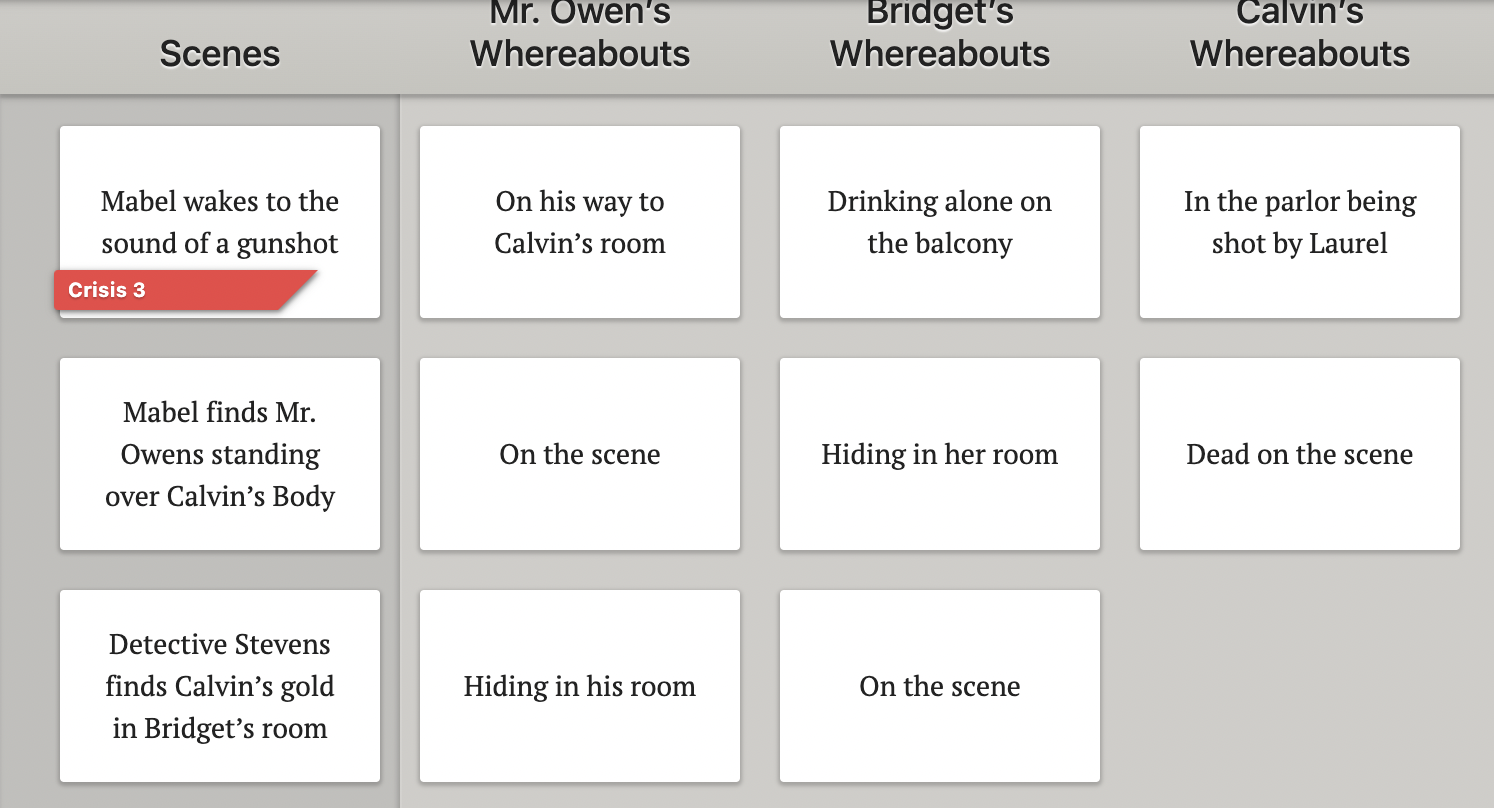
At this point, you're an expert at stirring up drama. The only thing left to do is sit down and actually write your conflict-riddled novel.
Dabble Writer can help you do that. It's packed with brilliant features to streamline every part of the planning and writing process. You'll especially love the Plot Grid for tracking that ever-intensifying conflict from scene to scene.
If you're not already a Dabbler, you can try it for free for 14 days by following this link. You don't have to enter a credit card, and your free trial also gets you two weeks of access to DabbleU Academy where you can advance your storytelling skills even more.
Now get out there and dream up disasters for your protagonist.
SHARE THIS:


TAKE A BREAK FROM WRITING...
Read. Learn. Create.

What's the difference between direct and indirect characterization? And is one better than the other? Here are the answers you've been looking for.
Always wanted to know the secret to telling a good story? This guide lays it all out for you.

Discover the best writing tools for everything from brainstorming and organizing to drafting, revising, and managing your time.