Plot
The Essential Literary Devices List for Legit Writers
What is a literary device? And how can it help you write a better story? Discover everything you need to know about building your author toolbox.
What is Falling Action? The Secret to a Satisfying Story
It can be tempting to phone in your falling action, but this element is essential for telling a story that leaves an impact. Learn what falling action is and how to master it.

Three-Act Structure Worksheet to Level Up Your Story Design
Our three-act structure worksheet makes it easier than ever to plot a novel with this classic story framework.

Rising Action Examples (Plus Tips for Writing Your Own)
Rising action takes up a massive chunk of your novel. About 50-70% of it, in fact. No wonder so many writers freeze up when it's time to tackle it. If you're one of them, this article can help.

Foreshadowing: The Writer’s Guide to Building Anticipation
Ready to build some suspense and keep your readers frantically flipping pages? Then you'll want to check out this guide to foreshadowing.

Flashback and Foreshadowing Techniques for Clever Writers
Flashbacks and foreshadowing are great tools for creating a more immersive experience for your readers. But using them effectively is a craft unto itself. Here are some of the best techniques for putting these time-jumping devices to work in your novel.

How to Plug Those Plot Holes
Plot holes can quickly make Swiss cheese of your story, ruining all the carefully crafted character arcs, themes, and beautiful narrative you've worked so hard to create. So let's figure out how to identify, fix, and prevent plot holes!

50 Sad Story Ideas That Will Leave Your Readers Shattered
Looking for a sad story idea that will absolutely destroy your readers (in a good way)? Here are 50 ideas you're free to steal, plus a few bonus tips on getting your audience to feel those feels.

30 Dystopian Plot Ideas for a Terrifying Future
Dystopian fiction is one of the darker subgenres of science fiction and fantasy. It takes us into dark, foreboding worlds, where oppression and bleak landscapes are the norm. Books like 1984 by George Orwell, The Hunger Games by Suzanne Collins, and Brave New World by Aldous Huxley have become classics that shine a light on political corruption, environmental disaster, and societal collapse.Why do we love these stories? Maybe it's because dystopian fiction allows us to explore worst-case scenarios, to grapple with the idea that the world we know and love could be lost forever. It's a way for us to confront our fears and anxieties about the future, to see what could happen if we continue down a certain path.

How the 8-Point Story Arc Keeps Your Novel on Track
The eight-point story arc is a versatile novel-planning structure that's both pantser and planner friendly. Here's how you can use it to write your next book.

Story versus Plot: Is There a Difference?
While the terms "story" and "plot" are often used interchangeably, they are actually two distinct elements of narrative, and understanding the difference can be a useful tool in your storytelling arsenal. You’re going to need some of both to create a compelling book that’ll have your readers coming back for more.

What is a Plot Hole? Finding 'Em, Fixing 'Em, and Avoiding 'Em
Plot holes: those pesky little mistakes that can fall anywhere between a simple accident in eye color all the way to messing up your entire story. We’ve all been there. You thought you wrapped up everything so nicely, but then you go back to edit, or a friendly and well-meaning beta reader asks you “what about this?” and suddenly you’re struck with a sense of impending doom.

The Seven Basic Plot Points
The seven basic plot points offer perhaps what is the most open-ended of the structure archetypes with broad, high-level descriptions.
Three Act Structure
What is three-act structure? Learn why this story structure is so effective and whether it can help you plot your novel.

Plotting Your Novel Using Save The Cat!
Save the Cat is one of the most popular ways of drafting screenplays and novels in modern storytelling.

The Hero's Journey
The Hero's Journey is a classic story structure. Learn why it's so popular among writers and how to apply it to your own storytelling.
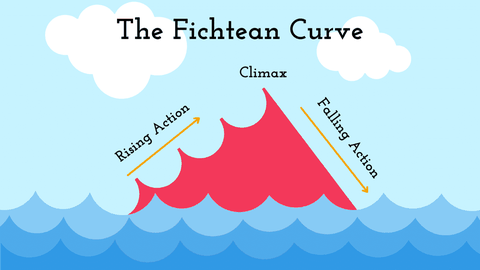
The Fichtean Curve: A Dorsal Fin of Catastrophe
We call it John Gardner's aquatic monstrosity, the Fichtean Curve is a narrative structure that can help you easily plan out your novel.

What is the Snowflake Method?
We break down Randy Ingermanson's Snowflake Method, a type of outlining that can make writing your book much easier and faster.
Dan Harmon's Story Circle
Learn about Dan Harmon's Story Circle—what it is, how it can help you plot your novel, and whether it's right for you.

What is Freytag's Pyramid? How An Old Story Can Help You
One of the original story structures, Freytag's Pyramid is the foundation for dramatic stories and tragedies. Learn all about it with Dabble!

Story Structures: The Fundamentals You Need to Know
Story structures are the frameworks that tie your story together. A story structure can help guide your book to be the best it can be!