
The Book Themes We Love Most and How to Write Your Own


Theme is one of the most overlooked aspects of storytelling, especially for first-time or less-experienced writers. I mean, you have your unique plot, your memorable characters, your thrilling conflicts, and just the right amount of exposition. What more do you need?
Well, dear writer, let me tell you that theme is the certain je ne c'est quoi of writing. It's the secret sauce. The *chef's kiss* that will have your readers raving about your book, even if they don't have a degree in English to explain why the theme was so awesome.
That's the thing with theme: it's a subtle addition that has far-reaching benefits for your story.
Have I hyped it up enough yet? Good. Because in this article, we will be talking all about theme, including:
- What a theme is
- The most common literary themes
As my mom always says, “Don't just dream it, theme it.”
She has never said that, but cheesy lines transitioning out of the intro are kinda my thing, so let's roll with it.
What is a Literary Theme?
First things first, what the heck is a theme? It's tough for us to talk about the most common themes in literature without first understanding the basics.
If we turn to Merriam-Webster, the alpha and omega of defining things, we see that theme is “a subject or topic of discourse or of artistic representation.”
Which is only marginally helpful.
My preferred definition of theme is this: the human truth or social message you are trying to get across with your story.
The theme is the message your story is about. While your plot is the story itself, your plot and characters come together to share the message you want the reader to take away. It is the central idea behind your story.

As the author, the theme is the message you are sharing with your story but one you are never explicitly stating. Instead, you are demonstrating this message through character development, repeated actions, and events throughout your book.
Imagine the eye rolling you'd induce if your protagonist exclaimed, “Good triumphs over evil again!” or “I only did this because an event in my past robbed me of my innocence.”
No. Stop. That's so cringy.
As we cover the most common themes in literature, start to think about ways you can use your favorites in your story.
Quick Pro Tip!
The Dabble Plot Grid is an amazing tool for seeing all your narrative elements at a glance and making sure they convey your story’s theme as you intended. I personally tested a lot of tools before I settled on this one, and several years later, I can confirm it’s still the best one for wrangling all the creative chaos in a writer’s mind.
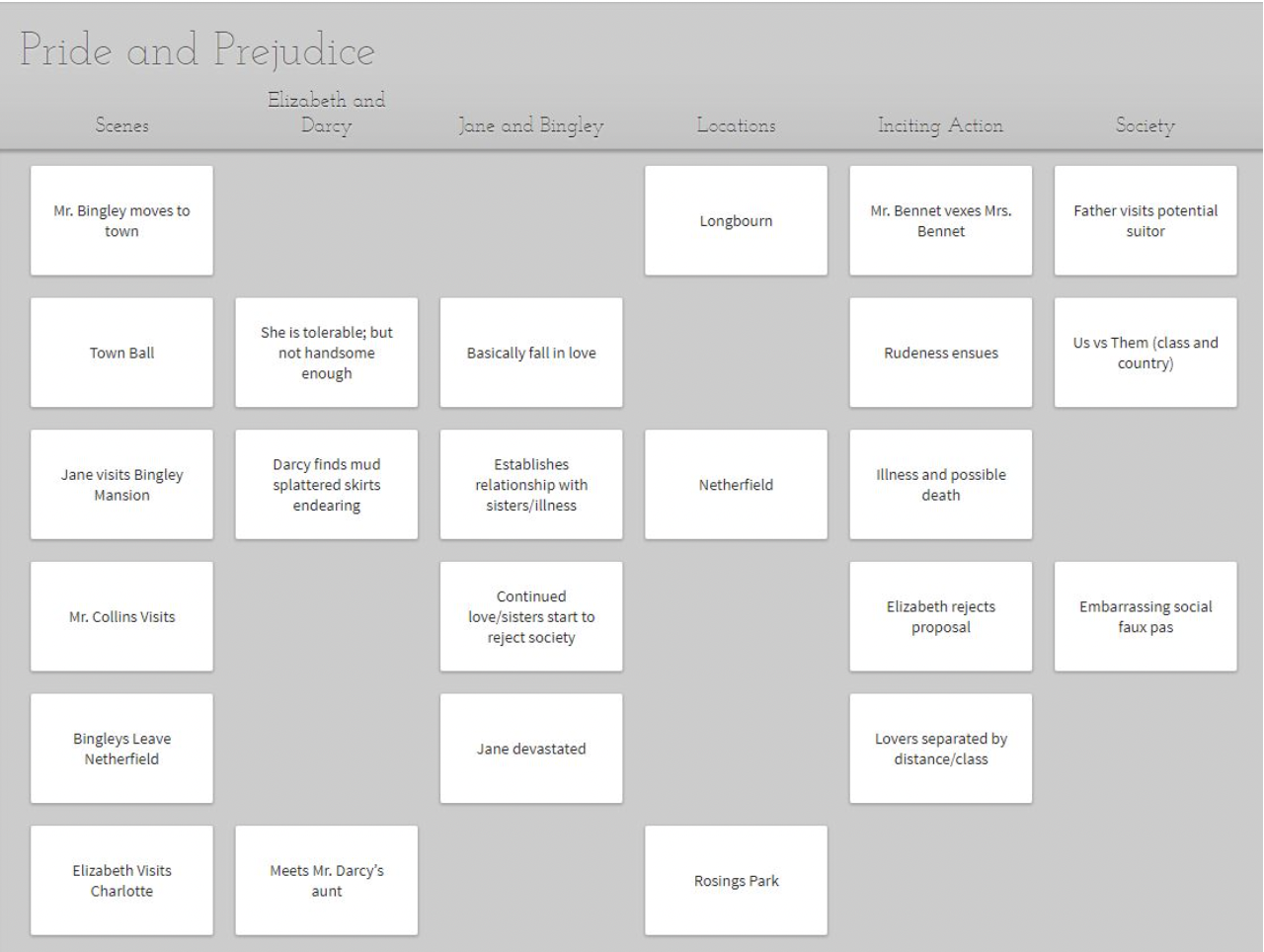
If you’re not sure how to use the Plot Grid, this video can help, and if you don’t have Dabble, you can try all Dabble’s features by clicking this link and starting your free 14-day trial.
What is a Universal Theme?
You’ll occasionally hear people talk about universal themes. These are literary themes that transcend culture and time. Universal themes are the reason certain novels resonate with readers all over the world and books that are centuries old are still assigned in literature classes.
Before the Coffee Gets Cold was written by a Japanese author but is a hit in the West thanks to its themes of regret, emotional honesty, and embracing the present. A Doll’s House is nearly 150 years old, but it’s still performed on modern stages because its reflections on gender roles, oppressive societal norms, and self-liberation are still relevant.
To be honest, though, nearly all the themes we’ll be discussing in this article are universal themes. That’s why literature is so powerful. Beneath the external details like the physical world and character description, there’s a deeper story nearly everyone can relate to—a story about grief or love or finding one’s voice.
That leads us to this next question:
What is the Point of a Literary Theme?

A theme gives your story a deeper, more relatable context by revealing insights about human nature and empowering readers to analyze literature without prompting from a professor.
Have you ever debated the wisdom of a character’s choices with a fellow reader? Have you suddenly recognized your own dilemmas in the protagonist or experienced a shift in perspective thanks to a novel you read?
Those are all examples of engaging with an underlying theme. You interpreted the deeper message beneath the story and explored that idea in the context of the characters and plot.
Fiction is so much fun, you don’t even notice you’re doing smart kid stuff by enjoying it.
Common Themes in Literature
This is by no means an extensive list of all possible themes. In fact, this is actually a list of theme topics, which are ideas that themes are about. Under each of these topics, I'll explain what it means and how you can turn it into a full-fledged literary theme.
For reference, a complete theme is a sentence. Remember, your theme is the message you're sending. A one- or four-word idea is not a message.
With that in mind, let's dive into the most common themes you will find in books.
The Classic Good vs. Evil
Honestly, it doesn't get much more classic than this one. I think I can confidently say most people reading this have read a book with a theme involving good vs. evil. Heck, most fantasy and sci-fi stories wield it, to some degree.
Whether it be a virtuous hero fighting an evil wizard or a parent pushing their limits to save their family, we know good vs. evil. We like good vs. evil. But, if you want your theme to involve good vs. evil, try to think of something that hasn't been done a million times before.
Potential Good vs. Evil Themes
- Does good really always triumph over evil?
- Is there a gray area between good and evil? Are good and evil subjective?
- Do the evil folks have some valid criticisms?
The Power of Friendship
As someone who grew up with a healthy obsession with anime, the immutable power of friendship is something I'm all too familiar with.
With themes centering on platonic love, you're looking at how resilient people are because of the people they surround themselves with. No matter what life throws at them, no matter how many times they fall down, they get up and persevere because their friends are there to support them.
You can also turn this around and show the reader how important it is to work on friendships and not just take them for granted.
Potential Power of Friendship Themes
- How can friends get you through your worst times?
- How does each member of a group contribute in their own way?
- What can't friendship overcome?

Redemption
Honestly, who doesn't like a redemption arc? Revealing more of my anime roots, Zuko from Avatar: The Last Airbender has one of the best redemption arcs of all time from one of the best TV shows of all time. You can't change my mind on this.
Themes involving redemption show us that we are all worthy of a second chance, no matter what we've done in the past. Alternatively, they might show us that some folks are beyond redeeming.
Potential Redemption Themes
- What does it take to atone for an evil act?
- Are some people or acts irredeemable?
- Is someone ever truly redeemed?
Courage in the Face of Danger
We authors put our fictional people through a lot, often things that would scare the pants off normal people (whether you're writing horror or not). That's why courage in the face of danger is such a common and effective theme.
By showing us what courage can do, you're inspiring the reader and making them believe that they could do that, too.
Potential Courage Themes
- How can courage bring out the best in us?
- What's the cost of cowardice?
- Do we all have the potential to be courageous?
Coming of Age
Coming-of-age stories follow characters from their youth into adulthood, examining how their experiences shape their journey of self-discovery. Sounds relatable, right? We've all grown up at some point, right? Or, like in my case, we still are deep down inside.
These themes show us just how incredible or devastating some events can be, forcing us to either rise above them or cope with them.
Fun fact: coming of age stories are also called “bildungsroman.” Do with that information what you will. I will laugh about it.
Potential Coming of Age Themes
- What are the lasting consequences of childhood trauma?
- Can one person cause a ripple effect in our lives?
- How can someone overcome their upbringing?
Sacrifice
Everything good comes with a cost, right? Sacrifice is a common theme because most people—especially parents—have sacrificed for something in their lives. I point out parents because sacrifice themes are extremely common in books that feature parental love.
But there are other forms of sacrifice, too. Sacrificing love for your career or your career for love. Sacrificing comfort or safety to help others. Sacrificing the ordinary for the extraordinary.
Potential Sacrifice Themes
- What is worth sacrificing for?
- What isn't worth sacrificing for?
- Why do we sacrifice?
Selfishness
Flipping things around, selfishness is the exact opposite of sacrifice. You can use these themes to show how selfishness hurts you or when being selfish is called for.
Or maybe your underlying theme focuses on the question of what selfishness truly is. Where is the line between self-care and self-absorption? When is selfishness actually the best thing you can do for everyone?
Potential Selfishness Themes
- How does selfishness eventually hurt you?
- When is being selfish justified?
- Are human beings innately selfish?
Lost Innocence
While this type of theme can easily tie into coming-of-age stories, it doesn't necessarily have to. Themes involving lost innocence look at what it takes to permanently change someone and what happens after someone makes an irrevocable decision.
Potential Innocence Themes
- Is it worth trying to hold onto our innocence?
- What can corrupt innocence?
- What happens when someone's innocence is taken from them?
Chaos and Order
Similar to good vs. evil, themes of chaos and order are a little more morally ambiguous. We often think of order being good and chaos bad, but what about authoritarian regimes? Indentured servitude?
These themes compare order and chaos to make us look deeper than we normally would.
Potential Chaos and Order Themes
- When does order go too far?
- Is there a place for anarchy or chaos in our society?
- Do people naturally tend to prefer order or chaos?

The Importance of Family
Watch any Fast & Furious movie and you'll have themes about mi familia stated bluntly a million times. I'll still watch them, though.
Themes of familial love and the importance of our family are commonplace because most people have a family to relate to—either family by blood relation, adoption, or a family by choice. These themes can explore the power that family gives you or the hurt it can cause.
Potential Family Themes
- What extremes will someone go to in order to protect their family?
- How much worse is pain caused by family?
- How can family get us through the worst parts of our lives?
The Power of Romantic Love
All romance readers know that the primary theme of every romance novel is “love conquers all.” That has to be the theme. The Happily Ever After is mandatory.
But some stories have multiple prominent themes, so even when the official stance on the subject has already been dictated by the genre, there’s room to explore more specific thematic questions.
Do friends really make the best lovers? How do you know you’ve found the right person? What even is love?
Of course, you don’t have to write romance to explore romantic themes. (And if you don’t write romance, you can make those themes as pessimistic as you’d like.)
Potential Romantic Themes
- What does it mean to be loved?
- Is there a barrier love cannot overcome?
- How do you know when it’s time to let go?
The Meaning of Justice
Whether it’s a story about the French Revolution, an elderly baker following clues to find the perp, or a reporter uncovering government corruption, themes that center on justice always deliver compelling stories.
Every reader understands the desire to see righteousness prevail and evil punished. We’re also very familiar with the power dynamics that protect the privileged and deprive the vulnerable of true justice.
It doesn’t matter if your story offers the dream of a well-deserved victory or invites the reader to indulge in their resentment over harsh reality—themes of justice always scratch an itch.
Potential Justice Themes
- Is revenge the same thing as justice?
- How much should we sacrifice in the name of justice?
- What does it mean for the punishment to match the crime?
The Power of Money
Cultures throughout history and all over the world have wrestled with the question of what money is actually worth: what it represents, what it signifies, and whether we control it or it controls us. No wonder it’s one of the most timeless themes in literature.
This literary theme is extra fun because it often forces us to reckon with opposing ideas that are somehow true at the same time. Money is both a corrupting force and a door to new opportunities. It’s a source of indulgence and a necessary tool for survival.
There are endless ways to tackle this literary theme.
Potential Money Themes
- When does money buy happiness?
- How does wealth impact one’s worldview?
- Could a society function without money?

Humanity’s Relationship to Nature
The Last of Us offers a not-too-subtle take on humanity’s vulnerability and the consequences of our hubris in the evolving natural world. Moana presents nature as both an obstacle and a partner. The Overstory’s central theme explores a timeless symbiotic relationship between humankind and trees.
Whether nature appears as an adversary, a partner, or a little bit of both, it always makes for a compelling literary theme.
Potential Nature Themes
- Does nature reveal our resilience or our limitations?
- What are the rewards or consequences of trying to govern nature?
- What does it mean to respect the natural world, and what’s at stake if we fail to do so?
Fate vs. Free Will
Here’s a literary theme for my sci-fi/fantasy writers. Not that they have sole ownership of this one. It’s just huge in both genres, from the classic Chosen One trope in fantasy to sci-fi stories about prescience, AI, and simulated reality.
Don’t let the out-there nature of these stories fool you, though. This is one of the most common themes in literature because nearly everyone has wrestled with it in their very real, ordinary lives.
That makes this literary theme as meaningful for an ancient warrior hand-picked by the gods as it is for a fifteen-year-old on a journey of self-discovery in rural Iowa.
Potential Fate vs. Free Will Themes
- Do we truly have agency over our lives?
- What do we lose if we lose free will?
- Is there any value in living a preordained life?
Mortality
It stands to reason that mortality would be among the most common themes in literature. After all, it’s a reality we all live with, and cultures throughout history and across the globe have come up with their own ways of explaining and approaching death.
The Good Place goes deep with this one. The show is famous for its depiction of the afterlife, but as it progresses, it raises the larger question of whether the reality of death actually gives life more meaning.
If you’re low-key obsessed with death and love philosophizing about our purpose on earth, this theme might be for you.
Potential Mortality Themes
- How do our beliefs about death influence the way we approach life?
- Is death a tragic conclusion or another sacred event in the human experience?
- What are the downsides of immortality?

Examples of Themes in Literature
Knowing the most common themes in literature is one thing. Understanding what they look like in a story is another. How do authors convey a story’s underlying message without hitting readers over the head with it?
It helps to study how the greats do it. Here are some stories worth studying with their key themes in bold:
Animal Farm by George Orwell
Just as your high school English teacher told you, Animal Farm is an allegory for the Russian Revolution. Orwell explains the oppression inherent in Soviet communism through the different themes that emerge in his story.
The cart-horse’s blind trust of Napoleon reveals the dangers of an uneducated and ignorantly loyal working class. The repeated manipulation of language to squash free thought and debate demonstrates that words carry tremendous power.
The entire plot and the story’s outcome suggest that it’s human nature to divide ourselves into classes, accepting that some deserve power and others oppression.
The Hate U Give by Angie Thomas
You generally don’t want your characters speaking about the themes they wrestle with clearly and directly like they’ve all been to therapy. That tends to feel forced.
That said, this story allows for a little direct conversation, because one powerful underlying message of The Hate U Give is that Black Americans have had to confront certain themes as a way of life for centuries. The characters in this novel aren’t discovering that oppression is real. They’re simply thrust into a position where they’re forced to navigate it in a very public way.
So the themes emerge naturally in Starr’s narration and in character dialogue as she explores her role as a key witness in a police-related murder.
And what are those themes?
Stereotyping incites violence. The system is designed to keep poor people poor. Community is power.
To name just a few.
The Handmaid’s Tale by Margaret Atwood
Like Animal Farm, The Handmaid’s Tale confronts the entire system of oppression, with themes exploring the circumstances that allow for totalitarian control and the tools used to maintain power.
This dystopian nightmare centers on the control of women’s bodies, demonstrating that dehumanization is a key step in the oppressor’s handbook. Women are forced to dress in a way that reflects their usefulness to the regime, and they’re stripped of their own names.
And like Orwell’s barnyard classic, this novel warns against complacency and reflects the power of language to manipulate and brainwash.
“Story of Your Life” by Ted Chiang
The way we communicate impacts the way we perceive the world and connect with others. That’s one of the main themes in this short story, which also tackles themes related to free will, memory, and parenthood.
All this because a linguist is called upon to invent a language that allows her to communicate with aliens.
This story demonstrates the versatility of speculative genres like science fiction. When anything can be anything, you can find the perfect story to explore themes that matter to you.
Romeo and Juliet by William Shakespeare
Our final example of themes in literature is a classic story about how you shouldn’t bet it all on your first love. Or maybe it’s more accurate to say that the central theme is that love cannot thrive in a world designed by hate.
See, that’s actually one of the best things about literary themes: readers interpret the underlying meaning for themselves.
Sure, as the author, you construct your story and craft your characters to convey a certain message. You write soliloquies about flower names and prejudice. You juxtapose the innocence of love with the senselessness of violence.
But as we all know, art is subjective, and your readers will always add a piece of themselves to the message they take away.
Tools for Revealing Themes in Your Own Story

I’m going to let you in on a pro secret:
You can’t avoid incorporating themes into your story.
A theme feels like a fancy literary thing, but even the most commercial novels have them. It’s simply impossible to tell a story without making a point, even if that point is just that lies ruin relationships or true heroism requires sacrifice.
Your story is also likely to have several themes (some more important than others), especially if it’s a novel.
So I usually advise writers not to try too hard to force their story’s theme. It will emerge no matter what, and you don’t want to be too heavy-handed about it or you’ll have a preachy parable instead of an underlying message that resonates.
Still, it’s important to know the tools at your disposal when it comes to uncovering themes in your own story. Here’s a quick rundown.
Characters
Your main character will likely wrestle with an internal conflict. This inner battle could be a moral dilemma, an inability to get over unrequited love, an identity crisis, or a whole host of other things.
Whatever it is, the conclusion they come to is a major theme in your story… the philosophical conclusion, that is. Not “I’m better off because it turns out Judy was mean,” but “The thing we want most isn’t always the best thing for us.”
Other characters can support your story’s theme by representing different takes on the same topic. The main character could have a cousin who’s been chasing the one who got away for twelve years. That cousin and their storyline would become an opportunity for the protagonist and readers to experiment with a view that opposes the theme.
What if it cheapens your love to question it? Does the heart always know best?
As the author, you can play with the perceptions of your audience and main character by romanticizing the cousin’s perspective, then gradually revealing their unhappiness as they’re stuck on someone who’s been gone so long they’re now nothing more than a one-dimensional fantasy.
Dialogue
Dialogue is a great tool for exploring themes, but use it with caution. As I mentioned at the beginning of this article, the last thing you want is to have a character declare the lesson they learned on this emotional journey. That’s a really great way to ruin a good story.
Instead, let your characters talk about their perspectives and experiences in a way that sounds like something someone would actually say in real life. Sometimes it’s as simple as something like:
“I don’t trust anyone but myself.”
“Shame. You’d probably be a lot further in life if you did.”
That gets the reader to start turning thematic questions around in their mind without saying something more cheeseball like, “We’re stronger when we work together.”

Actions and Consequences
Your character’s decisions and actions always reflect their perspective. The rewards and consequences of those actions can then direct both characters and readers toward a specific literary theme.
Now, you don’t want to be too on-the-nose about this, especially if you write YA or adult fiction. Even if your character ultimately has to learn that they contribute more to the world by being themselves than by pleasing others, you’ll want to reward them a couple times for their people-pleasing tendencies.
But ultimately, those same tendencies will come with destructive consequences that help the character see they have more to lose by denying their true nature.
Literary Devices
Literary devices are all those fun little tricks writers use to enhance their writing and convey deeper meaning. Things like…
Symbolism
A symbol is a concrete thing that represents an abstract idea, like, for example, your story’s theme.
You remember the green light at the end of Daisy’s dock in The Great Gatsby? The one Gatsby kept staring at but could never reach? It represents his longing to be with her and live a life that is eternally out of his reach—a reminder of the foolishness of clinging to a fantasy.
Imagery
As the author of your own story, you have the ability to direct your reader’s attention and control their impression of a situation, all through vivid imagery. Want to make the point that war is never worth it? Don’t hold back on your description of the battlefield, an invaded village, or even one little war orphan fishing for breakfast in a contaminated stream.
Now I’m sad. Let’s move on.
Foreshadowing
This is when you hint at future events, usually bad ones. When Harry’s scar hurts in Harry Potter and the Sorcerer’s Stone, it foreshadows his strong connection to Voldemort and the thin line between the best and worst within ourselves.
This is not an exhaustive list. There are endless ways to bring out the themes in your novel. Honestly, the best way to get to know all available tools is to read lots of books and notice how other writers reveal their themes.
But don’t wait until you know all there is to know about themes before you get to work on your own story.
Write Your Own Tantalizing Theme
Whether one of those theme ideas resonated with you or you've come up with your own, I hope the wheels are turning and you're ready to write your story. Not just the story you were thinking of before you started this article, but perhaps one with more depth than you originally planned.
That ain't easy though. Luckily, we've put together a short, handy e-book to help you out. It covers everything you'll need to get your first draft written, including planning (or pantsing) your plot, crafting your characters, and coming up with a terrific theme.
The best part? You can snag it for free by clicking here. We can't wait to see you finish that first draft.
SHARE THIS:


TAKE A BREAK FROM WRITING...
Read. Learn. Create.

What's the difference between direct and indirect characterization? And is one better than the other? Here are the answers you've been looking for.
Always wanted to know the secret to telling a good story? This guide lays it all out for you.

Discover the best writing tools for everything from brainstorming and organizing to drafting, revising, and managing your time.