
Alternatives to Novlr: Exploring the Best Novel Writing Software


If you've got big plans to write a novel but (correctly) suspect that Microsoft Word isn't the easiest program to use for such an endeavor, you've probably been on the lookout for top-notch writing software.
Of the many options out there, one of the most popular programs is Novlr. This online novel writing software is well-loved for its intuitive interface, distraction-free presentation, and productivity analytics.
But is it the best writing tool for you?
We've compiled a list of eight Novlr alternatives worth your consideration. You're about to learn:
- What sets each program apart
- What users are saying about these writing tools
- How they compare in terms of price
- How to determine which writing software best fits your writing process
First, let's talk about where Novlr falls short for some authors.
Why You Might Be Looking for Novlr Alternatives
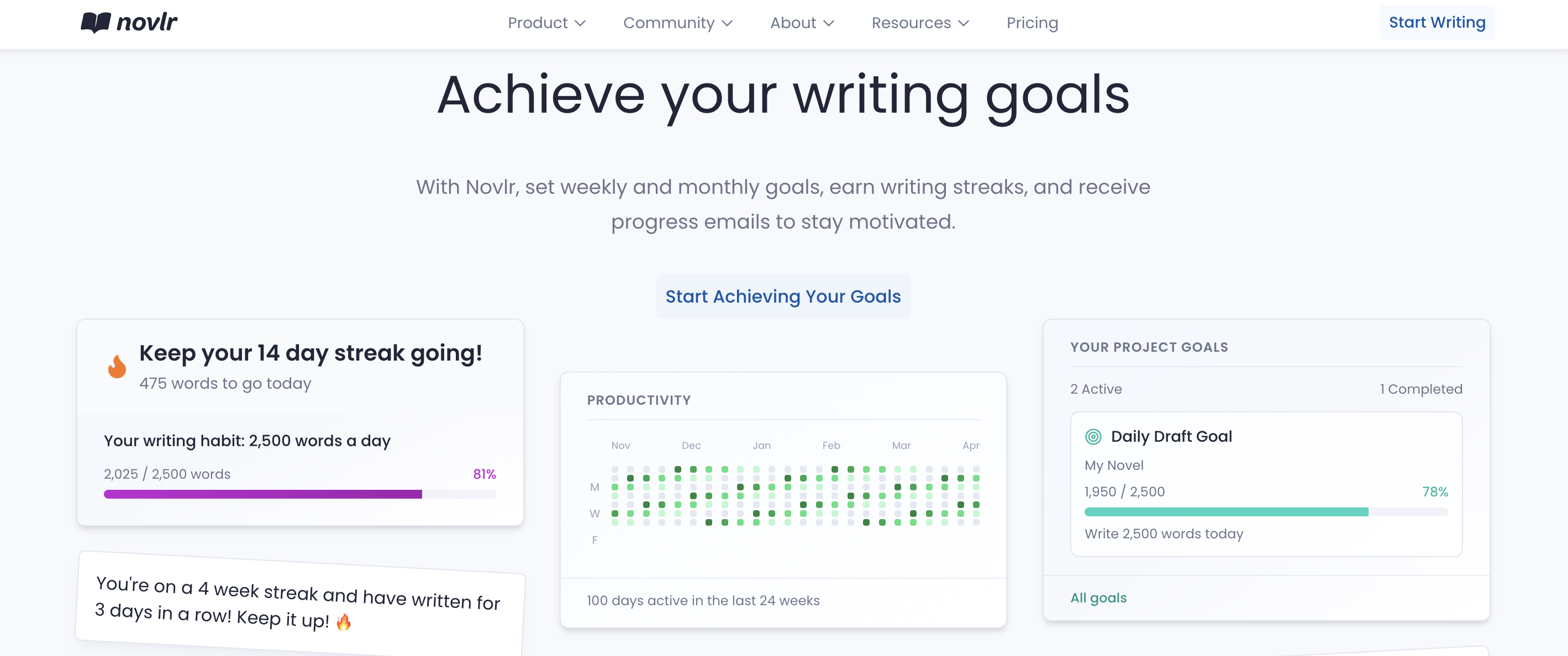
Let's be clear: Novlr is one of the most popular writing tools for a reason. It's easy to use, features an attractive interface, comes with integrated writing courses, and includes a gorgeous dashboard full of extensive analytics for tracking your progress.
That said, no one writing tool does it all (we checked), and if Novlr doesn't meet your biggest priorities, it's worth looking around. Here are some reasons you might keep browsing or switch tools.
You want more planning features - Novlr is essentially an online word processor—no planning or plotting features involved.
You want to spend little to no money - While it's priced competitively and has a free option with fewer features and a two-project maximum, you can find cheaper or even free online writing software. It's also subscription-based, and that's not everybody's jam.
You work with a co-author - Novlr allows you to invite others to comment on your draft but not edit it.
You want a desktop writing app - Novlr is only available online, which means you can only work on your draft when you have an internet connection.
What to Look for in a Book Writing App

When selecting a writing program, your only goal should be finding the tool that works best for the way you write.
Nevertheless, we'd like to suggest a few features worth considering as you embark on your software search.
Planning and plotting - Are you able to brainstorm and plot your story in the same software you use to write it?
Import/export - How easy is it to import files and export projects in the formats you need?
Intuitive interface - How steep is the learning curve? Will you be able to jump in and start writing immediately? If you need some time to get familiar with the software, do the features seem worth it?
Autosave and cloud storage - Can you use the novel writing software in full confidence that every word of your brilliant masterpiece will be saved?
Collaboration capability - Will your editors and beta readers be able to access your draft within the writing app? Can they comment? Can you work with a co-writer on a shared draft in real time?
Versatility - Is the writing software available on every device you use for writing? Are there online and offline versions?
Price - Does the price seem worth the benefits? Does it work for your budget?
Top Alternatives to Novlr

If you're thinking that Novlr might not be the novel writing software for you, here are some alternatives worth considering.
Dabble Writer

We might be a tad biased here, but we're going to say it anyway:
Dabble is the best novel writing program out there.
Like Novlr, Dabble Writer is quick to learn, nice to look at, features a distraction-free interface and dark mode option, and helps you stay on top of your writing goals with a word-count tracker and customizable goal-setting features.
It also includes an active community of friendly authors just like you (join us in the free DabbleU Campus community!) and loads of educational resources, both free and paid through a DabbleU Academy membership (included in the highest Dabble Writer subscription tier).
What sets Dabble apart is that it features clever planning tools like the famous Plot Grid. If you're not familiar, the Plot Grid is a plotting tool that allows you to track multiple story elements alongside your scenes. This helps you manage multiple storylines, character arcs, pacing, and more.
.png)
The customizable Notebook is great for organizing research, worldbuilding bibles, and anything else you need to nail down your planning process. You can also dream up your characters in detailed Character Profiles, complete with attachable notes and the option to organize your fictional people into Casts.
.png)
Writing with a co-author? Dabble even supports real-time collaboration with other subscribers. It also allows you to share comment-only and read-only versions with friends, editors, and beta readers. These options are made even better by the fact that you can create separate Review Copies of your manuscript to share, so you're able to collaborate and experiment without changing your primary draft.
You get a similar perk with Dabble's approach to versioning. This tool allows you to access your version history from any point in the writing process and gives you multiple options for bringing old scenes back to life, whether that means restoring them completely or bringing them into your current project as a note you can pull from as-needed.
As for versatility, you can use Dabble on any device, and unlike Novlr, it includes a desktop app so you can use it online or off, whenever and wherever. It features autosave and cloud backup so you never have to worry about losing those hard-earned words.
The one area where Dabble lacks versatility compared to some of the tools on this list is in its intended use. Dabble Writer is designed first and foremost for fiction writers. While you can easily use all of its features to plan and write most forms of nonfiction and poetry, it doesn't have advanced formatting features specific to screenwriting or academic writing.

You can, however, customize Dabble Writer's interface with themes and dark mode options, upload an existing manuscript, and export your Dabble Writer project as an MS Word doc, Google Doc, or Markdown file or share it as a web file. For Word and Google Docs, you'll also have the option to have your manuscript immediately formatted to meet industry submission standards.
Scrivener
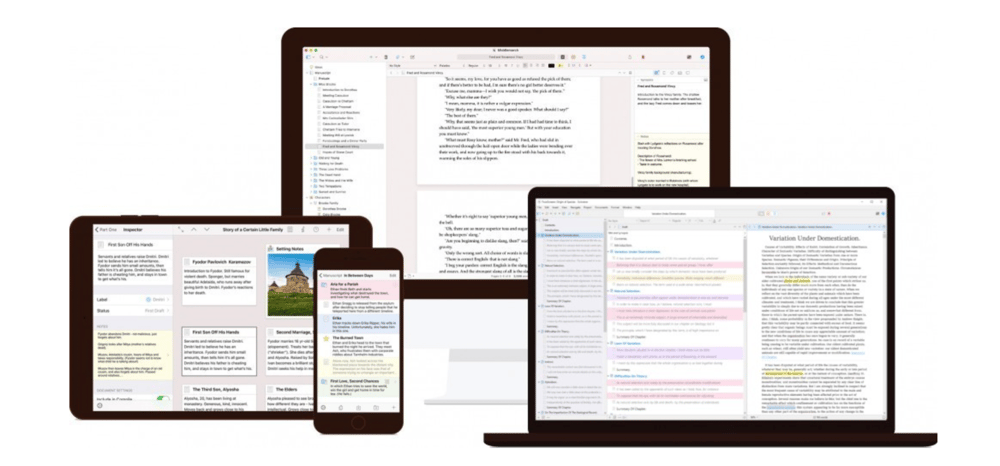
If you've heard of Scrivener, you might know it as the most intimidating novel writing software out there. As writing apps go, this one is pretty involved and the learning curve is steep. But if you love bells and whistles, you might find Scrivener is well worth the time you'll spend on video tutorials.
This tool gives you access to customizable corkboards for organizing scenes, a complex outliner tool, multiple formats, and handy options for storing audio files, research materials, and more. One particularly popular feature is the ability to view up to four documents at a time, allowing you to have your research and manuscript or two related scenes side by side as you work.
Scrivener also offers its own approach to version history with its Snapshot feature, allowing you to capture a copy of a scene before you change it. You have the option to restore your Snapshot or compare it side by side with your new iteration. Of course, this requires some foresight on your part. You can't access old versions you didn't create a Snapshot for.
Like Dabble, Scrivener can be used on multiple devices, online or offline, though you have to buy separate licenses for different devices. It also has an autosave function.
Users love the fact that Scrivener allows you to import and export a wide range of file formats, though many complain that the exporting process can be a bit complicated.
It's also worth noting that while co-authoring is technically possible on Scrivener, it's pretty clunky. The happiest Scrivener users tend to write solo.
Atticus

If you're not that concerned about the lack of advanced planning tools in Novlr but would like a little more assistance with the self-publishing process, Atticus might do the trick for you.
Like Novlr, this tool skips all the tools for mind mapping and story structure, focusing instead on offering a simple, intuitive writing space. Atticus has a few handy writing features, like goal tracking, a word sprint timer, project collaboration, and drag-and-drop chapter organization. But the really impressive stuff doesn't come in until you're ready to publish.
Where Atticus stands out is in its formatting capabilities. This program provides a whole truckload of style options for creating a professional, print-ready PDF or ePUB. It empowers you to create a professional book interior yourself without having to learn advanced formatting skills.
In fact, there are plenty of writers who use a different tool for writing and planning their novel, then turn to Atticus for final formatting and visual design. That approach adds to your expenses, of course, but on the plus side, Atticus requires a one-time purchase, so you can buy it once and use it for years.
Ulysses
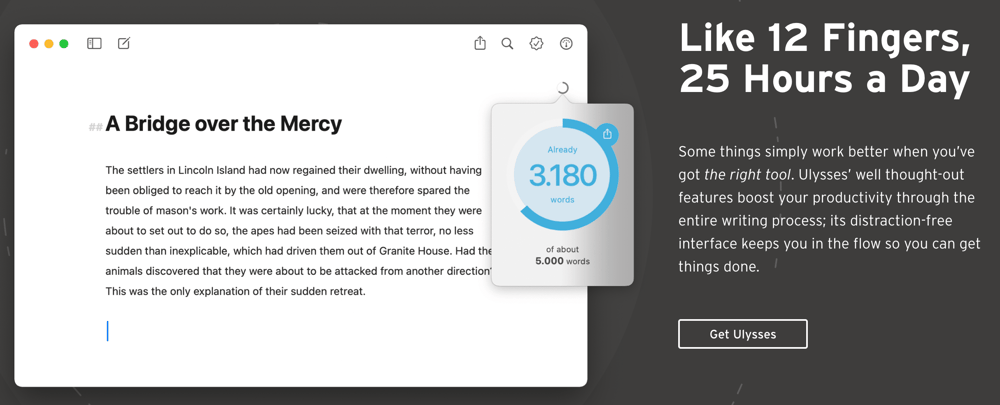
If you're not writing on a Mac, iPad, or iPhone, you can skip ahead to iA Writer. Ulysses is very cool, but it's a Mac-only situation.
For Apple users, Ulysses is a minimalist novel writing app ideal for the writer who just wants a simple, attractive interface that keeps them focused on getting the words down right. There are no planning tools, but this program does feature a proofreader, editing assistant, and word-count goal tracker. It also features formatting tools for turning your work into an e-book or blog post.
Like Dabble and Scrivener, Ulysses offers automatic backup. It's worth noting, however, that Ulysses uses iCloud to sync between devices and some users have reported that it's a bit clunky. You can import and export a range of file types as well as publish directly to a blog.
Unfortunately, Ulysses does not currently support collaborative writing.
iA Writer
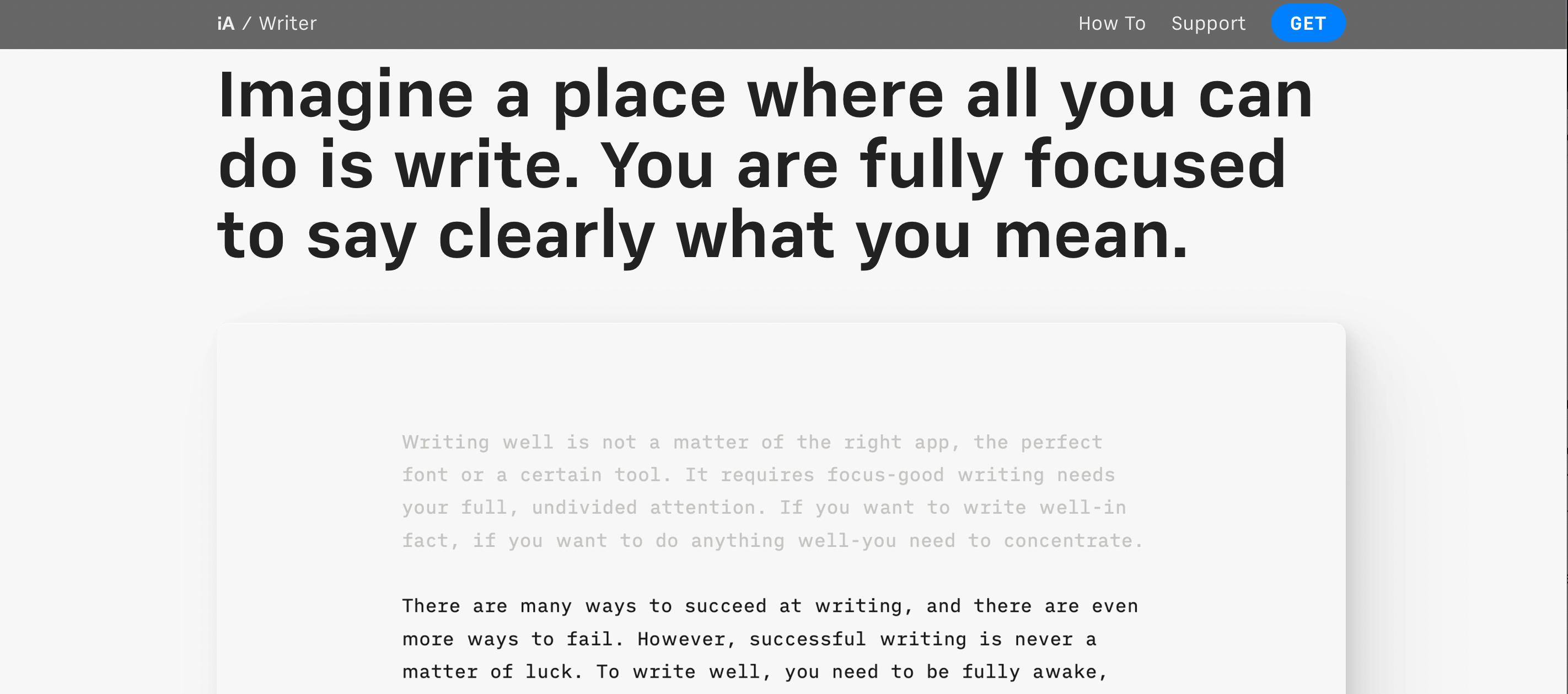
Here's another one for minimalists, and this one covers Apple, Windows, and Android users.
Like Ulysses, iA writer emphasizes the actual writing process, skipping the plotting tools and providing a clean, simple, and intuitive interface so you can enjoy a focused writing experience. It's designed for use with Markdown so you never have to take your fingers off the keyboard to format your text.
What sets iA Writer apart is its visually pleasing approach to revision features. It has a built-in style check that indicates clichés, filler words, and redundancies with unobtrusive strike-throughs. You can also turn on the syntax highlighter for a color-coded visual of your types of speech—a great way to look for excessive adverbs or repetitive phrasing.
If you use AI for inspiration, iA Writer will keep track of your copy-and-pasted AI passages with rainbow-colored text so you don't accidentally leave the robot's voice in your finished manuscript.
yWriter
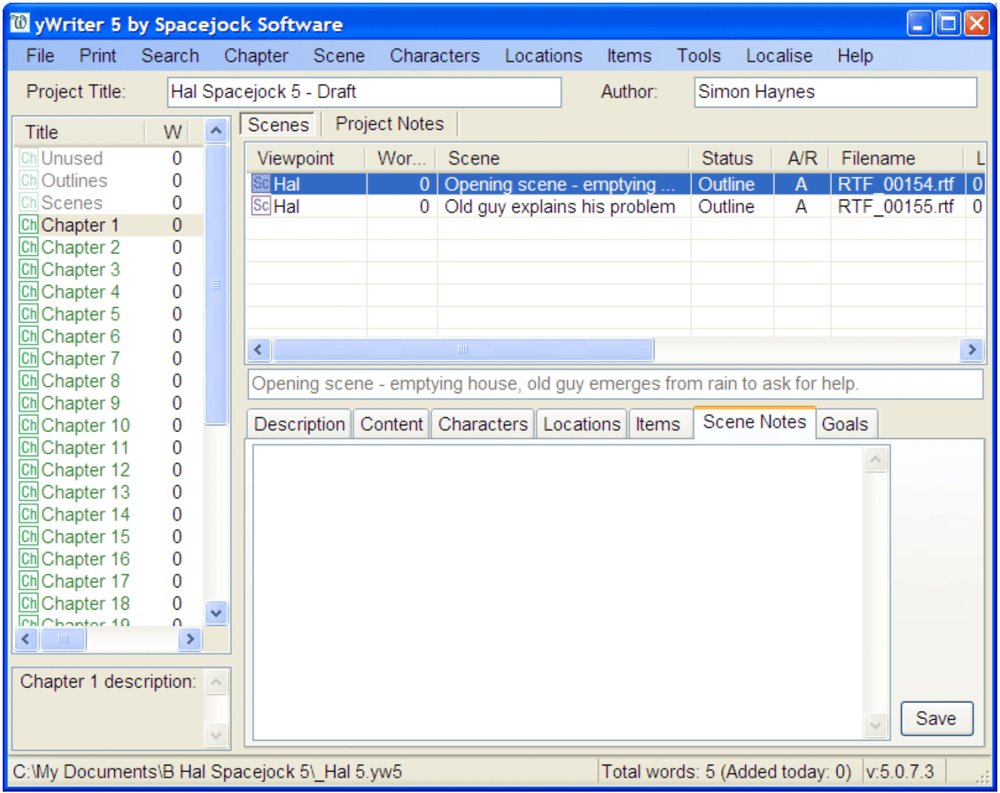
The first thing you should know about yWriter is that it's free for Windows users. (There is a small fee for MacOS, iOS, and Android versions.) You have the option to pay for registration, but it's not mandatory. Even then, the price of registration is pretty low compared to other apps, including Novlr.
Although yWriter was created as a word processor, it comes with a range of handy planning tools. You can create extensive character notes, track locations, craft an outline, and more. You even get some pretty interesting scene management features, like rating the quality and importance of individual scenes. These tools are all fairly easy to learn.
Originally an offline writing software, yWriter now has an app that allows you to sync using third-party cloud storage. Though, as you'll see in the reviews section below, users seem less thrilled with the mobile app than the desktop version. Collaboration is not available with this writing software.
The import/export options are also extremely limited, though it's worth noting that it allows you to export an ebook to Calibre.
If looks are important to you in a novel writing tool (no judgment; same here), you should know yWriter isn't the cleanest looking interface on this list. But again: plenty of great features and you can't beat the price.
Google Docs
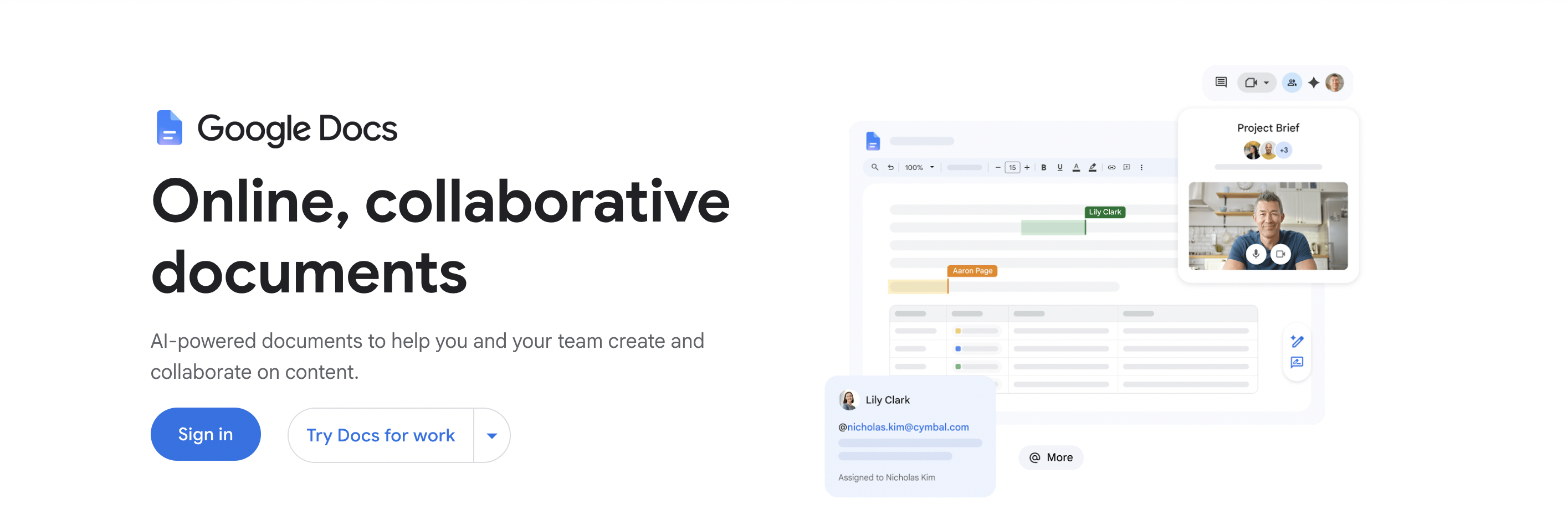
Google Docs—another free online word processor—probably has the most familiar interface on this list. Odds are decent that you've used Google Docs before. If you haven't, there's a good chance you've at least used Microsoft Word. And if you know how to use Word, you'll probably adapt to Google Docs in a matter of minutes.
This program wins big points for versatility. You get both online and offline access on any device and collaborate with anyone who has a free Google account. It automatically syncs and saves, plus it stores previous versions so you can draft and edit with total peace of mind. Importing and exporting is a breeze.
The biggest downside, however, is that this free tool wasn't designed to be a novel-writing app, and it doesn't handle long novels very well. Or even novellas, really. Once you hit a word count of about 40,000 or more, Google Docs becomes super slow and a little glitchy.
This also isn't a great option if you're looking for a program that includes planning and plotting tools. Google Docs has exactly zero.
Hemingway Editor
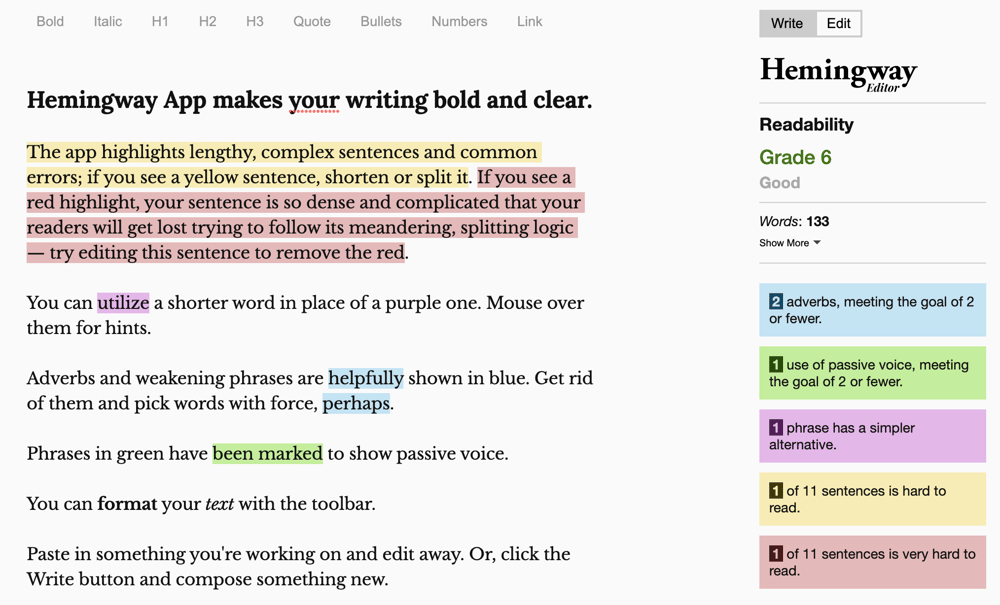
If you're hoping to find a comprehensive novel writing tool—or even a simple online word processor—Hemingway Editor is not that. It is, however, a great supplemental app.
Hemingway Editor is an editing tool (go figure). That's all it does. There are no plotting features and you probably wouldn't want to use it to draft a novel.
That said, it has something to offer that the other Novlr alternatives on this list don't, even when you factor in their built-in editing tools. Hemingway Editor focuses on readability and style issues. It flags issues like passive voice, convoluted sentences, and oversized words.
This tool has both an online version and a desktop app.
User Reviews and Testimonials

So those are the facts. But what are creative writers like you saying about these novel writing programs?
Let's take a look at some fairly typical reviews.
Dabble Writer
Pro:
“Dabble is the perfect mix of all the features I love about Scrivener with the ease of access and synchronization I got from writing on Gdocs. I've watched it grow for a bit and with every iteration it becomes something even better.” –Product Hunt review
Con:
“Pricing is bit on the high end.” –G2 review
Scrivener
Pro:
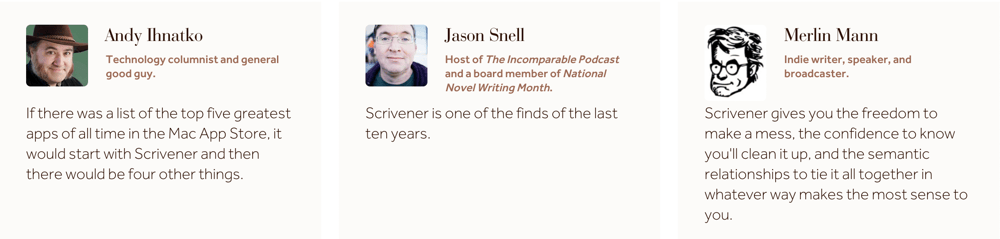
“Unbelievable value for the price. Amazing amount of features.” –GetApp review
Con:
“In a way, there are too many functions available and it can be overwhelming at times. Sometimes I have difficulty finding my book on the left side as the binders confuse me.” –GetApp review
Atticus
Pro
"I can't even tell you how much time Atticus has saved me in formatting my books. It's all done for you. You 'set it and forget it.'" –Trustpilot review
Con
"I love Atticus for formatting. I don't recommend it for writing your drafts (too laggy)." –Reddit user
Ulysses

Pro:
“I love the fact that the editor just gets out of my way, almost as if I have a blank page in front of me.” –Mac App Store review
Con:
“If it was available on Windows it would be nice to use across platforms ... sadly it's not.” –G2 review
ia Writer
Pro:
"Syncing between my Mac and iPhone is seamless. Writing is simple and guides for how to use markdown were incredibly helpful." –Mac App Store review
Con:
"I would like to have had an option to buy licenses for multiple operating systems, e.g., MacOS and iOS." –G2 Review
yWriter App

Pro:
“Seriously the best novel-writing app avPro:
“Seriously the best novel-writing app available. Great organizing abilities.” –GooglePlay review
Con:
“The cloud synchronization doesn't work at all. It constantly creates new project files, Dropbox conflicts are created. It's just a mess.” –GooglePlay review
Google Docs
Pro:
“I love how easy it is to use and how file sharing is super integrated. The quality for the cost of the product is super.” –GetApp review
Con:
“Google Docs lacks the formatting powers that many offline local word processors have.” –Software Advice review
Hemingway Editor
Pro:
“Hemingway is incredibly easy to use. I think that's the best part of it.” –G2 review
Con:
“Ultimately, I don't like how my writing ‘sounds' after I've run it through Hemingway. Its suggestions are just too ... ‘caustic'... for my tastes.” –G2 review
Pricing Structure

Now that you've got the deets on the pros and cons of these writing apps, let's talk money. Now, the price of these programs can change over time, so in terms of actual dollars and cents, I'll provide links to the pricing pages so you can check the current rates.
Beyond the actual cost, however, you might want to know how plans are structured and what (if anything) you get for free. The question of a monthly subscription versus a one-time payment is a big one for a lot of authors. It's usually less expensive to pay for software once and be done with it, but subscription models allow you to access ongoing updates without having to purchase a program again.
Whatever your priorities are, this information may help you narrow things down.
Dabble Writer
Freebies:
- Dabble offers a 14-day free trial that gives you access to every single feature—no credit card required!
Plans:
- Dabble Writer offers three subscription tiers. Click here to see current prices and what's included in each plan. Subscriptions can be monthly or annual, with the latter providing a discount.
- The highest subscription tier includes access to DabbleU Academy, an exclusive author community with tons of live workshops, self-guided courses, and more.
- You can also get a lifetime subscription, allowing you to pay one fee now and enjoy access to all Dabble Writer features and upgrades forever.
Discounts:
- Discounts are available for teachers, students, and those who pay their subscription fee annually.
Scrivener
Freebies:
Plans:
- Scrivener requires a one-time payment. You must make separate payments for macOS, Windows, and iOS, though you can order a macOS and Windows bundle at a small discount. Click here to see current prices.
- There may be additional charges for future upgrades.
Discounts:
- There are discounts for students and academics.
Atticus
Freebies:
- Atticus does not offer a free trial, but there is a 30-day money-back guarantee.
Plans:
- You can get Atticus with a one-time purchase. That single purchase covers all your devices and future updates. Click here to check current pricing.
Discounts:
- Atticus does not offer regular discounts.
Ulysses
Freebies:
- 14-day free trial (automatically available when you download the app)
Plans:
- Ulysses is subscription-based. There are no tiers, just one price that covers access on all your devices and includes future upgrades. Click here to see current prices.
Discounts:
- There are discounts for students and annual payment plans.
iA Writer
Freebies:
- iA Writer offers a 7-day free trial.
Plans:
- It's a one-time payment, with separate payments for Mac, Windows, and iOS apps. Check out current prices here.
Discounts:
- There is an educational discount for Mac and Windows applications.
yWriter
- yWriter is free for Windows users, but you have the option to support the developer with a registration fee.
- Mac and mobile users pay a small fee.
Google Docs
- Google Docs is completely free.
Hemingway Editor
- The online version of Hemingway Editor is free. If you want to download the app for Mac OSX or Windows, it costs a one-time fee.
Which Novel Writing Software is Right for You?
Only you can say for sure. Take a little time to determine what would be most helpful for your unique novel writing journey and compare your priorities to each app's best features.
Looking for something free and familiar? Only plan to write short-form masterpieces like short stories, poems, and essays? Try Google Docs!
Hoping to find software made specifically for novel writing but still don't want to give anybody your hard-earned dollars? Give yWriter a whirl.
Love the minimalist simplicity of Novlr but really need a writing app you can use offline? You might be looking for Ulysses.
Want a massive pile of plotting and planning features for your first novel? Scrivener might be for you.
Dreaming of an autosaving, auto-syncing online/offline novel writing app that has a customizable interface, brilliant plotting tools, and editing features that take a lot of the chaos out of your revision process? Why, you must be looking for Dabble Writer!
And if you're still on the fence about any of these alternatives to Novlr, remember that you can try all of them for free.
In fact, now's the perfect time to take your first experimental plunge with Dabble. Click here, don't even think about touching your credit card, and start filling out that Plot Grid.
SHARE THIS:


TAKE A BREAK FROM WRITING...
Read. Learn. Create.

What's the difference between direct and indirect characterization? And is one better than the other? Here are the answers you've been looking for.

Always wanted to know the secret to telling a good story? This guide lays it all out for you.

Discover the best writing tools for everything from brainstorming and organizing to drafting, revising, and managing your time.