
How to Write Dark Fantasy Your Readers Won’t Recover From

Welcome to the darkness.
Grotesque monsters lurk in the shadows. Power-hungry blood mages rule the kingdom. Crime runs rampant, and torture is a daily event.
And you smell that? That’s the rotting carcass of hope.
If this all sounds like a relaxing Sunday for you, you’re probably a dark fantasy writer. This genre invites you to indulge in all things horrific and sinister. It’s a dramatic departure from the world we know while also managing to offer glimpses into the less appealing side of human nature.
It is, in short, very cool. But not easy to write. Which is why we’re gathered here today.
We’re going to cover all the key aspects of a great dark fantasy story. We’ll discuss reader expectations, how to master the important storytelling elements, and how to avoid common pitfalls.
But first, let’s make sure we’re all talking about the same thing.
Understanding Dark Fantasy
Before you can write dark fantasy, you have to understand what it is and what it isn’t.
Dark fantasy is a fantasy subgenre that incorporates supernatural horror elements. These stories tend to be deeply unsettling and devastating at every turn.
The world is dark and in decay. Most supernatural creatures are malicious, and all are grotesque. Evil rules. Goodness inspires torture and violent death. The deities delight in human suffering. The magic is dark, and monsters roam freely.
Isn’t That Just Horror?
Nope, and here’s why:
In horror, the scary monsters and creepy magic are remarkable. Abnormal. Unexpected. They shock and surprise the protagonist, shattering the main character’s entire concept of reality.
In dark fantasy stories, the horror elements are just everyday life. Characters might not like seeing the ruling sorcerer turn a rebel’s skin inside out, but they’re not shocked that said sorcerer can or would do that.
This genre presents the reader with a world that feels utterly hopeless from the very beginning. It doesn’t open with teenagers on a road trip looking forward to the best summer of their lives. There’s no bright-eyed young couple moving into their first home, believing they’ve opened a bright new chapter, unaware of the spirits haunting their kitchen cabinets.
Dark fantasy characters never have a good reason to believe their world could be better. And that lack of hope is a defining feature of the genre. In fact, there are two significant subgenres of dark fantasy that are distinguished primarily by where they land on the hope spectrum.
Grimdark vs. Nobledark
Grimdark is as bleak as it gets. In this type of dark fantasy, there is no hope of fixing what’s wrong with this world. Evil will always reign, and the innocent will always suffer. The main character is a villain protagonist or, at best, a morally ambiguous anti-hero who acts purely out of self-interest.
There are no happy endings here.
Nobledark is also very bleak, but in a story like this, there’s at least a door cracked somewhere, letting in a very narrow ray of hope.
Nobledark heroes and heroines are genuinely good people. They somehow sustain hope in a despairing world, and rather than fighting purely for their own survival, they seek to build alliances and improve the world for the greater good.
These dark fantasy stories don’t have classically happy endings, either, but they’re at least bittersweet, even more than most other fantasy subgenres. Even as the larger world remains a steaming hot nightmare, the protagonist will have succeeded in making things slightly better for someone. Plus, they can enjoy the moral victory, having preserved their values and integrity in a universe where corruption reigns.
Examples of Dark Fantasy Novels
So where have you seen this type of devastating storytelling before?
Prince of Thorns by Mark Lawrence - This is a classic example of an angry, violent protagonist out for blood. Having witnessed the violent deaths of his mother and brother in his childhood, a ruthless prince returns to battle the dark forces that have stolen his rightful throne.
The Fifth Season by N.K. Jemisin - A darkened sky. A dying landscape. Impending war. And a grief-stricken protagonist who’s being hunted because of her terrifying abilities. Check, check, check, and check.
The Poppy War by R.F. Kuang - A war orphan forms an allegiance with a vengeful deity and grows up to be a genocidal oppressor. A cute little coming-of-age story, basically.
What Readers Expect From Dark Fantasy
When writing any genre, it’s important to ask yourself what fans of the genre expect. What keeps them returning to stories like yours?
That insight will help you write a novel that delivers the experience they’re hoping for when they pick up your book. What do they want to feel? What do they want to ponder? What images, characters, and conflicts seize their attention?
Here are some answers:
Decay in All Its Forms
Nearly everything in a dark fantasy world is rotting, both literally and figuratively.
Most characters are corrupt, and those that aren’t are haunted by old trauma, struggling to survive in a world designed for suffering, and probably carrying the physical scars of old injuries. Relationships are defined by fear and distrust, and the events of the story often serve as evidence that any efforts toward care or collaboration will be punished.
Then, of course, there’s the setting itself: ancient cathedrals in decay, cursed landscapes, societies defined by exploitation and corruption… anything that reminds the reader that this is a world without hope.
Nonstop Suffering
All stories need conflict, but in dark fantasy, even the backdrop of everyday life is defined by struggle.
Nations are at war. The innocent are oppressed. Poverty, torture, disease, genocide, blood feuds… pick your favorite combination of terrible things and weave them into your fictional universe, and you’ve got yourself a dark fantasy world.
A Cathartic Exploration of Humanity at Its Worst
This one is important. For a lot of readers, this is the entire point of indulging in dark fantasy stories.
This genre allows us to confront the worst in humanity from a safe distance. We may not have abominations in the real world, and we may not be under the rule of a sorcerer wielding dark magic, but we do live in a world where poverty, exploitation, oppression, and war are real and consistent.
Dark fantasy offers a space for us to examine those difficult realities without having to dwell on a devastating news cycle. It’s a place to ask how evil rises to power and why desperation produces villains. It challenges us with moral gray areas and asks us to question who we’d be under such wretched circumstances.
It’s a place to acknowledge the darkness that surrounds us and the darkness within ourselves, and that means it’s your job to write darkness that serves a purpose.
Be endlessly, creatively horrifying. Write a story packed with violence and crime and horrifying abuses of power. But have a point.
Don’t just seek to disturb your readers. Offer them a fantastical place to indulge a pessimistic view of the very real world.
Non-humanity at Its Worst
The severely broken and power-hungry humans aren’t the only baddies in dark fantasy.
You’ve also got horrifying abominations and grotesque creatures. You’ve got demons and banshees and vampires that don’t even sparkle.
Then there are the deities. The gods of dark fantasy are far from benevolent. Best-case scenario: They stay out of human affairs and laugh at their suffering. More often, they’re deliberately cruel, torturing mortals for their own delight.
And if you hear mention of magic in this world, steer clear. This isn’t Dumbledore stuff. It’s dark magic, and those capable of accessing arcane powers have only sinister intentions in mind (or the magic itself is sinister).
You even get cursed landscapes in dark fantasy. I’m not kidding—everything here is the worst.
Moral Gray Areas
We touched on this a bit already, but it’s an important point, so I want to make sure you don’t miss it.
Moral relativity is an essential component of dark fantasy stories. Actually, it’s more than that. It’s an inevitable element in any story set in a dark and depraved world.
In a traditional fantasy world, we know the main character has chosen the righteous path when they put the good of others above themselves. But in dark fantasy, that arc feels a bit Pollyanna. No one here is worthy of the protagonist’s self-sacrifice, and everyone is out for themselves anyway.
In this world, there really aren’t goodies and baddies, at least not as we know them in other genres. It’s usually more like an ultra-baddie and then a morally ambiguous protagonist who opposes the ultra-baddie for their own selfish reasons.
Unhappy Endings (Sorta. Probably. Maybe.)
Traditionally, readers do not pick up a dark fantasy book in search of a happy ending. Not unless they’ve never read the genre before and no one properly warned them.
Even nobledark narratives that contain some small victory for the main character have often ended with the world remaining a terrible, unfixable place.
Now, this old norm seems to be shifting a bit, especially in series. You’ll often see unhappy or super bittersweet endings throughout the series, while the final book ends on a victorious note.
Either way, your target reader probably isn’t looking for a pure-and-tidy happy ending.
Mastering the Elements of Dark Fantasy

Now for the question you came for: how do you actually write dark fantasy? How do you create a full, compelling narrative that incorporates all the essential elements we’ve discussed?
First, if you’re starting completely from scratch with fantasy writing, I suggest checking out this guide and browsing the fantasy section of our free article library for a whole heap of additional tips.
Of course, learning the basics of fantasy writing is a great start, but it’s not enough if you want to compose a riveting dark fantasy novel. You need to know how to tailor the classic storytelling elements to serve your audience and create a tale packed with horror and depravity.
So let’s discuss.
Creating Dark Fantasy Worlds
In terms of the process, dark fantasy worldbuilding is like any other kind of worldbuilding. You have to create all the elements of your world that are relevant to your story. This includes both the physical world (stuff like flora, fauna, and geography) and the cultural world (stuff like history, religion, and class structure).
You also want to design this world with your desired atmosphere in mind. In dark fantasy, you’re likely going for something sinister, depressing, foreboding… anything along those lines.
You may also want to pay close attention to these specific worldbuilding elements:
History
There’s usually an explanation for how a world became a landscape of terror and decay. So what’s the story in your universe?
Is this a world torn apart by war? The act of cruel deities? How has power shifted, and how does that past determine who rules and who suffers now?
Magic System
Once again, magic is not for healing the sick or creating glass slippers. Not in dark fantasy.
In the dark fantasy genre, magic is terrifying. It’s used to torture the innocent, control minds, commune with demons, or resurrect folks who really should have stayed dead.
At the very least, magic is bound to corrupt those who use it, whether it’s an obvious tool for evil or a morally neutral force that ultimately drives the user mad with power.
Governing System
Who holds power here? How did they get their power? How do they maintain it?
These questions are standard in any worldbuilding process, but in dark fantasy, you can be sure the answers involve something along the lines of violence or mind control (or both). It’s also a good idea to ask yourself who suffers because a particular entity is in power.
Religion and Deities
We’ve touched on this, too, but quick reminder: the gods are not nice here.
You can decide what type of not-nice they are. But your readers will be expecting sadistic deities who delight in human suffering. Any mortal who earnestly worships those deities is either terrified and desperate or rotten to the core.
Creatures
Your monsters, mythical creatures, and abominations stand right at the intersection of fantasy and horror. They inspire both awe and terror, and their very presence adds a threat to your world that is particularly frightening because it’s unfamiliar and unfathomable.
By the way, if you could use some inspiration in this area, mythology and folklore are full of horrifying creatures. Just make sure you understand them in their cultural context if you’re borrowing folklore from a culture that is not your own.
Crafting Characters Worthy of the World
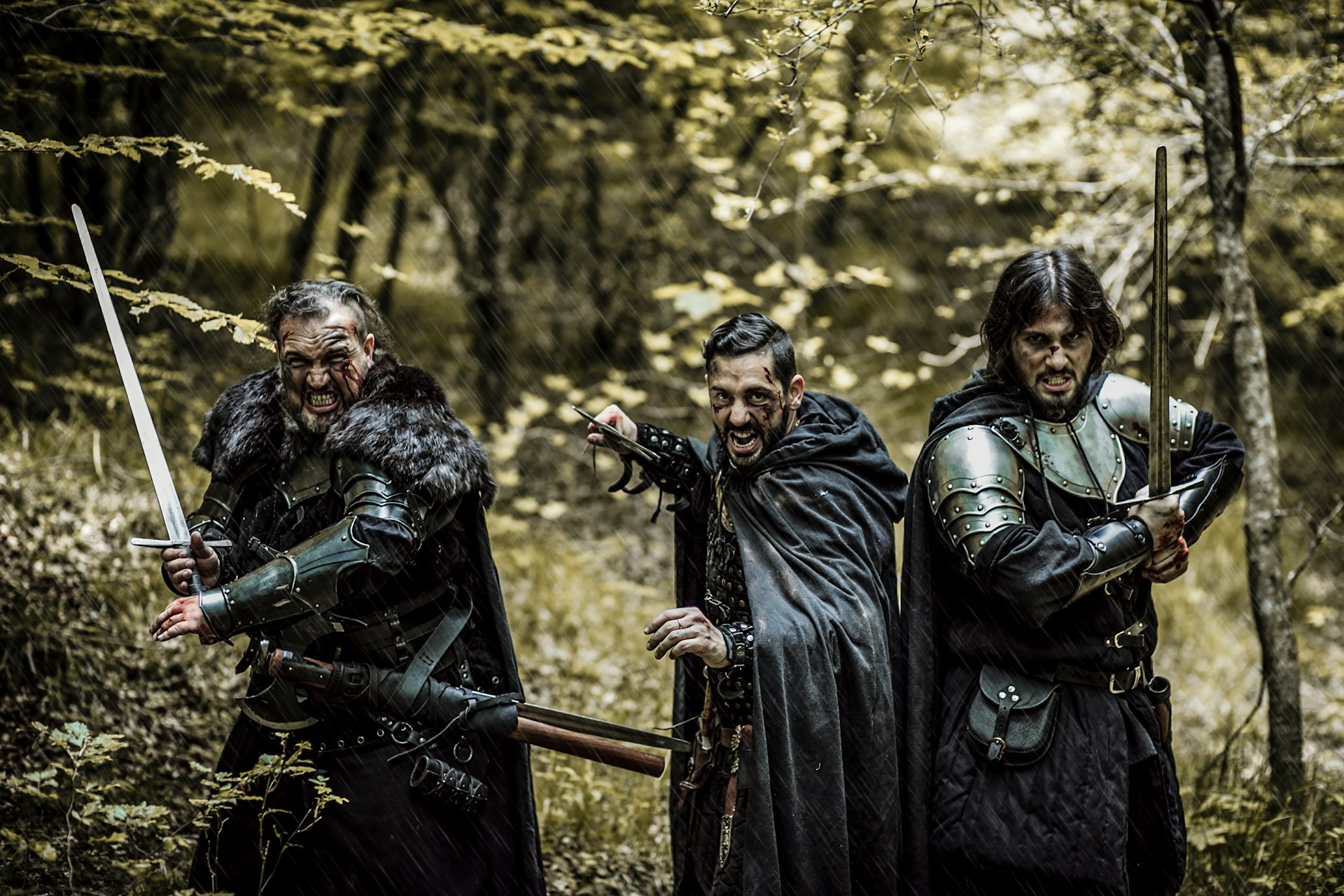
There aren’t a lot of traditional heroes and heroines in dark fantasy.
What you do have are morally ambiguous protagonists. These are often anti-heroes who are unworthy of your admiration but are at least an improvement over the depraved villains they oppose.
Dark fantasy protagonists are typically motivated by their own needs and interests. They’re not actually trying to make the world better (except in Nobledark); they’re only out to improve their own situation.
Like most other inhabitants of this world, they can be violent, manipulative, and cruel. After all, that’s what it takes to survive here.
On that note, you want to give this character a backstory that makes their unpleasant disposition and dark worldview at least somewhat understandable. That’s how you tap into the moral relativity your readers love. Give them something they can empathize with—something that makes them wonder if they’d be any different under the same circumstances.
Devising Devastating Conflict
There are three major conventions you should keep in mind as you plot your dark fantasy conflict.
First, you want to include antagonistic forces that are vastly more powerful than humans and defy human comprehension.
This might include black magic, terrifying sorcerers, unbreakable curses, grotesque monsters, corrupt leaders who rule with violence and mind control, or any other horror your twisted mind can imagine.
Any good narrative includes an antagonist that feels impossible to defeat, but in dark fantasy, you can push that concept even further to reinforce that sense of hopelessness.
And when you give your protagonist a win, that victory should come at a tremendous price. That might mean severe injury, the death of a loved one, or even their own sanity.
On that note, remember that protagonist victories are never world-changing in dark fantasy. Your main character may win a small battle, but evil wins the war.
Tapping Into Dark Fantasy Themes
Finally, as you write your dark fantasy story, remember that all the brutality and horror must have a point. What’s the underlying message? What are you trying to say about human nature or power or survival or whatever?
Here are some common dark fantasy themes to get your wheels turning:
- Anyone is capable of villainy if they’re pushed far enough.
- The only person you can truly trust is yourself.
- Power corrupts.
- Compassion is a luxury no one can afford in a world at war.
- Humanity is ultimately powerless.
Probably nothing here you’d print on the inside of a greeting card, but dreadful themes like these are a hit with dark fantasy readers.
Avoiding Tragically Common Pitfalls in Dark Fantasy Writing

Before I send you off to write your dark fantasy novel, I should warn you about a few mistakes new writers tend to make. Keep these bad habits in mind so you can dodge them like a seasoned pro.
Underdeveloped Dark Characters
Go ahead. Create the most sinister beings your dark imagination can dream up. But don’t stop at outlining all the ways they’re evil. Go deeper.
What do they want? What do they fear? What’s motivating them? How have they become this absolute horror of a human being (or whatever they are)?
Did they survive unthinkable trauma as a child and now they want to make the whole world pay? Has life taught them that cruelty is the secret to survival? Did they make a bad deal with a vengeful god and now live in service to them?
Asking these questions will help you avoid the next big pitfall:
Failure to Explore the Gray Areas
I’ll say it one more time because it’s very important.
In dark fantasy, it’s not good versus bad. It’s bad versus also bad but in a slightly more excusable way. And to make that clear, you need to put your characters in positions where the clearly immoral choice actually feels like a somewhat reasonable option.
Let the rom coms affirm the strength of your reader’s moral compass. Your job is to crush the compass under your boot, hand it back, and see if their arrow still points north.
Brutality Just for Shock Value
As you can imagine, dark fantasy readers have a strong stomach for horror and violence. But they still need the nightmares to serve a purpose.
How do your brutal scenes reveal character or heighten the conflict? What themes do they explore? Why do you choose a specific form of torture or manipulation? How do you choose which characters suffer?
There should be a reason for everything.
Ignoring the Internal Logic of Your Fantasy World
Airtight worldbuilding is as essential in dark fantasy as it is in any other fantasy genre.
Create rules for your magic system and stick to them. Design a social structure and make sure your characters behave as they would in that cultural context. Determine the priorities of deities and governments, and don’t let them look the other way when the small and powerless act in defiance of those values.
A cohesive and consistent world is an immersive world, and that’s what you want. You want to make it easy for your readers to get hopelessly lost in the hellscape you’ve created for them.
One Final Tip So You Don’t Get Hopelessly Lost, Too

Writing dark fantasy—like writing any kind of fantasy—is hard.
There’s a ton of worldbuilding on top of all the standard plotting, character development, drafting, and revisions.
And let me tell you: Dabble makes it all a lot easier.
The Plot Grid allows you to organize all your story threads and see them at a glance. Story Notes are perfect for creating and sorting a comprehensive worldbuilding bible (we even have a free template to help you do that). All your notes are just a click or two away as you draft your novel.
There’s even a dark mode for those who love to lurk in the shadows.
If you want to test this advice, you can try all Dabble’s features for free for 14 days—no credit card or commitment required. Click here to get started.
SHARE THIS:


TAKE A BREAK FROM WRITING...
Read. Learn. Create.

So you want to write a story with two protagonists. Cool. I mean, if you want to be an overachiever like that, then I’m here to help you. Maybe it’s not really overachieving though and is actually really critical to your story. I buy that.There are definitely certain stories that are ideal for dual protagonists. Romance would be a good example, when you have two love interests and are both exploring the coming together and coming apart and falling in love from two points of view.Of course, you don’t have to be writing a romance to have two protagonists. You might be writing a mystery or a fantasy novel where two main characters exist on alternate timelines and their destinies verge at some point. Or maybe they’re just in two different places and have a bone to pick with one another.

What's the difference between direct and indirect characterization? And is one better than the other? Here are the answers you've been looking for.
Always wanted to know the secret to telling a good story? This guide lays it all out for you.