
Author’s Guide to Fantasy Monsters, Creatures, and Humanoids

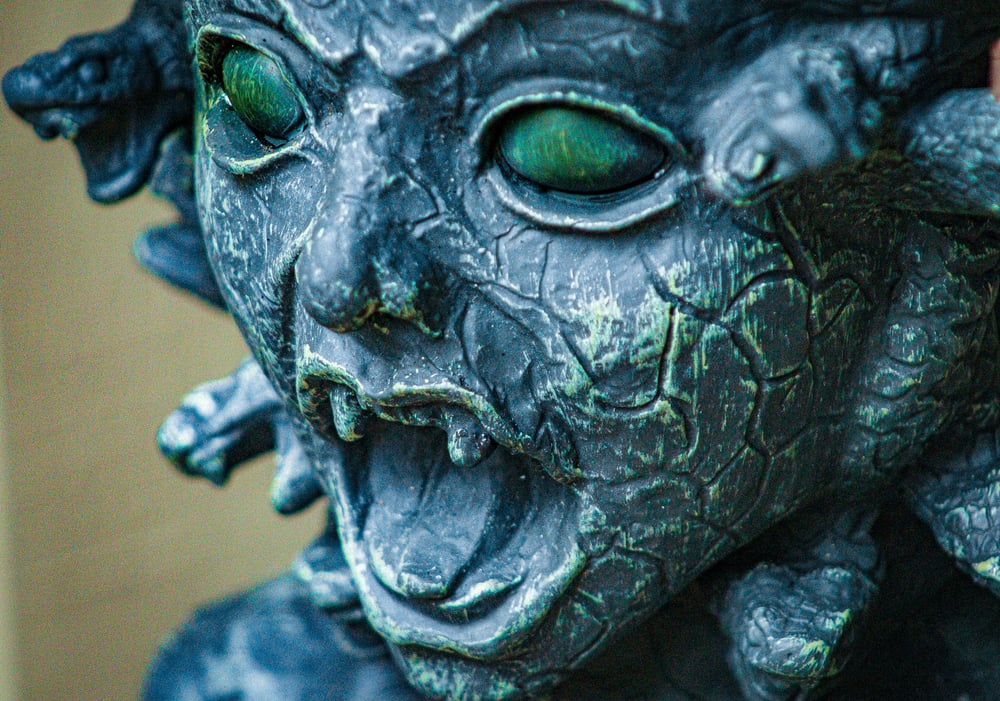
What horrors lurk in the dark corners of your imaginary world? What unseen forces protect the landscape and light your travelers’ path? Who are the outsiders in your universe—the humanoids, the hybrids, the reformed demons?
Even if you don’t have all the answers yet, you’ve gotta admit that the questions are pretty fun to ponder.
So that’s what we’re doing in this article. We’ll be discussing a whole bunch of fantasy creatures, exploring their roles throughout history and how they might serve your novel.
Don’t worry if the possibilities seem a little too endless. You’ll also get some tips on choosing the fantastical entities that are best for your specific story, so that should help you narrow it down.
Saddle up your dragon and let’s get going.
The Role of Creatures in Fantasy Stories
Your fantasy world must serve your story.
That’s one of Doug’s golden rules for worldbuilding. (If you want to learn the others—and you’re a DabbleU Academy member—you can check out his in-depth worldbuilding workshop here. Even better, you can catch his Worldbuilding Wednesday lesson every month and dive into specific areas of the craft.)
This rule applies to your world’s geography, religion, magic system… everything, including your fantasy creatures.
As fun as it is to dream up cool beasts and beings, you want to bring some intention into the process. Consider the purpose your creatures serve in the story. How do they enhance the story? What do they add to the world? What role do they play in theme and character development?
No single creature has to do everything, but they should do something, such as…
Highlighting Themes
Fantasy creatures make excellent symbols, representing spine-tingling topics like unacknowledged desire, ever-present fear, and the awesome power of nature.
Whether you create grotesque monsters or pleasant companions with magical powers, consider how their traits, actions, or abilities might help you explore your story’s themes.
Maybe your vampires serve as a literal representation of the energy-draining forces in your protagonist’s life. Or the hulking-but-gentle beast in the forest could inspire fearful rumors that prove the danger of ignorant hate.
Demonstrating the Power of Nature
Who doesn’t love character-versus-nature conflicts? Whether it’s the primary battle of your novel or you’re simply trying to show how ill-prepared your protagonist is for the world they’ve stumbled into, fantasy creatures can boost the struggle between a character and the natural environment.
How do the powerful fauna of this fantasy world force your protagonist to confront their own limitations? What magical pests must your characters contend with? How many giant rodents will your characters have to wrestle to make it through the swamp?
Building or Expanding the World
Sometimes a creature’s sole purpose is to establish a sense of place. If you’re writing about an underwater world, you’d want to give your reader a glimpse of aquatic fantasy creatures. If it’s an urban fantasy that centers on a paranormal P.I., you might open with the detective secretly photographing a werewolf just to show that this is a typical assignment in this particular universe.
In addition to defining the setting, fantasy beings can also add an air of mystery. Show your reader a strange footprint in the mud, and they’ll understand that there’s more going on in this world than they realized.
Heightening Conflict
Fantasy creatures often represent the unknowable. And in fact, if you look at monsters in mythology throughout history, so many of them serve as an explanation for life’s greatest difficulties.
They cause our nightmares, curse us with illness, warn us of death, and lure us to our death by preying on our insecurities or tempting us with our own desires.
Plus, some of them are just, like, really scary.
So it makes sense that these creatures could make the protagonist’s conflict significantly worse. Monsters might guard the goal your character is trying to reach. They might create chaos, actively hunt your protagonist, or simply awaken fear that your characters struggle to overcome.
Even magical beings who have no sinister inclinations can heighten the conflict. Maybe the elves only pose a threat to your band of travelers because they must guard their vulnerable village from potential invaders. Maybe the jinn isn’t out to get anyone personally; her pranks are for her own amusement.
There are countless ways your fantasy beings can enhance your story. What matters is that you know their roles. What do they add to your fantasy novel? What would the story be lacking without them?
Drawing Inspiration From Mythological Creatures

Some of the creatures you encounter in fantasy novels were first dreamed up by a speculative fiction author. J.R.R. Tolkien invented several now-famous beings, including hobbits, orcs, and wargs.
But most of your favorite fantasy creatures were inspired by folklore. Some of those beasts even exist in different forms across cultures all over the world. Dragons, unicorns, fairies, elves… there are countless iterations of these mythological creatures, and more continue to emerge as authors adapt them for modern fantasy stories.
Each creature listed in this article (we’ll get to the list in a minute) has a long history linking them to at least one specific culture. The traditions, beliefs, and values of that culture are then reflected in the creature… in what it explains, represents, celebrates, or warns against.
This opens up endless opportunities for you, the author, to find inspiration. When you start digging into the many histories of dragons and demons and jinn, you discover new ways to characterize these creatures and define their influence.
And if your fictional world is a fantastical interpretation of a real setting, mythological creatures present an opportunity to present the culture of your setting with greater authenticity. If your story is set in a fantasy version of Norway, might as well involve creatures and beings from Norse mythology, right?
You can also find ways to explore monsters from new angles to create your own version. What if seemingly sinister beings like kelpies and mares actually had good reason to lure humans to their deaths or terrify them with nightmares? How would you make them empathetic?
You can even stray further from the folklore and use these creatures as a jumping off point. Make a list of the monsters that thrill you the most, then look for patterns. What do they have in common? Why do you love them? How can you use those traits to create something entirely new?
Is Any of This Appropriation?
I’m not in a position to declare what is or is not appropriation when it comes to borrowing from folklore. But I do know it can be tricky when a mythological creature—or your chosen version of the creature—is extremely specific to one culture.
No one’s going to accuse you of appropriation if you write fantasy novels that feature elves, but if you decide you want to center the West African asanbosam in your story and you don’t have West African heritage, you might want to do some homework to make sure your story pays proper respect to the culture it comes from.
This is an area where you’ll likely run into double standards, and those double standards are completely understandable. Colonizers have suppressed and demonized the myths of the cultures they’ve invaded, establishing their own traditions as the default. It’s no wonder those long-silenced cultures might bristle at the idea of someone outside their community borrowing their folklore.
It’s complicated, and I can’t tell you what to do. All I can suggest is that you be thoughtful when borrowing from someone else’s mythology. Understand the role certain creatures play in the culture as a whole, and be especially respectful when dealing with religious figures the culture truly believes in.
Above all, be willing to hear members of that culture when they voice opinions or suggestions about your use of their folklore. You always hold the power to make your own artistic choices; just be open to hearing from those closest to the creatures you want to borrow.
Now, one more disclaimer before we get to the list…
Beware the Biggest Pitfall of Creating Fantasy Creatures

When you dig into the origins of fantasy creatures, you’ll stumble upon some stereotypes. Some of these fantastical beings were, unfortunately, inspired by races, classes, or genders that the storytellers looked down on.
For example, a changeling is a humanoid creature left in place of a stolen baby. It looks just like the human baby, but behaves very differently. This fantasy being was originally dreamed up to explain children with neurodivergence or developmental disabilities. So… not great.
It’s also not uncommon for evil or dangerous humanoids to have physical features resembling a race considered “threatening” by the culture that created them. And pretty much every culture has at least one female being who uses her beauty to lure men to their doom.
I mention all this not because you have to avoid these creatures, but because a little awareness can help you avoid accidentally writing the same stereotypes into your own novel. Tweak them if you need to. Subvert the original messaging. Modernize them or make them your own.
Now on to the list I promised you.
Types of Fantasy Creatures
To simplify, I’ve divided this list into categories. There’s a lot here, but this is not an exhaustive list. Not even close. Hopefully, you’ll find something here that inspires your fantasy writing, but please feel free to continue your research beyond this article. There’s a long history and a whole globe full of mythological beings to explore.
Helpers

These fantasy creatures can serve as allies, guides, and generally make life easier for your characters.
Or they’re supposed to, anyway. Sometimes the helper/human relationship gets complicated, as you’ll see with this first example:
Golem - In Jewish folklore, a golem is a being created from clay or mud. Its sole purpose is to serve its human, usually on a specific mission. A golem possesses no soul and has a tendency to start out very helpful before going off the rails and destroying everything.
Unicorn - You know this one—the horse with a horn in the middle of its forehead. You’ll find different variations of unicorns in countries all over the world. Westerners are most familiar with the unicorns who are graceful and pure and prefer to hang out with virgins. There’s also the karkadann, the powerful Persian unicorn whose horn curves backward.
Then there’s the qi-lin (China) or kirin (Japan). This creature is often referred to in the West as the East-Asian unicorn because of its single horn, but it’s really its own thing, with a horse’s head, a deer-like body, and dragon scales. This is a sacred, benevolent beast associated with peace and prosperity.
Naga - Naga show up in different ways throughout multiple Asian religious traditions. Sometimes they’re half-human, half-serpant. Sometimes they’re full serpent. Sometimes they’re a multi-headed serpent. They are always cool.
To answer everyone’s first question about any species of snake, yes, they are venomous. But while they could easily harm a human, they don’t particularly want to. Naga are usually depicted as benevolent protectors. In Hindu folklore, they guard treasure. In a famous Buddhist story, they shelter the Buddha as he meditates.
Will-o’-the-Wisp - Here’s another complicated helper for you. Will-o’-the-wisps are elemental spirits or fairies that guide travelers with their light. Sometimes they’re genuinely helpful and get these strangers wherever they need to be. But in some stories, the mischievous fairies deliberately send humans in the wrong direction.
There are variations of these creatures in different countries all over the world, probably because they’re based on a real natural occurrence: An atmospheric light that appears in swamps and marshes at night.
Predators

If it’s monsters you’re looking for, here are some fantastical beasts that are out for blood:
Asanbosam - Off to a strong start with this one. The asanbosam is a vampiric being from West African folklore that lives in trees. It’s got terrifying claws and hooked feet, which it uses to hang onto its branch when it drops down to snatch you up.
Surprise attacks, blood thirst, hooks for feet… this is definitely one of my favorite monsters on the list. Possibly my very favorite.
Chimera - A chimera is a female creature from Greek mythology that’s basically an entire zoo in one monster. She’s got the body of a lion, the head of a lion but also the head of a goat, and her tail is a complete snake, head and all. Oh! And she breathes fire. Total hot mess. It’s no wonder she symbolizes chaos.
The term “chimera” can also be used to refer to any creature that’s essentially a collage of incongruous parts. You’ll see more chimeras farther down the list.
Chupacabra - The name literally translates to “goat sucker,” and that pretty much covers it. This beast comes from Latin American folklore, and in most countries, it’s reptilian and alien-looking. In the American Southwest, it’s depicted as more of a monstrous dog. But no matter where you are, the vampiric chupacabra feasts on the blood of livestock and is partial to goats.
Peryton - This one has only been around since 1957, when magical realism icon Jorge Luis Borges dreamed it up. This thing has the front half of a stag, while its back half is all bird (including wings, of course). The deliciously creepy part is that a peryton casts a human shadow until it kills a human. Once it’s done that, its shadow is its own.
Vampires - Vampires were more of a horror thing before urban fantasy came along. They’re undead beings that feast on human blood, and you’ll find different versions of this creature in different societies (like the asanbosam and chupacabra).
Vampires from European folklore were originally bloated with a purplish complexion, and their origins varied depending on the culture. Modern Western vampires are pale and thin. (Whether or not they sparkle is entirely up to you.) Like modern werewolves and zombies, they usually perpetuate their kind through their bite.
Water Spirits - In Scottish folklore, they’re horse-like spirits called kelpies, usually live in lochs, and enjoy luring humans to a death by drowning. Scandinavian folklore features similar creatures: nokken. These spirits typically live in still bodies of water and are known for being both beautiful and deadly, like the water they personify. Their alluring nature is key to attracting their victims, and—get this—these seducers are typically men. I love it.
Werewolves - Stories about men transforming into wolves stretch way back to the furthest reaches of history (or at least as far back as you can go and still find wolves). The lore surrounding these beasts has evolved over centuries to become what we have today: the thing where afflicted humans turn into wolves whenever there’s a full moon and transmit their curse to other humans by biting them.
Like vampires, you don’t find many werewolves in traditional fantasy, but they’ve entered the wider fantasy genre with the rising popularity of urban fantasy.
Fans of historical fantasy might also like to know that there were werewolf versions of witch trials in the Middle Ages. Do with that what you will. Then let me know when your novel hits the shelves.
Zombies - Outside of horror, you see these undead creatures in urban fantasy, dark fantasy, and fantasy novels where necromancy plays a significant role. The zombies we know in Western culture—the stiff, lumbering corpses that are hungry for brains—are pretty young. This version of zombies emerged in the mid-twentieth century in works like I Am Legend by Richard Matheson and Night of the Living Dead.
Before that, Haitian folklore warned of “zombis” or “zonbis” that were under the control of the person who reanimated them. In this tradition, it’s possible to command an undead corpse to do your bidding and take possession of its soul, which is like a whole other thing.
Terrors

These fantasy creatures may or may not be hunting for human flesh, but a run-in with them is sure to do some psychological damage regardless.
Adze - The adze comes from Ewe folklore and is a firefly that flies into homes through keyholes and kills humans by sucking the blood from them. It’s believed that this creature served as an explanation for deaths caused by malaria from mosquito bites.
The other wild thing about the adze is that it turns human when it’s captured. You’d think that would make it vulnerable, but in fact, an adze in human form can possess true humans and ruin their lives. Kind of a lose-lose for all mortals involved.
Demons - Different societies define and describe demons in different ways, but in every culture, they’re evil entities who are up to no good. Within a theological framework, demons might operate in service to a Devil-type figure, working in direct opposition to a divine being.
In some traditions, however, they’re simply malevolent beings terrorizing the world through their own area of expertise. Where they come from and how they operate varies from culture to culture, so do your research… if only for the fun of it.
Futakuchi-onna - This lady comes from Japanese mythology. She’s a normal-looking woman, but look out, because she’s got a secret second mouth hiding under her hair on the back of her head. The mouth is insatiable and will cause the woman pain if it’s not fed. In case that’s not creepy enough to satisfy you, sometimes her hair acts as tentacles to feed the mouth.
Ghosts - It’s probably not fair to have ghosts in this list, but they had to go somewhere. They’re not inherently terrifying; they’re simply the spirits of mortal beings. Some are full of rage and out to punish the living. Some are benevolent guides. Some are neutral and wouldn’t be scary at all except where is their skin?
There is no way for us to touch on every interpretation of what it looks like for a soul to be detached from the body. Every culture throughout all of history has explored this character, so all I’ll do is encourage you to research what’s out there if ghosts are your jam.
Ghouls - In pre-Islamic Arabian religion, a ghoul is a demonic humanoid who lures humans, eats them, and then takes their form. In Western lore, ghouls are mostly just ugly creatures who feed on corpses. They’re not necessarily evil; that just happens to be their diet.
Mare - The mare comes from German and Slavic folklore. She typically appears as a beautiful woman, a human soul, and/or a shapeshifter, and she likes to sit on a person’s chest as they sleep and give them nightmares. (She’s an explanation for sleep paralysis, basically.)
In some myths, the mare enters the home by transforming into a moth and flying in through the window. Sometimes she sucks the blood of her victims, and sometimes she has no idea she’s a mare, as she wakes the next day with no memories of her actions the night before.
Poltergeists - These are the pests of the spirit world. A poltergeist is a ghost or spirit that messes with your stuff—slamming doors, turning off lights, sliding water glasses off table tops like an invisible cat. In many stories, they’re also capable of direct contact with humans. If you ever get bitten, slapped, or tripped by a spirit, it’s probably a poltergeist.
Fantastical Animals

The formula here is pretty straightforward. Take an already-intriguing animal, then add fire, magic, or shapeshifting. Or just make them forty times bigger and a little blood thirsty.
Basilisk - This mythical “serpent king” was originally described as a fairly small snake—about twelve inches, tops. It can kill you just by looking at you, and in some fantasy stories, it also breathes fire. It’s only vulnerable to weasels and a rooster’s crow, both of which are capable of killing it.
Dragons - Here we have everyone’s favorite fire-breathing reptiles. Positively iconic. Dragons exist in myths from all over the world, particularly in Native American, European, and Asian traditions. The dragons Westerners know best fly and breathe fire. They’re traditionally malevolent, but modern stories reimagine them as companions, helpers, or even military personnel (dragonnel?).
Asian dragons, on the other hand, are benevolent deities who reside in the sky or water. They have no wings, but they do have antlers.
Fox Spirits - Fox spirits originally come from Chinese mythology, but they soon became staples of Japanese, Korean, and Vietnamese folklore, too. The lore varies between cultures and centuries, but the basic gist is that these spirits are shapeshifters, often taking the form of either a fox or a beautiful woman.
They can be benevolent and bring good fortune to humans. In other myths, they’re malevolent, gaining power by eating human hearts, which they do by (you guessed it) appearing as beautiful women and luring men to their deaths.
Fox spirits have multiple tails. In some accounts, their power increases with every tale they gain. The nine-tailed fox is all-knowing.
Hellhounds - As you might guess, a hellhound is a big dog that guards the underworld and/or assists the Devil. Many societies have hellhounds in their lore, and these beasts are usually large, black, red-eyed, and freakishly strong.
The most famous hellhound in the Western world is probably Cerberus from Greek mythology. He has three heads, which isn’t unusual for a hellhound, but also isn’t universal. Some hellhounds are simply portrayed as really scary dogs that appear and disappear in the ordinary world. It’s not a great sign to see one in your neighborhood.
Kraken - Kraken are massive sea monsters from Norse mythology. By “massive,” I mean they can wrap their tentacles around a ship. In some stories they resemble octopi, in others they appear to be squids. Either way, they look a lot like the animals we know and love, only gigantic.
Their interests include sinking ships and guarding treasure.
Phoenix - The ultimate symbol of rebirth, the phoenix has its roots in Egyptian, Persian, and Greek mythology. This immortal bird dies in flames and then rises again from its own ashes.
You might hear of a Chinese phoenix, but the birds aren’t quite the same. While both are associated with the element of fire, the mythical Chinese bird—the fenghuang—is a composite of several different birds, symbolizes happiness, and cannot regenerate after death.
Humanoids and Half-Human Creatures

Now we come to the beings who look like us but have that little something extra. Some of these creatures are merely human shaped, some have some human parts, and some probably have human DNA, but I’m not a geneticist, so I can’t tell you which ones.
If you’re wanting to explore themes of prejudice, identity, or belonging in your fantasy novel, humanoid or half-human creatures make it really easy. They are at once both human enough to commingle with people and still different in really obvious ways.
However you decide to use humanoids in your story, you’ve got a lot to choose from.
Banshees - Anyone else get scolded by their mother for “hollerin’ like a banshee” during their childhood meltdowns? Banshees are female spirits from Irish folklore who either warn of a death or announce one with their chilling wail. They tend to have long hair and red eyes from weeping.
Centaurs - A centaur is made of the top half of a human and the body of a horse. Personality-wise, they vary from story to story. Centaurs are sometimes depicted as violent and frequently drunk, other times they’re gentle and wise. They also tend to symbolize intelligence, nature, or wildness.
Dwarves - We now think of dwarves as short, but their height isn’t really mentioned in early German folklore. What seems to be more relevant is that they’re craftsmen who live in the mountains. (Lady dwarves exist, too, but not in the early stories.)
Dwarves may or may not like humans. They may or may not guard treasure. They may or may not be capable of invisibility with the help of a magical cloak. As always, it depends on which country and timeline their story is from.
Elves - Like dwarves, elves are portrayed as delightful or dangerous depending on the traditions of a culture at any given moment. Sometimes they make shoes, sometimes they make beautiful music, sometimes they (*checks notes*... yep, there it is) use their beauty to lure men to their deaths. They pretty much always possess some kind of magical powers.
Elves are consistently humanoid, but beyond that, storytellers don’t seem stuck to a single description. Shakespeare helped popularize the idea that they’re small and playful. Tolkien made them tall and gorgeous. Pointy ears only became a thing in the Victorian era. So don’t be afraid to make your elves your own.
Fairies - Fairies are magical, beautiful, and strongly associated with nature. They’ve always been able to fly, though they’ve only had wings since the Victorian era. Before that, they flew by magic or by riding birds. (What a life, man.)
Size statistics aren’t consistent for fairies. They’ve been human sized, too small to perceive, and every size in between. Past societies have also believed them to be demons or demoted angels. The lore is all over the place, so have fun exploring your own definition of a fairy.
Gashadokuro - This Japanese spirit is human in the sense that it’s made of humans. It takes the form of a skeleton that’s fifteen times the size of a normal skeleton, and—get this—it’s made of the skulls of people who died due to famine or battle.
Much like Patsy Cline, it goes out walkin’ after midnight (2:00 a.m. specifically), but unlike Patsy Cline, it’s looking for people to eat.
Gnomes - In older folklore, these petite folk lived underground and could move through the earth with an ease that defies science. Over time, stories about them placed them in meadows, forests, gardens, and even human homes. They’re generally good-natured, though they don’t tolerate disrespect. They’re also very industrious and care for the spaces they inhabit.

Goblins - Goblins have a long and varied history, with some accounts describing them as demonic and murdery, others identifying them as friendly little household helpers. In all stories, they’re small and grotesque.
Gorgons - The Gorgons were three sisters in Greek mythology who had famously hideous faces and snakes for hair. They could turn men to stone just by looking at them. You’re probably familiar with the most famous one, Medusa.
In Greek mythology, the sisters were born monsters. Later, the Roman poet Ovid described Medusa as a beautiful woman who Minerva turned into a monster as punishment for being assaulted by Neptune in Minerva’s temple, which is an absolute bonkers reason for replacing a person’s hair with snakes.
Over time, Medusa—and gorgons—have become increasingly attractive in their depictions, symbolizing deadly beauty or feminist power, depending on who’s telling the story. Male gorgons are a thing, too, but you see a lot less of them.
Jinn - Jinn (also known as djinn) are shapeshifting spirits who often take human form. They come from both pre-Islamic Arabic religion and Islamic folklore. These beings are supernatural but still accountable to God, and they can be good, wicked, or neutral.
Their passions include human possession, soothsaying, helping out the folks they like, and cursing their enemies. They can also reproduce with humans and create human/jinn hybrids.
Merfolk - You know these creatures. Human on top, fish on the bottom (“If they’re lucky,” Doug adds as he edits this article). Merfolk appear in stories all over the world, and while some lore identifies them as hideous, they’re best known for being (wait for it) beautiful but dangerous, as they are prone to lure men to their death, often with a song.
In more modern depictions, they’re hoarders who hang out with crabs and use flatware to style their hair.
Nymphs - In Greek mythology, nymphs are minor female deities. They’re strongly associated with nature and are typically tied to a specific environment or object, like a tree or meadow. They’re excellent caretakers of their home, probably because they won’t survive the death of their natural surroundings.
Orcs - Orcs are the invention of J.R.R. Tolkien. They’re greedy, terrifying gray-skinned brutes. While many of the beings on our list are complex and come with varied interpretations, Tolkien orcs are inherently and exclusively evil.
Of course, that doesn’t mean you can’t create orcs that have a little more dimension.
Sphinxes - In Greek mythology, the sphinx has a woman’s head, a lion’s body, and the wings of an eagle. She likes to make people solve riddles, and if they get it wrong, she eats them, which feels like an over-reaction.
The Egyptian sphinx has a man’s head, a lion’s body, and no wings. This one isn’t into the riddle thing, and he’s actually considered a pretty benevolent guy.
Both serve as guardians to important things like cities, temples, and pyramids.
Trolls - They're ugly and dimwitted, but what they lack in charm they make up for in way too much strength. At least that’s the most common interpretation. Nordic and Scandinavian folklore have brought us a few different versions of trolls—including ones that look just like us—but the big, ugly version seems to have stuck.
They tend to be bullies in their interactions with humans. And billy goats.
How to Keep Track of Your Story’s Creatures
Again, the beings on this list represent only a sliver of what mythology has to offer. I may have even skipped your favorite fantasy creatures. So don’t hesitate to keep digging for the monsters and spirits that speak to you.
Then, when you’re ready to start laying down some serious plans for you novel, make sure you have a system for documenting all the important details. Documentation keeps you consistent, and consistency is key for immersing readers in your fantasy world.
You should probably use Dabble Writer for that. I mean, you do you, but Dabble is amazing for staying organized and inspired throughout the entire writing process. You can create a full worldbuilding bible in Story Notes, cataloguing all the monsters and animals lurking in your forests. And Character Profiles make it easy to list the attributes and record the backstory of your complicated humanoids.

I could go on, but it’s probably best if you just check it out for yourself. You can do that with a 14-day free trial. The trial also gets you two-week access to DabbleU Academy, which includes live events, an exclusive community, self-guided courses, and a ton of recorded workshops (including some super in-depth workshops for fantasy worldbuilding).
Click here for your free trial.
SHARE THIS:


TAKE A BREAK FROM WRITING...
Read. Learn. Create.
What's the difference between direct and indirect characterization? And is one better than the other? Here are the answers you've been looking for.
Always wanted to know the secret to telling a good story? This guide lays it all out for you.

Discover the best writing tools for everything from brainstorming and organizing to drafting, revising, and managing your time.