
What Is a Round Character and How Do You Write One?


Round characters get a lot of love in literature.
You’ve probably learned this if you’ve gotten feedback that your fictional characters are “too flat” or “lack dimension.” Writers and readers alike celebrate round characters for their engaging nature and relatability. We credit them for giving our narratives more depth and inspiring our audiences to obsess over them.
But what exactly does it mean for a character to be round? And if your characters supposedly aren’t round enough, what should you be doing differently?
Let’s talk.
What is a Round Character?

A round character is a complex character. They have a multi-faceted personality, embodying a wide range of emotions, perspectives, and experiences. They’re flawed but relatable, and they have a vast inner life, battling both internal and external conflicts and exhibiting the psychological complexity all humans share.
In other words, a round character is a character who feels realistic. They’re riddled with emotional baggage and internal contradictions and are as complicated as the people we meet in real life.
As a result, it’s often the job of a round character to drive the plot forward. This isn’t universally true, as we’ll soon discuss, but it’s true more often than not.
Round Character vs. Flat Character

The existence of a round character naturally implies the existence of a flat character.
So what is a flat character?
Flat characters are one-dimensional, possessing only a small handful of personality traits that naturally fit together without any contradictions. Generally speaking, you can sum up their entire identity in a single sentence. You never learn much about their inner lives, and their conflicts are purely external, if they engage in conflict at all.
Compared to round characters, flat characters can be just as entertaining but not as emotionally engaging. You’re never really surprised by their actions, and while they often serve to move the story forward, there’s not much psychological depth behind their choices. In this way, they’re also not as lifelike as round characters.
Scar from The Lion King is a flat character. He’s arrogant, manipulative, and power-hungry. That’s pretty much all we know about him, and those personality traits alone explain the choices he makes.
Now, if we saw Scar wrestle with his guilt or he had a backstory explaining why he holds so much contempt for his brother and why he’s obsessed with being king, then he’d be a round character. But Scar does bad things purely because he’s a bad guy, and that’s why he’s so very flat.
Are Protagonists Always Round?
This is a common misunderstanding about round and flat characters.
It’s true that main characters are often round. But you can find flat protagonists, too, especially in children’s fiction and sometimes even in plot-driven genre fiction. Snow White is an excellent example of a flat protagonist. So is James Bond—at least the more traditional versions. He’s been given a bit more depth in recent years.
Other flat character examples include Gandalf (The Lord of the Rings series), Eeyore (Winnie the Pooh), and Cinna (The Hunger Games).
How to Tell the Difference Between Round and Flat Characters

Despite his undeniable flatness, Scar is an entertaining villain. It’s fun to watch him and a joy to despise him.
So don’t assume that the flat characters are the boring ones. When you’re trying to distinguish between flat and round characters, ask yourself the following questions instead:
Do They Feel Real and Relatable?
Round characters feel like real people. And just like with real people, you get to know these fictional folks gradually, as the author peels back the many layers that define them.
That complex personality makes it easier to see yourself in them. Severus Snape (the Harry Potter series) would be a flat character if his entire identity was loathing Harry Potter. It’s not, though. His backstory includes loneliness and isolation—relatable feelings that inform his decisions—and his shifting allegiances keep readers guessing.
As you probably guessed, a flat character is less realistic and relatable. They feel more like the embodiment of a theme or a character who only exists to advance the plot.
Is What You See What You Get?
There are no surprises with flat characters. If a flat character is a free spirit who doesn’t take anything seriously, you’re not going to suddenly discover their somber side.
It’s a different story for round characters. They have many layers—layers that are slowly revealed over the course of the story, some of which you never saw coming. You may even find that you misjudged them in some way.
Elle Woods (Legally Blonde) is a great example of a round character with multiple facets to her personality. When we first meet her, she comes off as a naive sorority girl obsessed with beauty and fashion. As the movie progresses, we learn that she is all those things, but she’s also smart, resourceful, kind, and unapologetically authentic.
Can You Easily Predict What They’re Going to Do?
Flat characters are fairly predictable. Even if you don’t anticipate their choices, your reaction to the actions of a flat character will usually be, “Yeah, no, that checks out.”
A round character can surprise you, thanks to their complicated personality and an internal conflict that pushes them to do something new and unexpected. In Jane Austen’s Pride and Prejudice, Mr. Darcy does this when, despite initially coming off as arrogant and aloof, he makes a great sacrifice to preserve the Bennets’ reputation, motivated by his love for Elizabeth.
It’s important to note that round characters surprise us in believable ways. They make choices we don’t see coming, but when we look at the full picture of who they are, those choices suddenly seem inevitable.
Are They a Primary, Secondary, or Tertiary Character?
A primary character is the same thing as a protagonist or main character. They drive the story. Their conflict is the novel’s central conflict.
A secondary character makes a massive contribution to the story. They show up a lot and usually have a direct impact on the central conflict.
A tertiary character only appears a few times over the course of a novel. They typically serve one small purpose, like providing comic relief, conveying important information, or helping define the world.
Tertiary characters are always flat. Primary and secondary characters are often round, but as I said before, they don’t have to be.
Round Character vs. Dynamic Character

Sometimes people confuse round characters with dynamic characters or use the terms interchangeably. They’re not the same thing.
A round character, as we know, is a character who has depth and complexity.
A dynamic character is a character who changes over the course of the story. For example, Eleanor Shellstrop (The Good Place) evolves from self-preserving and vindictive to selfless and compassionate as the series progresses.
So a character can be both round and dynamic. In fact, this combination is fairly common, especially among protagonists.
What you don’t see are characters who are both flat and dynamic. A dynamic character experiences significant changes because their external conflict forces them to confront their internal conflict, acknowledge their weaknesses, and overcome their fears. Flat characters don’t have enough depth for that kind of transformation..
So to sum up: Not all round characters are dynamic, but all dynamic characters are round.
Round Character vs. Static Character
A round character doesn’t have to be dynamic. They can also be static.
A static character does not change. For example, Harry Bosch is a round character who is consistently troubled, relentless, and committed to his principles throughout the series. But that failure to evolve doesn’t eliminate the character’s complexity.
As you probably figured out by now, flat characters are always static because they never undergo significant change.
In short: Not all static characters are flat, but all flat characters are static.
Characteristics of Round Characters

Now that we’ve established what round characters aren’t, let’s zoom in and examine what they are. Here are some key characteristics all round characters share.
They’re the Product of Extensive Character Development
It takes a lot of effort to create a fictional human who feels like a real person. It’s not just a matter of stacking up some personality traits and picking out a wardrobe. You need to dive into this character’s psychology and emotional baggage to depict them in a truly convincing way.
You’ll have to know their personality, backstory, motivations, goals, strengths, weaknesses, and so much more. Plus, you’ll need to determine how these qualities work together to make the character’s internal conflict feel like it was always inevitable. (More on that in a bit.)
They’re Flawed and Relatable
All this in-depth character development results in a character who is wonderfully imperfect. They have fears and insecurities. They make big mistakes that heighten the conflict and ensure a good story. They lose faith in themselves and let others down.
And these things are what make it easy for us to see ourselves in them. Their flaws and weaknesses make them human (even if they aren’t human), and it’s all the more satisfying when they overcome their demons and do the right or brave thing.
You don’t get that kind of experience with flat characters. Flat characters tend to just be “bad” or “good” or “not immoral but still pretty annoying.”
You Won’t Get to Know Them All at Once
Just like with real people, it takes time to get the full picture of who a round character is.
In the first scene, you might discover what they look like, what their dominant personality traits are, and that some goal is very important to them for some reason. In the next scene, you might learn a little more about their perspective on that goal. Then, in another scene, you’ll find out that some past trauma motivates them to pursue their goal. Later on, you’ll learn what that trauma is.
Like all the best relationships in your life, the reader/round character relationship unfolds gradually.
They Make Surprising Choices
These complex characters are more likely to surprise you, and there are a couple reasons for this.
One is the fact that they’re multifaceted. A grouchy old man who generally hates the world might offer his donut to a sad little boy on the bus, because something about the boy reminds him of his little brother, who passed away last year. He might have hardened a bit in his old age, but he hasn’t lost that bit of tenderness.
Also remember that many round characters are dynamic. They wrestle with their internal conflicts and eventually change. In that process of evolution, you’re likely to see them make decisions they wouldn’t have made ninety pages before.
They’re Crucial to the Conflict
A round character’s strengths, weaknesses, and internal conflict feed (and are fed by) the big external conflict. If a character’s involvement in the story defines the conflict in a way that is unique to them, they’re probably a round character.
It’s not that flat characters don’t contribute to the conflict. They absolutely can. They’re just not as entwined with it as a more rounded character would be.
The Role of a Round Character in Storytelling

Why bother with all that deep character development? If a well-written flat character can still be engaging, why do we need round characters at all?
Turns out, these complex creatures add a lot to our stories.
They Serve as an Emotional Portal
And just like that, we’re talking relatability again.
As you know, the flaws and complications of your multi-layered characters make it easier for your readers to relate to them. That relatability becomes a portal, drawing your reader deeper into the story and inviting them to experience the fear, tension, and victory for themselves.
If your reader can identify with your character’s fear of abandonment, they’re going to feel it when that character has a fight with their sidekick and finds themselves facing their nemesis alone.
They Drive the Conflict and Heighten the Stakes
Typically, the fears and desires of round characters are what drive the external conflicts. And their internal conflicts create higher stakes.
If you’re not familiar with these terms, an external conflict is a conflict between a character and any force outside themselves. The Three Little Pigs versus the Big Bad Wolf, for example.
An internal conflict is a battle a character fights within themselves. The Third Little Pig’s internal conflict might be their love for their siblings versus their desire to break free from the obligation to constantly save their siblings from their own poor decisions.
This dream of freedom might cause the Third Little Pig to stop interfering in the way the other Little Pigs build their homes, which puts everyone in a more dangerous situation.
Of course, we usually hear this story with all flat characters, but think how much higher the tension would be if we saw the danger brewing and didn’t know for sure if the Third Little Pig would open the door at the crucial moment.
That brings me to the next point:
They Surprise the Reader
Because round characters contain multitudes, their actions aren’t always predictable.
You do need consistency when you write a round character. You can’t have them making choices that feel way out of left field.
But say, for example, you’re writing about a teenager who’s always angry with his mother. If you wrote him as a flat character, he’d likely be all angst. As a round character, he’d probably feel regret when he pushed too far. He might rage at her one night, then get up early the next morning to make a pot of coffee so it’s ready for her.
Even small character surprises like that give the reader big feels and deeper insight into a character.
Creating a Believable Round Character

I’ll be honest: It’s really hard to create a character who feels as layered as a real human being.
See, it’s not enough to pile on a variety of personality traits and fears and backstory. To craft a character in a convincing way, you have to make sure all those different parts make sense together. There has to be a reason your round characters want what they want and feel what they feel.
I’ll give you a quick explanation of what it takes to create a good round character, but I also recommend checking out our character development worksheet and The Best Character Template Ever for a more in-depth guide.
You’ll also see tons of links in the following sections. Click those for a comprehensive guide to each topic.
For now, here’s the basic rundown:
Give Them a Multi-Dimensional Personality
For a one-dimensional character, you can get away with summing up their personality as “bubbly and nosey” or “uptight and formal.”
For a round character, you need quite a bit more than that.
What sparks their nosiness? Are they just endlessly curious or do they love being the person who’s in the know? Is their bubbly personality a true reflection of their psychological state, or are they masking their loneliness?
Are there situations where they’re not bubbly? What does their personality look like when they feel at home? What about when they’re insecure?
Also think about their background—their family, community, life experiences, and culture. How might these things shape aspects of their personality?
Create Their Backstory
The things we’ve been through teach us what to fear, value, embrace, and avoid. The same is true for a believable round character.
A round character’s backstory is made up of many parts, including family relationships, cultural influences, friendships, romantic connections, and any other element of their past that impacts who they are now.
For major characters, it’s a good idea to identify one traumatic experience that defines their primary worldview. You’ll see this referred to as the Shard of Glass or the Ghost. Around Dabble, it’s called the Big Hurt, so coined by Doug, our Dean of DabbleU Academy.
Much like a real human, your fictional character will respond to the Big Hurt by forming a flawed philosophy designed for the sole purpose of helping them avoid that pain in the future. This is what K.M. Weiland calls The Lie Your Character Believes.
For example, if your character is abandoned as a child, they might then live by the Lie that they can’t count on anyone but themselves. That philosophy will then impact the way they interact with others and their decisions going forward.
Clarify Their Motivations and Goals

A goal is what your character wants. Their motivation is why they want it.
A one-dimensional character might have a goal, but it’s generally something vague and surface-level, like they want to convey important information or please their master by thwarting the main character.
When a character is round, the reader can recognize the deeper layers of their objective, as well as the fear or desire driving it.
In fact, this is why a round villain is so much more interesting than a flat villain character who’s evil just to be evil.
Say you’re writing a villain who plays a lot of dirty tricks to steal a promotion from the more deserving protagonist. You want them to be a round character, so you ask yourself what they really want—what having that promotion means to them—and why they want it.
Maybe what they really want is to be in control, and they want it because they had a very chaotic youth and vowed they’d never be that vulnerable again.
This doesn’t make their actions okay, but it does make them a lot more interesting.
Establish Strengths and Weaknesses
Round characters have the capacity to be their own hero and their own worst enemy. This allows them to make huge mistakes that heighten the conflict while also giving readers reason to cheer them on and hope for a good outcome.
So you’ve got to know what your round character is really good at and where they fall short.
Strengths can be anything from external talents like archery to internal virtues like courage or kindness.
Likewise, weaknesses can be external or internal, though it’s extremely important to include flaws and fears in the mix.
A flaw is any shortcoming that will trip your character up in a significant way in the story, like selfishness or cowardice. Their fears should include something they’ll have to face in order to succeed.
Give Them an Internal Conflict
As we discussed, an internal conflict is the battle a character faces within themselves.
You want to go pretty deep with this for a round protagonist, as their internal conflict impacts the trajectory of the external conflict. (For this reason, it helps to plot external and internal conflicts side by side.)
Your character’s inner battle will also reflect their Lie. For example, if their Lie is that authority figures know what’s best, their internal conflict might be between their allegiance to leadership and their own moral compass telling them their leaders are wrong.
For round secondary characters, you can go as deep as you want with this. Maybe they’re struggling with a profound identity crisis. Or maybe it’s just that they really want to become an architect instead of taking over the family restaurant, but they’re afraid their parents will feel rejected.
Gradually Reveal Their Full Character
Let your readers learn about your round character as the story unfolds.
Drop new insight into every conversation they have. Let the obstacles they face reveal their strengths and vulnerabilities. Unearth their backstory as they confront their mistakes and make new decisions.
Your audience doesn’t need the full picture up front, and it’s okay if they even misjudge your character a little. Those misunderstandings add a dash of reality.
Decide if They Need an Arc
Finally, you’ll need to decide if your round character is dynamic or static. If they’re a dynamic character, you’ll need to construct a character arc.
A character arc is the journey of change they go through over the course of the story. A lot of dynamic characters change for the better, though some change for the worse. You can explore your options in the articles I just linked, or if you’re a DabbleU Academy member, you can go really deep in our Character Development course.
Round Character Examples Worth Studying

Round characters are everywhere. Atticus Finch, Elizabeth Bennet, and even the Grinch are all complex characters with layered inner lives. But if you’re looking for somewhere to start, here are some classic round character examples:
Jay Gatsby, The Great Gatsby
His backstory is murky, discovered bit by bit throughout the story, and definitely informs his current outlook, motivations, and obsession with Daisy.
Starr Carter, The Hate U Give
She wrestles with identity as she navigates two very different worlds and her relationships within those worlds.
Walter White, Breaking Bad
Desperation drives him into the meth trade, but the criminal life unleashes a suppressed desire for power.
Erik Killmonger, Black Panther
He’s one of the all-time best examples of a round villain with compelling motivations inspiring horrifying behavior.
Sabrina Armas, Happy Place
Here’s a rom-com side character, just to demonstrate that you can find round characters in lighthearted reads, too. Sabrina is bubbly, meddling, and a bit manipulative, but her sometimes-questionable behavior stems from a fear of losing the relationships that matter most to her.
Ready to Round Out Your Characters?
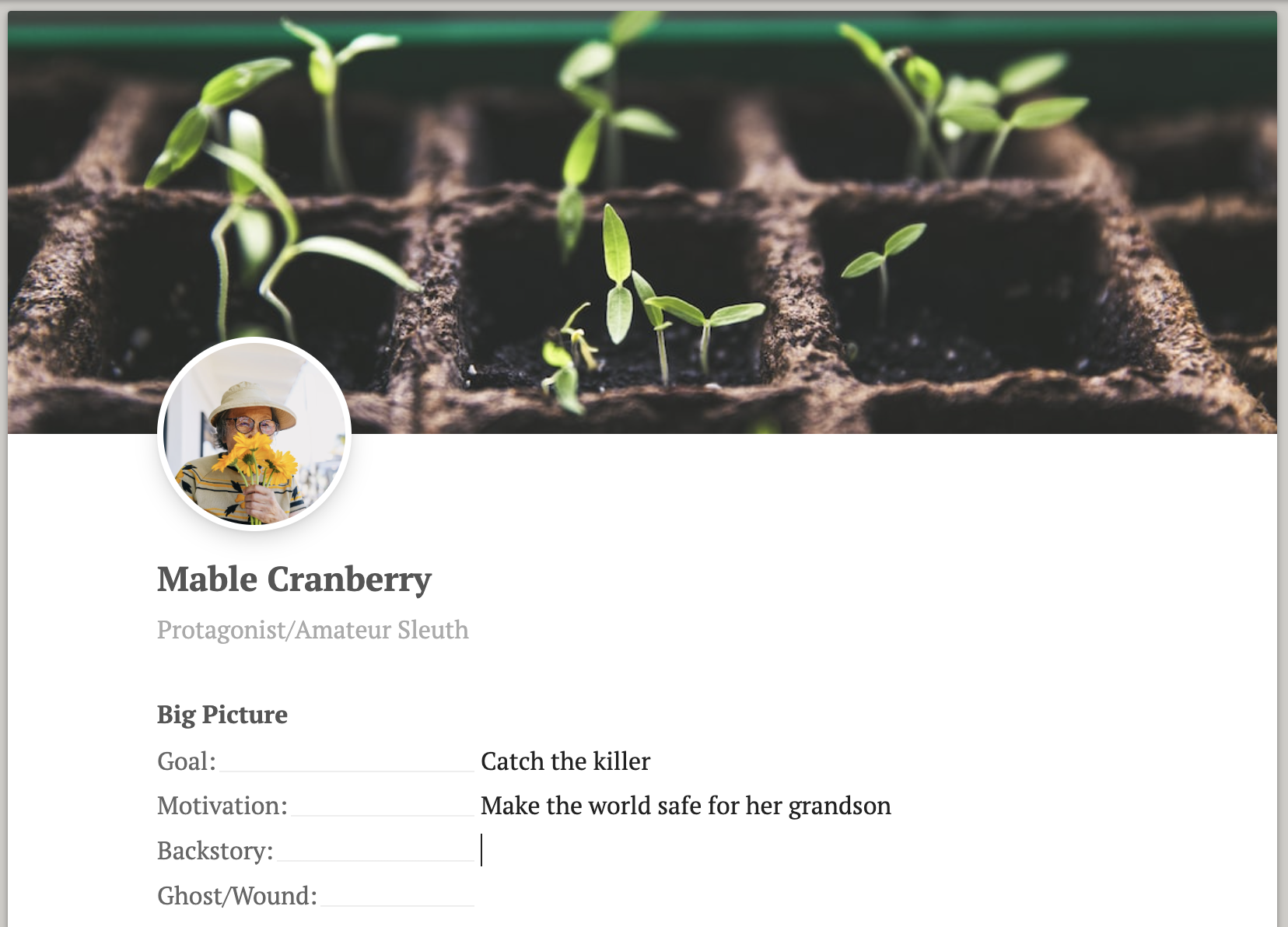
It’s a big job, but Dabble is here to help.
The Dabble writing tool features customizable character profiles that allow you to upload images, create property lists, add notes, and more! These profiles are always a click or two away from your manuscript, so you can easily reference them and update them as you write.
Plus, a Premium subscription to Dabble gives you full access to the DabbleU Academy, an exclusive community with tons of learning opportunities, including our in-depth character development course.
To test drive both the writing tool and the Academy, click here. You’ll get 14 days of access for free, no credit card needed to sign up.
SHARE THIS:


TAKE A BREAK FROM WRITING...
Read. Learn. Create.

What's the difference between direct and indirect characterization? And is one better than the other? Here are the answers you've been looking for.

Always wanted to know the secret to telling a good story? This guide lays it all out for you.

Discover the best writing tools for everything from brainstorming and organizing to drafting, revising, and managing your time.