
The Author’s Guide to Direct vs. Indirect Characterization


Anyone who has ever used a dating app knows the difference between direct and indirect characterization.
When you look at someone’s dating profile, you get direct characterization—explicit statements about their traits and values. “Loves to travel.” “Hard-working single dad.” “Living life to the fullest.”
Scroll through their photos, and you get indirect characterization—details that invite you to draw conclusions about who they are.
In one picture, they’re making a goofy face that assures you they don’t take themselves too seriously. The formalwear photo tells you they clean up nice. The dog pic suggests this might be someone who could introduce you to a dog one day.
When you meet up in person, you get a little more of both indirect and direct characterization. The person sitting across from you straight-up tells you who they are, and meanwhile, you witness further behaviors that give you a better sense of the overall picture. You see the way they treat the waiter, the tone they use when they talk about their mother, the questions they choose to ask you.
All these forms of characterization come together to help you fill in the big picture and see this person as a complete, complex human being you may or may not want to spend more time with.
That is the experience you want to give your reader as they get to know your characters, and that is why we’re gathered together here to discuss direct vs. indirect characterization. You’re about to learn what these two terms mean, see examples of each type in literature, and discover strategies for using them to create a more immersive experience for readers.
.png)
Dabblers might want to follow along with their Character Profiles open in Dabble Writer so they can capture any sparks of inspiration. Non-Dabblers will probably want to snag this free 14-day trial so they can see how cool Dabble Writer is.
And everyone will want to start with a quick primer on the “show, don’t tell” rule, as it’s the key to the difference between direct and indirect characterization.
What Does “Show, Don’t Tell” Mean?

“Show, don’t tell” is probably the number one rule for writing engaging prose. The idea is that your words make a greater impact when you show your reader what’s happening than when you summarize it for them.
For example, this would be telling:
She was irritated.
This would be showing:
She pursed her lips and sighed through her nose.
We’ve got “show, don’t tell” worksheets to help you practice these techniques. If you’re a DabbleU Academy member, we’ve even got a whole self-guided course on this rule.
Telling isn’t always bad. Sometimes it’s more helpful to your reader if you lay it all out directly.
That said, showing is usually better because it allows the reader to experience the story themselves. This style of storytelling engages their senses, emotions, and reasoning as they make sense of a fictional situation the same way they’d navigate real life.
Keep that in mind as we get to this next bit.
What Is the Difference Between Direct and Indirect Characterization?

Direct characterization occurs when an author explicitly describes a character’s personality and state of mind. This is also called explicit characterization, and it looks like this:
Gordy was a kind and patient man.
As you can see, direct characterization is a form of telling. Or, at least, that example was. It is possible to include elements of showing within direct characterization (as we’ll discuss later), but overall, direct characterization is tellier than the indirect approach.
Indirect characterization is when an author demonstrates who a character is through their words, actions, and impact. This is a form of showing, and it looks like this:
When she was finally done screaming at him about the expired coupon, Gordy offered her the receipt. “Those eggs are on the house, Edith,” he said. “I know things have been tough with Louie gone.”
In short, direct characterization:
- Uses clear language that leaves little room for interpretation
- Is quick and to the point
- Defines a character in exact terms
Indirect characterization:
- Asks the reader to infer things about the character
- Is expressed through longer sentences or even entire scenes
- Allows the author to show more nuance within a character
You need both characterization types to convey an engaging character. They’re meant to work together, as each has strengths the other doesn't.
We’ll talk about how to blend them in a bit. First, let’s look at some examples of direct and indirect characterization in literature.
Direct Characterization Examples

As any Anne of Green Gables fan could tell you, Matthew Cuthbert is shy, awkward, and terrified of women. There are several moments throughout the novel when L.M. Montgomery uses indirect characterization to make this point, but when she first introduces Matthew, she’s direct about his phobia:
Matthew dreaded all the women except Marilla and Mrs. Rachel; he had an uncomfortable feeling that the mysterious creatures were secretly laughing at him. He may have been quite right in thinking so, for he was an odd-looking personage, with an ungainly figure and long iron-gray hair that touched his stooping shoulders, and a full, soft brown beard which he had worn ever since he was twenty. In fact, he had looked at twenty very much as he looked at sixty, lacking a little of the grayness.
From this passage, we learn exactly what Matthew thinks and feels, as well as how he is perceived.
Here’s an example from Travels With Charley, where John Steinbeck introduces us to his dog and travel companion:
He was born in Bercy on the outskirts of Paris and trained in France, and while he knows a little poodle-English, he responds quickly only to commands in French. Otherwise he has to translate, and that slows him down. He is a very big poodle, of a color called bleu, and he is blue when he is clean. Charley is a born diplomat. He prefers negotiation to fighting, and properly so, since he is very bad at fighting.
We learn a lot about Charley here, and we don’t have to infer anything. He was born in France and knows French commands better than English ones. He’s big, blue, and avoids conflict. It’s all laid out for us.
Indirect Characterization Examples

So then what does indirect characterization look like?
As we’ll soon discuss, there are several tactics you can use to indicate a character’s feelings or personality without stating them directly. One common strategy is to use the character’s thoughts, as you see in this example from Such a Fun Age by Kiley Reid:
Emira wondered if there was an appropriate amount of support and enthusiasm you needed to have for a friend, because if there was, then Shaunie was hitting her retainer. Every week it was something. Wasn’t it so great that Shaunie got this internship? Wasn’t Shaunie’s new boyfriend so cute? Wasn’t it so nice that we got free drinks from that old guy who loved Shaunie’s smile?
Reid could have just written, “Emira felt jealous of her friend and was tired of celebrating Shaunie’s accomplishments.” That would have gotten the job done a lot quicker. But then we wouldn’t feel her exhaustion and envy the way we do when we get a peek inside Emira’s head.
Through this indirect characterization, we hear the internal rant and feel it gaining momentum as Emira spirals into deeper resentment.
Dialogue is another great tool. Here’s an exchange from Seven Days in June by Tia Williams:
“Who let that bleached peasant in here?” Cece was the queen of policing women who had her hairdo. Which was half of Brooklyn. “Is she wearing Walmart denim?”
“Have you ever been in a Walmart?” asked Eva.
“Physically, yes. Spiritually, no.”
In this quick exchange, we see how highly Cece values her own image and how judgy she is about the fashion choices of others.
I’d also like to point out that neither Cece nor Eva directly characterize Cece within their dialogue. Williams resists any impulse to write, “You’re so bougie you’ve probably never even been in a Walmart.” Instead, she allows the reader to read the subtext beneath Eva’s question, and the result is a conversation that feels much more realistic.
I’m not saying you can never have a character explicitly describe another (or themselves) in dialogue. Sometimes that’s the right move. But it can also be a crutch for a writer who can’t come up with another method of indirect characterization.
That won’t be you, though. You’re about to learn all the methods.
When to Use Direct Characterization

As I mentioned at the beginning of this article, you need both direct and indirect characterization to craft a well-rounded and engaging character. But how do you know when to use which one?
I’m about to give you some general guidance, but this is mostly to highlight the strengths of each type of characterization. There are no official rules; it ultimately comes down to your own judgment.
Here are the situations where authors are most likely to be direct:
Introducing a Character
You’ll typically want a blend of direct and indirect characterization when your reader first meets a character, but this is one area where direct characterization shines. Direct characterization establishes the major strokes of your character’s identity quickly, so readers are able to immediately picture them and understand any conflicts that arise.
Getting to the Point
Sometimes you just need to communicate a detail and move on with the story.
Maybe your readers need to know that your protagonist loves hammerhead sharks, and it would be a waste of ink to describe the hammerhead shark calendar hanging in their kitchen or orchestrate a whole dialogue that only exists to explain your character’s passion.
Creating Emphasis
We usually turn to indirect characterization for emotional impact. However, there are moments when a direct statement can pack a punch, especially if you haven’t been overdoing explicit characterization.
For example:
The glass door was shattered, the flower pots overturned, the prize-winning goldfish missing from its bowl. Alice was done playing the peacemaker.
The last sentence tells us exactly where Alice’s head is, and the directness and brevity of that statement actually helps us feel the immediacy of her decision.
Delivering Crucial Details
Some character details are too important to hint at. If you need to make sure your reader fully comprehends a key aspect of your character, you’ll want to state it explicitly.
You can (and probably should) still support your direct characterization with behaviors and dialogue that back it up. But stating it outright will help guide their interpretation of those less direct examples.
Strategies for Direct Characterization
So how does one characterize directly like a pro?
Let’s discuss.
Have a Good Reason for Being Direct
Remember the “show, don’t tell” rule. Direct characterization is mostly a form of telling, and telling isn’t bad, but showing is generally stronger. So if you’re going to tell, know why it’s actually the preferred strategy.
Fortunately, we just discussed a bunch of good reasons for using direct characterization, so that gives you something to consider when you make these decisions.
Be Specific
Remember the passage describing Matthew from Anne of Green Gables? Instead of simply saying, “Women made Matthew nervous,” the author writes this:
Matthew dreaded all the women except Marilla and Mrs. Rachel; he had an uncomfortable feeling that the mysterious creatures were secretly laughing at him.
She’s explicitly stating how Matthew feels, but she offers a specific picture of what he fears, which allows us to imagine him and his hang-ups with greater clarity.
Use Descriptive Language
Along similar lines, don’t hesitate to bring sensory details into your direct descriptions, like this:
Annette found comfort in organization—her sweaters folded and stacked like a pastel rainbow in her closet, the fringe of color-coded datebook tabs under her fingertips.
This is a way to bring a little bit of showing into all that telling. We know that order is soothing to Annette, and now we’re also imagining how that comfort shows up in her life.
When to Use Indirect Characterization

There are many, many times when indirect characterization is the right call. So I hope you’re ready for some very general guidelines. There’s just no other way to cover all this ground.
Let’s get into it.
Demonstrating Nuance
Human beings are complicated. If I asked you to tell me what your best friend was like, you could provide some fairly accurate statements, but you’d probably be left feeling like you hadn’t painted the full picture.
People have to be experienced to be known. The little habits, the way they speak, the way they move, the contradictions in their behavior… it all reflects the web of life experience, values, and personality traits that make a person unique.
Through indirect characterization, you can show that bigger picture, making it the ideal tool when a simple summary isn’t enough.
Engaging the Reader
This is what I meant when I said we’d be covering a lot of ground with these guidelines. When do you not want to engage the reader?
But that’s kind of the point. Direct characterization is great for communicating your character’s traits quickly and clearly. Once you’ve done that, however, you want to spend more time on the indirect stuff, because that’s how you draw them into your character’s orbit and show them what it’s like to be around those qualities… maybe even show them how it feels to be that character.
Indirect characterization also encourages the reader to engage with your fictional beings the same way they’d engage with real beings. They have to draw their own conclusions about who these people are, putting the pieces together gradually as they witness their behavior.
Showing Growth
Many of your characters will evolve over the course of your story, and indirect characterization is a great tool for demonstrating that growth.
Sure, you could say, “Ethan was developing a soft spot for the orphan toad living under his front stoop.” But it’s way more fun for your readers to see that arc as Ethan puts out a tiny dish of water for the toad in Chapter Six, then builds the toad its own little toad motel in Chapter Fourteen.
Strategies for Indirect Characterization
Now for the big question: How do you describe someone without describing them?
Use the STEAL Method
This is actually like a billion little tips in one. STEAL stands for Speech, Thoughts, Effect, Actions, and Looks. Here’s what that means:
Speech
Dialogue is an excellent form of characterization. Almost everything we say reflects who we are, and the same is true for your fictional people. That includes not just the content of your character’s dialogue, but also the way they say the things they say.
How is their personality present in the words they choose? Do they use any colloquialisms that indicate how old they are or where they’re from? How does their tone reflect their attitude?
Developing clear character voices is an essential step in mastering indirect characterization.
Explore It: An Utterly Electrifying Guide to Finding a Character’s Voice
Practice It: Just as an exercise, pick a character from your work in progress and rewrite the scene where you introduce them using only dialogue. How do you use their speech to create a sense of who they are?
Thoughts
Remember the example from Such a Fun Age where Emira is wondering how much she should have to celebrate her friend’s many, many wins? That’s an example of using a character’s thoughts to reveal their traits, feelings, or perspective.
Explore It: Ever Wonder How to Write a Character’s Thoughts?
Practice It: Write a conflict scene through one character’s perspective. Let their state of mind and personality traits come through in the way they think about the situation.
Effect
This is often used to refer to the effect a character has on the people around them. How do other people talk about them? How do they behave around them? How do other characters feel when this character enters the room?
Even if you’re writing from a point of view that doesn’t allow you to dig into the minds of other characters, you can still reveal a lot just by showing how someone stiffens when your villain protagonist approaches them.
You might also consider your character’s effect on their world. How have they decorated their home? What kind of car do they drive? What’s the condition of their garden? These are more clues for your reader to gather as they assemble the bigger picture of your character.
Practice It: Revise a scene you’ve already written, adding at least three details that show a character’s impact on other people or the world around them.
Actions
This one is huge. What does your character actually do?
Consider all of it, from the little mannerisms that reflect their background or mental state to the major decisions that someone would only make if they were terrified of rejection or madly in love or weirdly obsessed with one specific whale.
This is also a great way to show the lasting impact of your character’s backstory. How have the things they’ve been through influenced the way they navigate life?
Explore It: Types of Character Motivation: What Gets Them Out of Bed?
Practice It: Wherever you are in your project, brainstorm a list of all the possible actions your character could take next. Review each one through the eyes of a reader. What would you assume about the character if they made that choice?
Looks
Wrapping up the STEAL Method, even your character’s appearance can serve as a form of indirect characterization. How do they dress and carry themselves? How does their style reflect their personality? What can we assume about the fact that they never remove that necklace or wear the same outfit every day?
There’s often a lot of symbolism in the way we present ourselves, intentional or not. (More on that in the next tip.)
Explore It: Eyes, Ears, Mouth, and Nose: Character Descriptions for Your Novel
Practice It: Write a super detailed physical description of your character. Then review the description and highlight any characteristics that feel especially reflective of who they are. These are probably the details you want to focus on in your novel.
Use Literary Devices
Symbols. Metaphors. Flashbacks. There are all kinds of fancy storytelling tricks out there that can help you peel back the deeper layers of a character.
Let’s say your protagonist is far from home, and she always wears a necklace her mother gave her as a reminder of where she comes from. Then, over the course of the story, she begins to shift away from the values or beliefs she was raised with. You might show her deciding not to put the necklace on one day or carelessly forgetting it somewhere.
This use of symbolism shows an internal shift in your character, and you haven’t explained a thing. Neat, right?
And if you’ve already done a bunch of work to create a nuanced portrait of this fictional person through a blending of direct and indirect characterization, your reader’s gonna feel it when they see that necklace abandoned.
That’s the main thing to remember here. It’s not about any one character description. It’s about a thousand little statements and images that work together to reveal a full person.
That’s how it happens in real life, and that’s how you recreate real life on the page.
Build the Ultimate Character Profile
One final hint before I leave you to your writing: Great characterization begins with great character development.
We’ve got tons of resources to help you with that, like this character development worksheet, this character template, and a whole heap of character ideas to inspire your process.
But my favorite resource of all is Dabble Writer.
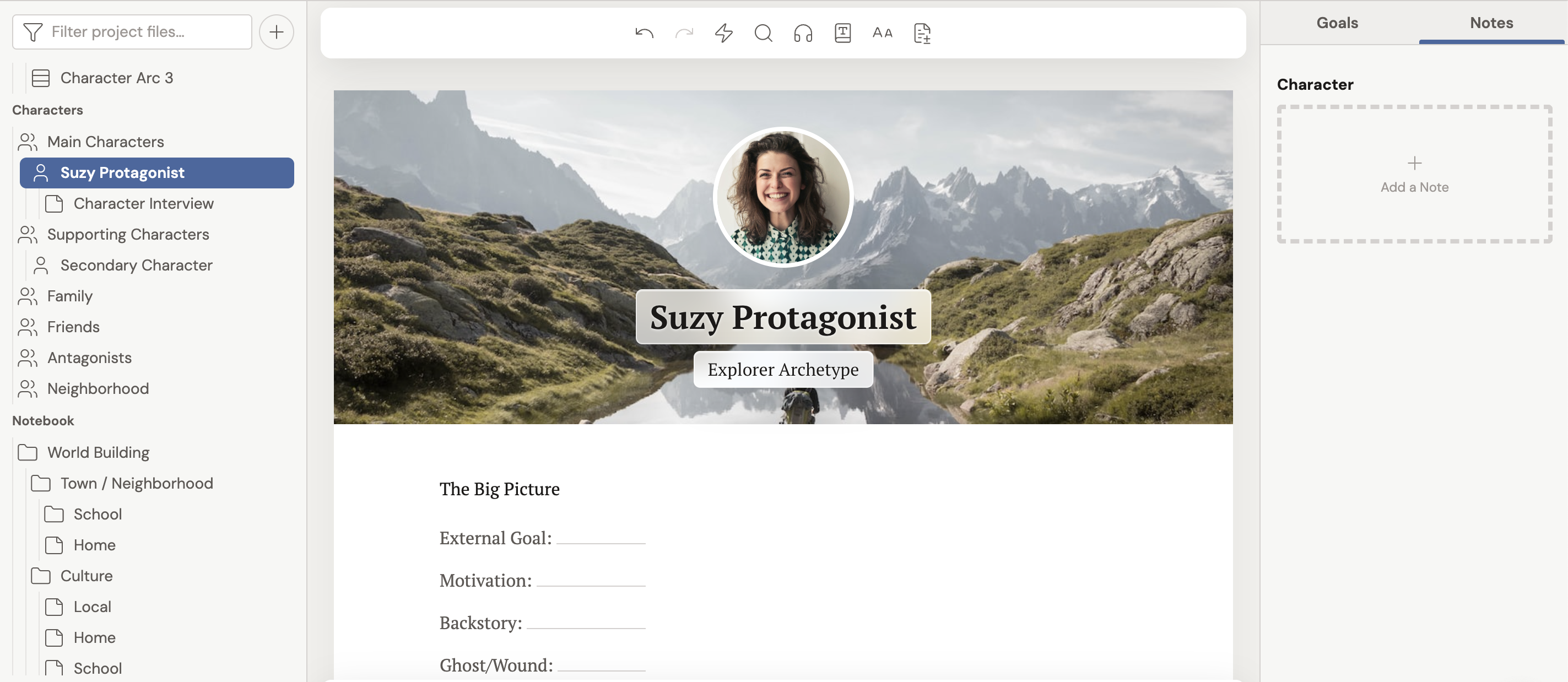
Create fully customized Character Profiles. Organize your characters into Casts. Track character arcs in the Plot Grid, and have your notes about their arcs at hand while you write each scene so you can be sure to show their growth.
If you’re not already a Dabbler, click this link to try Dabble Writer for free for 14 days. That even gets you two weeks of access to the exclusive DabbleU Academy, where you can join in on live workshops, get feedback on your work, and even follow an entire curriculum dedicated to character development.
Whatever you do, start practicing the skills you learned today as soon as possible. The more you write, the better you write.
SHARE THIS:


TAKE A BREAK FROM WRITING...
Read. Learn. Create.
What's the difference between direct and indirect characterization? And is one better than the other? Here are the answers you've been looking for.

Always wanted to know the secret to telling a good story? This guide lays it all out for you.

Discover the best writing tools for everything from brainstorming and organizing to drafting, revising, and managing your time.