
The Essential Literary Devices List for Legit Writers

You’re not messing around. You love stories, you love writing, and you want to make every tale you tell the best it can be. Literary devices can help.
Literary devices are those fun little tools like metaphors and irony that make a sentence more engaging, make a conflict more compelling, and transform your words into emotional confetti bombs.
And boy howdy, are there a lot of them.
You’re about to unlock an enormous toolbox that will equip you with the best devices in the craft. This article is more than a glossary of literary terms. (We already have one of those.) You won’t just learn definitions and see examples. You’ll discover what these literary techniques can do to make your writing better.
And since you’re serious about the craft, why not join us in DabbleU Campus? It’s a free online community full of friendly writers like you. We’ve got free resources, fun challenges, group word sprints, and more!
Now let’s get to learnin’ some devices.
What Is a Literary Device?
A literary device is a technique a writer uses to convey deeper meaning, engage the reader’s senses, or enhance the reader’s emotional connection to a literary work.
Pretty wide-reaching definition, right? That’s because there are many literary devices out there, and each one has its own little trick for enriching the reading experience.
Metaphors conjure vivid images or give symbolic weight to a moment. Foreshadowing creates suspense. Parallelism makes powerful points easier to digest and remember.
Some literary devices help you tell a more compelling story. Others help you write prose that resonates. We’ll explore both in this article.
What Are Some Common Literary Devices?

We’ve got a long literary devices list coming up, so you’ll probably run into some terms you haven’t heard before. But just to prove that you’re already more familiar with these tools than you might realize, here are some common literary devices:
Foreshadowing - This is that thing where you, the author, hint at future events, like when the thunder rolls just as a stranger enters the room, signaling that this character will bring trouble.
Hyperbole - Exaggeration to make a point. If you were narrating through a specific character’s point of view, you might say something like, “I could write today, but then I’d have to remove the cobwebs from my keyboard.” This hyperbole tells us the character hasn’t written in a while, they’ve got some dark feelings about that, and those feelings make it even harder to get started.
Not that anyone here knows anything about that.
Metaphor - A metaphor is when you compare two unlike things by acting like they’re the same. “The narrow path was a gnarled finger pointing the way into the forest.” Metaphors are great for writing more vivid descriptions and giving deeper meaning to the superficial details of a scene.
Personification - When you personify something, you give human characteristics to non-human entities, like that time the groomer referred to my dog as “very talkative.” You can use this device to create more vivid descriptions or set the tone.
Symbol - A symbol is a person, object, or concept that represents something deeper. Strategic use of a symbol can stir your readers' emotions more effectively than spelling things out. Think about how we instantly understand that the threat Buzz poses to Woody’s relationship with Andy when we see Andy’s name written on Buzz’s foot in newer ink and better penmanship
What’s the Difference Between Literary and Rhetorical Devices?
The term “literary device” has several synonyms, like literary technique or stylistic device.
You may also hear the term “rhetorical device” used interchangeably with literary device. They’re not quite the same thing, but they do overlap. In fact, rhetorical devices are like a subcategory of literary devices.
While a literary device is a tool for more impactful writing and storytelling, a rhetorical device is specifically geared toward making a compelling argument. It appeals to the reader’s emotions or reasoning in an effort to persuade them to embrace a perspective or take a specific action.
All rhetorical devices are literary devices, but not all literary devices are rhetorical devices.
When Should You Use Literary Devices?

There is no official rule as to how frequently you should use devices or whether certain devices should be used more than others. The only thing that matters is that you use them when they’ll be most impactful.
The entire point of a literary device is to strengthen your story and prose. If you can clarify the emotional undertones of a moment or immerse your reader in the world of your novel by using a specific device, use it.
What you don’t want to do is force a metaphor because you feel like you should have one or just thought of a really clever one. As with every other element of your story, your literary devices should serve your storytelling, not the other way around.
There’s such a thing as overusing literary devices, too. Hyperbole doesn’t work if every other statement is hyperbolic.
In the two lists of devices below, I’ll explain how each tool can strengthen your narrative or prose. Use that information to determine how and when to use them.
16 Literary Devices for Stronger Story Development
The literary devices in this list all exist to enhance your story. They do cool things like draw out your theme, reveal the many layers of your characters, tap into relatable human experiences, and more.
Some of these devices exist in every story. Others only appear on an as-needed basis. I’ll give you a heads-up about any tools you should absolutely incorporate into your own novel.
Allegory

What It Is: An allegory is a narrative that represents something else (often a real event, society, or philosophical perspective) through symbolic characters and actions.
What It Does: Allegories generally strive to make a point of some kind. By discussing the event or topic using fictional characters rather than real ones, the author makes it easier for readers to set pre-existing beliefs aside and explore an alternative point of view.
Example: George Orwell’s Animal Farm is a political allegory critiquing Soviet Communism.
Does Every Story Need This? Nope.
Archetype
What It Is: An archetype is a familiar pattern that repeats in stories across time and throughout history because it reflects a universal human experience.
An archetype can be anything from a symbol you’ve seen a million times (like the mysterious forest where the main character confronts their inner demons) to a whole entire character, like the Jester who takes nothing seriously but sees the situation more clearly than anyone else.
What It Does: Archetypes are great because their familiarity resonates with readers, but they’re still flexible enough for you to make them your own. You can use archetypes to key into your characters’ humanity and their universal struggles while still telling a story that feels unique.
Example: The Hero’s Journey is an archetypal story structure that explores the experience of leaving one’s comfort zone to face challenges that cause a character to return home forever changed.
Does Every Story Need This? It’s less about need and more about inevitability. Archetypes are so familiar to us that you’re likely to include them in your story even if you don’t mean to. Get to know them better so you can be more deliberate in your use of them.
Learn More: What Exactly is an Archetype in Literature? (This one also explains how an archetype is different from tropes and clichés), 14 Common Character Archetypes You Should Know (complete with links to deeper articles about each character archetype)
Dramatic Irony
What It Is: Dramatic irony is a plot device in which the reader knows something important that the character does not.
What It Does: This can be a great tool for creating suspense, because it forces the reader to watch the character walk into dangerous or humiliating circumstances. It can also be a source of comedy, in which case it’s known as comic irony.
Example: Much of the suspense (and some of the comedy) in The Truman Show comes from the audience waiting to see when Truman will learn what we know: That his whole life is a production watched by people all over the world.
Does Every Story Need This? No. In fact, it’s not an option if you’re telling a story through one specific character’s point of view because, in that situation, your audience can only know what the character knows. But don’t worry—that limitation creates its own kind of suspense.
Learn More: The Delightfully Unbearable Suspense of Dramatic Irony
Ellipsis
What It Is: You may be aware of the punctuation version of ellipsis—the dot-dot-dot that indicates a speaker trailing off or that words have been removed from a quote.
But there’s actually a whole other definition: the literary device definition. An ellipsis occurs when an author skips ahead in the timeline, leaving the reader to make their own assumptions about what happened during the gap.
What It Does: Sometimes an ellipsis creates a sense of mystery or suspense. It can also invite more reader engagement by forcing them to put the pieces together through clues in follow-up scenes.
In most cases, however, an ellipsis simply keeps the story moving. As an author, you’ve got to cut anything that’s irrelevant or repetitive, and that means occasionally skipping forward through time.
Example: The novel One Day is one big ellipsis after another, with the story revisiting the characters on July 15th of every year for twenty years. This allows the reader to experience the growing complexities of a long-term friendship/love story without dragging us through the complete details of two whole decades.
Does Every Story Need This? Yes, to some degree.
Flashback
What It Is: A flashback is when you interrupt the story's current timeline to show the reader a scene from the past. The “show the reader a scene” part of this definition is important. It’s not a flashback if you simply tell the reader that something happened to the character once.
What It Does: Flashbacks are primarily a “show, don’t tell” tool for exposition, meaning that they allow the reader to witness important past events rather than just hearing about them in narration. This can be a great way to deepen the reader’s understanding of what’s going on in the current timeline, whether this backstory clarifies a character’s motivations or demonstrates that the stakes are higher than the reader realized.
That said, you don’t always need to use a flashback to accomplish those things, and sometimes this literary device can interrupt the pace or confuse the audience.
Example: A Man Called Ove features multiple flashbacks of Ove’s courtship and marriage. These glimpses into the past clarify what he’s lost and the depth of his grief in the current timeline.
Does Every Story Need This? No.
Learn More: How to Write a Flashback (And When You Shouldn’t), Flashback and Foreshadowing Techniques for Clever Writers
Flashforward
What It Is: A flashforward interrupts a story’s chronology to give readers a glimpse of a moment in the distant future before returning to the story’s present. This can occur as a result of a character having a vision of the future, or it can simply be the narrator choosing to offer a peek at what lies ahead.
What It Does: A flashforward often sparks curiosity or creates a sense of suspense, like when an author opens a story with a glimpse of the climax before returning to the current timeline to show the reader how the protagonist gets themselves into such a pickle.
It can also be used to emphasize a particular point or theme, like in the example below.
Example: In A Christmas Carol, the Ghost of Christmas Future gives Ebenezer Scrooge a glimpse of the grim future waiting for him if he doesn’t change his ways.
Does Every Story Need This? Definitely not.
Foil
What It Is: A foil is a character deliberately created to highlight the traits of another character (often the protagonist) by embodying opposite qualities, behaviors, or beliefs.
What It Does: By creating a clear contrast, a foil character draws attention to another character’s strengths or weaknesses.
They often invite the reader (and protagonist) to explore major themes, too. While the main character views the world one way or enters the conflict under a certain set of circumstances, a foil is likely to embody an opposite perspective or experience. These differences inevitably raise questions about truth and relativity, and you can address those questions through each character’s choices and the consequences of those choices.
Example: In Black Panther, Killmonger is a foil for T’Challa. Both characters have endured tremendous loss and are fiercely protective of their community. But T’Challa grew up surrounded by the direct support of that community, while Killmonger was forced to fend for himself in a dangerous world.
In response to his experiences, Killmonger has decided that violence is the best way to fight for his people, while T’Challa opts for isolation.
Does Every Story Need This? I suppose not technically, but it’s such a strong and reliable tool, it’s hard to find a story without a foil character.
Learn More: What’s the Point of a Foil Character in Literature?
Foreshadowing
What It Is: Foreshadowing happens when you hint at future events in your story. You can do this through the use of symbols, like storm clouds gathering overhead. You can do it through dialogue, like when a character says, “Don’t go near the river after dark.”
You can even be more direct about it in your narration with lines like, “She didn’t bother hugging him goodbye because she was under the mistaken impression she’d see him tomorrow.”
What It Does: Foreshadowing builds suspense and heightens the reader’s emotional involvement in the story.
Example: Shakespeare loves foreshadowing Romeo and Juliet’s tragic deaths by giving them super dramatic lines like, “Life were better ended by their hate, Than death prorogued, wanting of thy love” and “If he be married, My grave is like to be my wedding bed.”
Does Every Story Need This? It’s a good idea to include at least light foreshadowing.
Learn More: Flashback and Foreshadowing Techniques for Clever Writers
Frame Story
What It Is: The term frame story refers to a narrative where a story is told within the context of another story.
What It Does: Many frame stories demonstrate the larger impact of the internal story, as they’re often told by someone who was either involved or was an invested witness. They can also demonstrate the power of the internal story by showing its effect on the listener (though it’s important not to be too heavy-handed about it).
Example: Fried Green Tomatoes at the Whistle Stop Café is about an unfulfilled housewife, Evelyn, who meets Ninny, a nursing home resident with a long story to tell. Ninny tells Evelyn the tale of two women from her past who brazenly lived their lives together on their own terms. The story inspires major changes in Evelyn’s life.
Does Every Story Need This? No.
Mood
What It Is: The overall atmosphere or emotional tone of your story is its mood. You might describe it using words like “romantic,” “thrilling,” or “suffocating.” Authors create a mood through scene descriptions, the rhythm of their prose, and the content of the story.
What It Does: The mood directs your reader’s emotional experience of the book.
Example: The Little Prince has a whimsical mood, thanks to the unusual storyline, the Little Prince’s childlike-but-profound philosophies, and the playful turns of phrase.
Does Every Story Need This? Hard yes.
Motif

What It Is: A motif is a recurring image, idea, or element that supports a story’s theme or journey.
What It Does: A motif directs the reader’s attention toward your story’s emotional weight or underlying message without pointing it out directly.
Example: Correspondence is a motif in Red, White, and Royal Blue, beginning with text messages between Alex and Henry, advancing to increasingly romantic emails and the inclusion of real historical correspondence between famous figures and their secret lovers.
This motif gives Alex and Henry’s relationship a deeper context, placing them in a long line of public figures who had to hide their love from the light and adding weight to the dilemma of whether to be open about their romance.
Does Every Story Need This? The best stories have some kind of motif, but don’t let it stress you out on your first draft. This is one of those things that often emerges naturally.
Learn More: Motif vs. Symbol: The Duo of Deeper Meaning
Narrative Voice
What It Is: Narrative voice refers to the personality of your narrator (even if it’s an unnamed omniscient third party) as it shows up through their diction, rhythm, and tone.
What It Does: A strong narrative voice engages the reader from the very first page. It gives them the feeling that a real “someone” is telling them a story, and it promises that this tale will be told in an entertaining way.
Example: The nameless, third-person omniscient narrator of Anne of Green Gables reflects the sensibilities of the title character with an effusive and humorous voice.
Does Every Story Need This? Definitely.
Learn More: The Difference Between Voice and Point of View, An Utterly Electrifying Guide to Finding a Character’s Voice
Parody
What It Is: A parody is a work that pokes fun at another work or genre by imitating and exaggerating its characteristics.
What It Does: Parody can be used to criticize existing work, but it’s more often a playful homage. Whether your entire story is a parody or you simply write a character or scene that parodies something else, this style of comedy can connect you to your readers by acknowledging that you’re with them in the fandom.
And if they understand what you’re referencing, that makes them insiders.
Example: Futurama is loaded with science fiction parodies, from Star Trek-inspired characters to a ton of Twilight Zone spoofs.
Does Every Story Need This? Nah.
Learn More: How to Write Comedy as a Fiction Writer Afraid of Flopping
Point of View

What It Is: Point of view (POV) refers to the perspective through which your story is told. The most common points of view in fiction include:
- First person - The narrator uses first-person pronouns (I/me) and tells the story through their perspective only. They don’t have to be a character in the story, but they usually are.
- Third-person omniscient - The narrator is a nameless entity who only uses third-person pronouns (he/she/they). They are able to share the perspectives of multiple characters.
- Third-person limited - Once again, this is a nameless entity who speaks in third-person. However, they tell the story through the perspective of a single character at a time.
Less common POVs include second person (the narrator uses the pronoun “you” as if the reader is the protagonist) and first-person omniscient (the character narrating is an omniscient being who uses first-person pronouns but can also tell you what other characters are thinking).
What It Does: Point of view has a huge impact on how the reader experiences the story, from how intimate the storytelling feels to how much bias is baked into the narrative. You can click the links above for more specifics.
Does Every Story Need This? Yep.
Example: The Hate U Give is written in first person, from the perspective of the protagonist, Starr.
Learn More: Finding Your Narrative Point of View, What POV is Best for Your Novel?
Situational Irony
What It Is: Situational irony is when the outcome of a situation is the opposite of what was expected. Under the heading of situational irony, we also have cosmic irony, which is when that shocking outcome was orchestrated by a higher power, like a deity or destiny.
What It Does: The most obvious benefit of situational irony is that it often provides a shocking twist. (Though, to be clear, the twist only works if it makes sense in retrospect.) It can also be a powerful tool for character development, as it forces characters to face the limits of their own control.
Example: One of the most famous examples of situational irony (also cosmic irony, btw) is Oedipus Rex, in which Oedipus kills his father and marries his mother even when he actively tries not to.
Does Every Story Need This? No.
Learn More: What’s the Sitch With Situational Irony?
Symbolism
What It Is: In symbolism, an object, person, or concept represents a more abstract idea, like a theme or feeling.
What It Does: Well-crafted symbols pack an emotional punch. They allow us to say a lot with very few words, and stir our reader’s feelings through an image or sensory experience, which is usually more effective than a chunk of emotionally loaded prose.
Example: In the movie Up, Carl’s house represents the life he had with Ellie and the dreams they shared. When he leaves the house at Paradise Falls at the end of the movie, we understand that he’s choosing to let go of the past and discover the adventures that lie ahead.
This is way more effective than having Carl make a speech about it, because by this point in the movie, the house isn’t just a house to us. It represents an entire marriage (which we saw played out in a beautiful and devastating montage) and it’s the enormous burden Carl has literally been dragging behind him.
Does Every Story Need This? Yes, but like motifs, symbols often emerge naturally. Don’t overthink this on your first draft. Notice what symbols show up in your story, then consider how you can use them most effectively.
Learn More: Motif vs. Symbol: The Duo of Deeper Meaning
44 Literary Devices for Stronger Prose

In this list, we dive into the devices that help you control the way your reader experiences your story. These literary techniques allow you to emphasize specific points, paint a vivid picture, and create a musicality with your words that ripples through your reader’s heart.
Now, you’re about to see a bunch of big, crazy words that feel like a lot to remember. Between you and me, you don’t have to remember them. In fact, I’ll do you a solid and put an asterisk by the words people expect writers to know.
For all the others, it’s way more important to remember what the device does than what it’s called. (Plus you can totally bookmark this article to come back whenever you want to reference any of these devices.)
*Alliteration
What It Is: Alliteration is when closely connected words start with the same sound.
What It Does: Alliteration can make a sentence or phrase more memorable by creating a sense of rhythm or drawing attention to specific words. Use it carefully, though—alliteration can sometimes come off as winky or needlessly clever.
Example: “The breeze blew briskly, bringing with it the scent of decay.” –Dracula
Learn More: Wield Words as Weapons: The Power of Alliteration
*Allusion
What It Is: An allusion is a direct or indirect reference to a real, well-known person, place, thing, or idea, with the expectation that the reader will recognize the reference and understand the underlying meaning.
This is different from merely mentioning something or someone famous. In an allusion, you’re using the reference to describe or clarify something else.
What It Does: An allusion serves as a cultural shorthand. If someone referred to their favorite vacation spot as their personal Garden of Eden, you’d instantly understand that it’s a place of peace and perfection.
Example: If you say something is your “Achilles’ heel,” you’re alluding to Achilles in Greek mythology and his one famous weakness.
Anadiplosis
What It Is: When you repeat the last word of a sentence or clause at the beginning of the next sentence or clause, that’s anadiplosis.
What It Does: This device can create rhythm, emphasize an important concept, and/or demonstrate the speaker or writer’s flow of logic.
Example: “My mother used to read me a bedtime story—a bedtime story that defined the way I think about good and evil.”
*Analogy
What It Is: An analogy draws a direct comparison between two things.
What It Does: The point of an analogy is to deepen the reader’s understanding of one or both of the things being compared.
Example: “Losing him was like losing a hand. I’d learn to function without him, but it’d be quite some time before I stopped thinking about his absence.”
Anaphora
What It Is: Anaphora occurs when you repeat the same word or phrase at the beginning of adjacent sentences.
What It Does: You can use anaphora to create emphasis, expand on a feeling, or build to a crescendo.
Example: “I love that you get cold when it's seventy-one degrees out. I love that it takes you an hour and a half to order a sandwich. I love that you get a little crinkle above your nose when you're looking at me like I'm nuts. I love that after I spend a day with you I can still smell your perfume on my clothes, and I love that you are the last person I want to talk to before I go to sleep at night.” –When Harry Met Sally
Anthimeria
What It Is: I love this one. Anthimeria is when you take a word that functions as one part of speech and use it as a different part of speech, like treating a noun as a verb or vice versa.
What It Does: This is a playful use of language that is sometimes used to create more vivid or specific descriptions.
Example: “She just high-heeled in here with all these demands.”
Antimetabole
What It Is: Antimetabole is when you immediately repeat a phrase in reverse order.
What It Does: This literary device usually flips a concept on its head to give the reader or listener a new perspective on it. It can also just be a playful, eye-catching way of making a point.
Example: “Are you living to work or working to live?”
Antistrophe
What It Is: Antistrophe refers to the repetition of a word or phrase at the end of consecutive phrases or sentences.
What It Does: Like anaphora, antistrophe emphasizes an idea, expands on a feeling, or builds to a crescendo.
Example: “You don’t want the truth because deep down in places you don’t talk about at parties, you want me on that wall—you need me on that wall.” –A Few Good Men
Apophasis
What It Is: Apophasis is a super-specific and potentially obnoxious rhetorical device in which one talks about something by claiming they’re not talking about it.
What It Does: Depending on how and when it’s used, apophasis can reveal one’s attitude about something or (in character dialogue) signal a passive-aggressive nature.
Example: “Please, make yourself at home, and don’t worry, I won’t ask why you were twenty minutes late.”
*Apostrophe
What It Is: As a literary device (as opposed to punctuation), an apostrophe is when someone addresses someone or something that is either imaginary or not present.
What It Does: This is often used as a device for ruminating on a theme or topic. The topic may or may not be the person or thing being addressed.
Example: A sailor caught in a storm says, “Hey, you wanna chill a little, Poseidon?”
*Assonance
What It Is: Assonance is the repetition of the same vowel sound among consecutive or closely connected words.
What It Does: Like alliteration, assonance can give your words a musical or rhythmic effect and even create a sense of tone depending on the vowel sound you use.
Example: “God only knows he's grown farther from home, he's no father / He goes home and barely knows his own daughter / But hold your nose 'cause here goes the cold water.” –“Lose Yourself”
Asyndeton
What It Is: Asyndeton is when you omit an expected conjunction from a sentence.
What It Does: Asyndeton can have a dramatic effect by disrupting the reader's or listener’s expectations. It can also be used to convey a more casual tone that ignores the rules of sentence structure.
Example: “I repainted the kitchen, replaced the cabinets, tore out the old linoleum. You didn’t even notice.”
Bathos
What It Is: Bathos occurs when a sentence abruptly switches from serious to trivial or comedic.
What It Does: This device takes your reader by surprise, which is what all good comedy does. It can also cause them to see the topic in a new light.
Example: “I only ever asked you for two things: Always be honest with me and never honk just because a bumper sticker told you to.”
*Colloquialism
What It Is: A colloquialism is an informal word or phrase that reflects how people speak in casual conversation.
What It Does: In narration, colloquialisms give your novel a more casual tone and create the sense that a friend is sharing a story. In dialogue, this device can be used to make your character’s speech feel more realistic and can hint at a character’s background or personality, depending on the colloquialisms you use.
Slang also falls under this category and can help you establish the place and time in which your story takes place. Just keep in mind that it can also date your novel, if that's something you're concerned about.
Example: “Y’all,” “what’s up?”, and “go nuts” are all colloquialisms.
Learn More: Character Diction: The Writer’s Secret for Stellar Dialogue
*Connotation
What It Is: Connotation refers to a word’s implied meaning beyond its literal meaning.
What It Does: When you choose connotative words, you create a clearer sense of tone and subtext. You also have a better shot at crafting prose that moves your reader.
Example: If someone says they’re going to rest, they’re literally going to sit or lie down, but the implied meaning of the word “rest”—the connotation—is that they’re going to temporarily release their burdens, find peace, and recharge.
*Consonance
What It Is: Consonance is the repetition of the same consonant sound among consecutive or closely connected words. Like what I just did.
What It Does: Like alliteration and assonance, consonance can give your words a sense of rhythm and musicality, as well as contribute to tone.
Example: “Best believe somebody's payin' the Pied Piper.” –“Lose Yourself”
*Denotation
What It Is: Denotation refers to a word’s literal meaning. Denotative words are emotionally neutral words that readers are unlikely to associate with abstract messaging.
What It Does: Denotation comes in handy when you need your reader to focus on the literal meaning of your words. Denotative words tend to be the preference for technical writing. You can also use them in dialogue for a character who sees things in black and white.
Example: While “home” is connotative, “house” and “building” are denotative.
*Double Entendre
What It Is: A double entendre is a play on words in which a word or phrase can have two different meanings. One meaning is straightforward, while the other is usually offensive or risqué.
What It Does: It’s playful, winky, and sometimes reveals where a character’s head is.
Example: “I’m just up here at Oxford brushing up on a little Danish.” –James Bond in bed with a Danish professor
Dysphemism
What It Is: A synonym for a word or phrase that is intended to be harsher than the term it replaces.
What It Does: Dysphemisms are often used to convey a negative tone, whether it’s dry, snarky, pessimistic, or cruel. They can also be used to convey an irreverent or casual tone, particularly if the term is a familiar one that has lost its bite through repetition, like “kicked the bucket” or “use the can.”
Example: “Suit” is a dysphemism for a corporate executive.
Learn More: A Bunch of Euphemism Examples and How They Help Your Writing
*Euphemism
What It Is: A synonym intended to soften the more challenging or offensive term it replaces.
What It Does: A euphemism has all kinds of uses. It can soften a blow, stir emotions, manipulate perception, or avoid the awkwardness of discussing delicate or sensitive topics directly.
Example: “Laid off” is a euphemism for getting fired.
Learn More: A Bunch of Euphemism Examples and How They Help Your Writing
*Hyperbole
What It Is: A hyperbole is a deliberate exaggeration.
What It Does: The goal of hyperbole is to make a point.
Example: “You’re not sure you have what it takes? Even after winning a billion awards?”
*Idiom
What It Is: An idiom is a phrase that’s common to a specific culture and carries an intended meaning that is different from its literal meaning.
What It Does: An idiom is a good way to signal that the speaker belongs to a specific culture or comes from a certain region, as those who are outside that experience are less likely to use the phrase and, in some cases, may not even understand its meaning.
Example: “Letting the cat out of the bag” is an idiom for accidentally revealing a secret.
*In Medias Res
What It Is: In medias res is a storytelling technique in which you begin a story in the middle of a conflict instead of introducing the ordinary world and working your way toward conflict.
What It Does: It immediately snags the reader’s attention and promises a fun ride.
Example: The Tell-Tale Heart opens with the narrator, who has just lost his mind for having killed a man, pleading with the reader to believe that he is sane.
Learn More: Opening Scenes With Oomph: Writing in Medias Res
*Imagery
What It Is: Imagery refers to the use of vivid descriptive language to engage the reader’s five senses.
What It Does: Strong sensory writing immerses your reader in the world of your novel so they feel like they’re experiencing your story firsthand.
Example: “Dark spruce forest frowned on either side of the frozen waterway. The trees had been stripped by a recent wind of their white covering of frost, and they seemed to lean towards each other, black and ominous, in the fading light.” –White Fang
Learn More: How to Write a Way Better Story Using Sensory Details, Show, Don’t Tell Worksheets to Level Up Your Writing
*Irony
What It Is: Irony is the subversion of expectations or appearances. In other words, if something is ironic, reality does not match what is expected.
We talked about situational and dramatic irony in the previous list, as those impact your storytelling. That leaves us with verbal irony, which is when someone means the opposite of what they say, and socratic irony, which is when the speaker feigns ignorance.
What It Does: The goal of irony is not to lie; the reader is supposed to either recognize irony when they see it or discover it later. The purpose of this mismatch between appearance and truth might be to reveal hypocrisy, hint at a theme, foreshadow future events, or add humor.
Example: “It is a truth universally acknowledged, that a single man in possession of a good fortune, must be in want of a wife.” –Pride and Prejudice
This famously ironic opening line points out the urgency of women in Austen’s world to match themselves or their daughters with a wealthy bachelor.
Learn More: Verbal Irony: What It Is, What It Isn’t, and Why We Even Care, Your Guide to the Manipulative Art of Socratic Irony
*Juxtaposition
What It Is: Juxtaposition is when you deliberately position two opposing elements in close proximity to one another. These can be ideas, settings, characters, anything.
What It Does: This literary device creates meaningful contrast and encourages readers to think more deeply about the differences.
Example: “It was the best of times, it was the worst of times, it was the age of wisdom, it was the age of foolishness, it was the epoch of belief, it was the epoch of incredulity…” –A Tale of Two Cities
Litotes
What It Is: Litotes is when you describe something in the negative, stating that it is not its opposite.
What It Does: Someone might use this device to soften a blow, avoid taking a firm stance, be cagey or winky, or simply because they can’t find a nuanced enough term to say what they want to say.
Example: “I’m not unimpressed by her biceps.”
*Metaphor
What It Is: A metaphor compares two unlike things by stating that they are the same.
What It Does: A metaphor can help you create a vivid description, explore an abstract concept through concrete images, or add layers of meaning to the people, objects, or experiences you describe.
Example: “The world had teeth and it could bite you with them anytime it wanted”–The Girl Who Loved Tom Gordon
Learn More: Playing the Long Game With Extended Metaphor
*Onomatopoeia
What It Is: Onomatopoeia refers to words that mimic the sound they describe.
What It Does: This literary device allows you to bring the scene to life by making it easier for your reader to “hear” what your character hears.
Example: “Plink,” “boom,” and “hiss” are all onomatopoeia.
*Paradox
What It Is: A paradox is the unexpected combination of two contradictory ideas that actually kind of make sense.
What It Does: A paradox can be a tool for encouraging your reader to think more deeply about a theme, see a topic in a different light, or recognize the complexity of a character’s experience. And sometimes it’s just funny.
Example: “I don’t want you driving until you have more experience behind the wheel.”
*Parallel Structure
What It Is: Also known as parallelism, parallel structure is when multiple sentences or phrases use the same grammatical structure.
What It Does: Parallelism can do all kinds of fun stuff, like establish a sense of rhythm, emphasize a theme, create clarity, and even escalate the drama.
Example: “That’s one small step for man, one giant leap for mankind.” –Neil Armstrong
Learn More: Parallel Structure: The Little Grammar Trick That Packs a Punch
Pathetic Fallacy
What It Is: Pathetic fallacy is when a writer assigns emotional human attributes to natural elements or objects to reflect either the mood of a scene or a specific character’s internal state. You see it a lot in character vs nature conflicts, but it can arise in other stories as well.
What It Does: This is a common tool for foreshadowing, as well as reflecting a character’s feelings or internal conflict. It doesn’t hurt that nature can be incredibly destructive, serene, or vicious, allowing a lot of room for reflecting big emotions that human characters might not fully express. This device also helps create an atmosphere.
Example: “The pine tree groaned under the force of the wind.”
*Personification

What It Is: You personify something when you assign human attributes to non-human objects, beings, or ideas. It sounds very similar to pathetic fallacy. The difference is that pathetic fallacy focuses on the projection of human emotions, specifically, and it’s most often applied to nature.
The term “personification,” on the other hand, can be applied much more broadly to include any human quality and any non-human thing.
What It Does: Like a metaphor or simile, personification offers a creative way to describe something more clearly or assign abstract meaning to concrete objects.
Example: “I hit send and waited for the three dots to appear. My phone just stared back at me.”
Polysyndeton
What It Is: Polysyndeton is when you use conjunctions repeatedly in close succession.
What It Does: This device creates a sense of rhythm and conveys excess, whether the speaker is listing an abundance of wonderful things or an unending parade of disappointments.
Example: “I want to retire and learn how to paint with watercolors and tour the country in a VW bus and have a closet full of caftans.”
*Pun
What It Is: A pun is a play on words that uses similar-sounding words or words with multiple meanings to make a joke.
What It Does: In addition to making me miss my dad, a pun can give a text a more playful tone.
Example: “I wondered why the baseball kept getting bigger. Then it hit me."
*Rhetorical Question
What It Is: A rhetorical question is a question designed to make a point on its own. If someone asks a rhetorical question, they’re not looking for an answer.
What It Does: A rhetorical question often encourages the reader to consider and actively engage with a compelling viewpoint. As a rhetorical device, it can be used in persuasive writing, but we use it all the time in casual conversation, too.
Example: “I get why you feel this is an inconvenient time, but would you rather I confessed my love in the middle of your wedding?”
*Simile
What It Is: A simile is a type of metaphor that compares two unlike things using 'like' or 'as'.
What It Does: As a form of figurative language, a simile can help you paint a more vivid picture or give deeper meaning to an image or action.
Example: “She entered with ungainly struggle like some huge awkward chicken, torn, squawking, out of its coop.” –The Adventure of the Three Gables
*Stream of Consciousness
What It Is: Stream of consciousness refers to a style of writing in which the author captures thoughts and feelings in the natural, unstructured flow of human thought.
What It Does: This literary device immerses the reader in a character’s mind in a way that feels more authentic than cleanly structured prose. Heads-up: It may take some practice to do this well. Stream of consciousness can easily become confusing, dull, or irrelevant.
Example: “She’d have to leave in two minutes if she was going to catch the train. Not that it would be such a shame to miss it. Have to stay home. Eat pizza rolls and watch reruns of old TV shows. What were the old TV shows now? Surely not Fresh Prince. Not yet.”
Syllepsis
What It Is: Syllepsis is the application of a single verb or adjective to two or more nouns, where the verb or adjective applies to each noun in a different sense. For example: “She couldn’t stomach Brussels sprouts or smug attitudes.”
What It Does: You can use this device to add humor or make a powerful point.
Example: "You are free to execute your laws, and your citizens, as you see fit." –Star Trek: The Next Generation
Synecdoche
What It Is: A synecdoche is when you reference part of something to refer to the whole or you reference the whole of something to refer to a part.
I know, I know, so I’ll give you a couple examples now. If you call someone’s car their “wheels,” you’re referencing a part to refer to the whole. If you call a police officer “the law,” you’re referencing the whole to refer to a part.
What It Does: Synecdoches can convey a casual attitude about the thing being referenced. They can also serve as a sort of cultural shorthand or even highlight a symbol, like referring to the monarchy as “the Crown.”
Example: Saying “St. Louis scores!” instead of specifying the specific player who made the goal.
Tautology
What It Is: Tautology refers to the redundant use of two or more synonyms for effect.
What It Does: To be clear, this is not something you want to do often. Tautology is not that different from adding a “very” in front of an adjective. The preferred move is usually to choose a stronger word and move on.
However, tautology can sometimes be an effective style choice, particularly when it’s in the dialogue of a character who’s not trying to speak in artfully crafted prose.
Example: “I love you and adore you.”
*Tone

What It Is: Tone refers to a narrator or character’s attitude about the story as it’s conveyed through their diction and pacing.
What It Does: Tone does a lot. It tells your reader what kind of vibe they can expect from this story. It clarifies your characters’ feelings. It’s a key part of your narrative voice, and it helps provide the experience your readers expect when they read a book in your genre.
Example: Alice’s Adventures in Wonderland is written in a playful, nonsensical tone.
Learn More: Author’s Tone: The Sneaky Li’l Secret to Roping Them In, What Is Tone? Unpacking the Secret to Your Story’s Vibe
*Understatement
What It Is: An understatement is when a writer or speaker minimizes the truth to make a point. It’s a form of verbal irony.
What It Does: An understatement often has a humorous effect while also drawing attention to the true severity of a situation.
Example: In Romeo and Juliet, Tybalt fatally stabs Mercutio, and Mercutio reacts with the understatement “Ay, ay, a scratch, a scratch...”
Zoomorphism
What It Is: Zoomorphism is like personification’s fun cousin. It’s when you apply animal traits to humans, objects, and other non-animal entities.
What It Does: This style of figurative language provides another creative way to paint a vivid picture and add depth to an image or action.
Example: “...the red sun…broke clear of the trees and dropped its wild, clawed light over everything.” –“Beside the Waterfall”
Advance Your Literary Technique
The more you get to know these literary devices—the more you recognize them in the books you read and practice using them yourself—the better you’ll be at writing captivating stories and finding your own unique style.
Of course, that doesn’t happen overnight. As writers, we’re always working to improve our craft, and that’s why it’s helpful to have a community of fellow authors to offer support and feedback. If you haven’t already, join us for free in DabbleU Campus and take your writing to the next level.
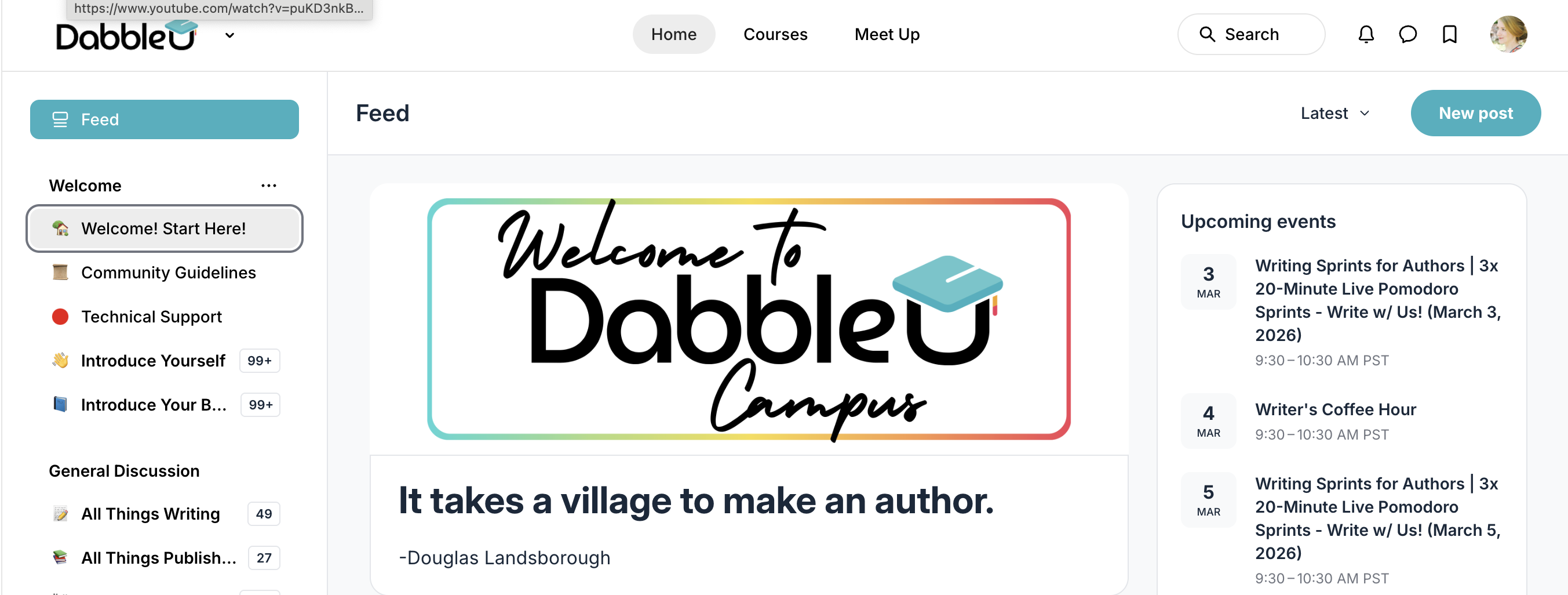
And if you’re really ready to get serious about authorship, check out DabbleU Academy. Membership includes access to live workshops, self-guided courses, Office Hours with resident authors and coaches, and loads more.
However you decide to develop your skills, just keep writing. It’s the fastest (and most enjoyable) way to become the author you always wanted to be.
SHARE THIS:


TAKE A BREAK FROM WRITING...
Read. Learn. Create.

What's the difference between direct and indirect characterization? And is one better than the other? Here are the answers you've been looking for.

Always wanted to know the secret to telling a good story? This guide lays it all out for you.

Discover the best writing tools for everything from brainstorming and organizing to drafting, revising, and managing your time.