
How to Tell a Good Story and Unlock a New Superpower


When you know how to tell a good story, you know how to connect with complete strangers. You’re equipped to make an argument in a more compelling way. You can even hack into someone else’s neurological processes, which we’ll discuss in a minute. (It’s not quite as creepy as it sounds.)
Strong storytelling skills serve everyone, from authors to salespeople to folks who just want to find common ground. Whatever reason you have for developing this ability, this article will get you started on the right path.
We at Dabble are all about helping writers, so we’re looking at storytelling mostly through an author’s lens, but the concepts you learn here can serve anyone in any context.
We’re not going too deep on things like story structure and character development here (we’ve got heaps of articles about those things and will link to resources as we go).
Right now, we’re focusing on the basic elements that make a story work. We’re exploring the reasons stories resonate so deeply with human beings and how we can tap into those reasons to shape an unforgettable narrative.
If you want to go beyond the concepts you learn here to refine your writing skills, I recommend checking out DabbleU Academy. A membership gives you access to live workshops, self-guided courses, Office Hours with our in-house writers and coaches, and an exclusive community of friendly writers just like you.
Join here or explore the Academy free for 14 days with a free two-week trial of Dabble Writer.
Now let’s talk storytelling.
Why There’s Power in a Captivating Story

Mastery of this skill begins with a clear understanding of what a good story does for its audience.
It’s not just entertainment. That’s where a lot of people get tripped up. They get so focused on being wildly funny or crafting a dazzling adventure that they neglect the core strength of great storytelling—the reason readers laugh or eagerly flip pages to see what’s going to happen next.
Above all else, a great story engages the listener or reader’s emotions.
It does this through a process called neural coupling. Neural coupling occurs when a listener experiences the same brain patterns as a speaker. If someone tells an immersive story about getting lost in the woods, the listener’s brain responds as if it’s living through the events described. Readers also experience this with well-written stories.
This is why a good story is funnier than a knock-knock joke or swoonier than a wedding invitation. It ropes us in and engages us entirely—brain, heart, and soul. If you can learn how to do that, you’ll be able to do these things, too:
Engage and Entertain
Entertainment is an emotional experience. Whether you want your readers on the edge of their seats, laughing themselves breathless, or stunned into silence, you can only deliver these results by telling a story that hits them in the feels.
The emotional resonance thing is particularly easy to forget if your goal is to tell a funny story. But most comedy plays on frustrations or even grief, offering a catharsis and connection in the form of a relatable joke. That, or it shocks the audience into laughter.
You can learn more about all that in this article.
Create a Connection
This is the most obvious benefit of neural coupling. When you’re able to help your listener or reader experience the story as if it’s happening to them, you deepen the connection between the two of you.
If you tell the story of your breakup rather than just saying, “We broke up,” you make it easier for your friend to connect with the loss you feel. This is also why many people have the impulse to respond to a story with a tale of their own. It’s a way of saying, “I think I know exactly how you feel. Is it like this?”
In fact, the back-and-forth of storytelling is a reliable way to create a sense of safety in a relationship. With each story, two people begin to understand one another better. They build trust and actually increase oxytocin, the bonding hormone.
Writers get to enjoy the magic of creating this connection with total strangers we may never meet. Through the characters and conflicts we create, we’re able to share how we view the world, including our own understanding of joy and love, loss and humiliation.
Our readers then have the opportunity to feel less alone or gain a deeper understanding of what it’s like to live a life that’s different from their own.
Make a Compelling Argument
You’re probably starting to understand why politicians love to talk about Jane Everywoman who approached them at a rally and cried as she spoke of the suffering her working-class family has endured because of their opponent’s policies.
An emotionally-charged narrative almost always makes a more compelling point than facts and figures. Even if we think we’re too smart to be convinced by the performance, we’ll remember the story that made us feel things more easily than the stats.
And because storytelling fosters connection, it inspires trust and allows the storyteller to illustrate their point rather than explaining it.
This doesn’t just apply to politics and sales. It’s also relevant for authors trying to communicate a specific theme. Just think of how often we use the word “Big Brother” (Nineteen Eighty-Four) as shorthand for referring to real-life government control and surveillance. The concepts we explore through a narrative tend to land harder and live within us forever.
What Makes a Great Story Great?
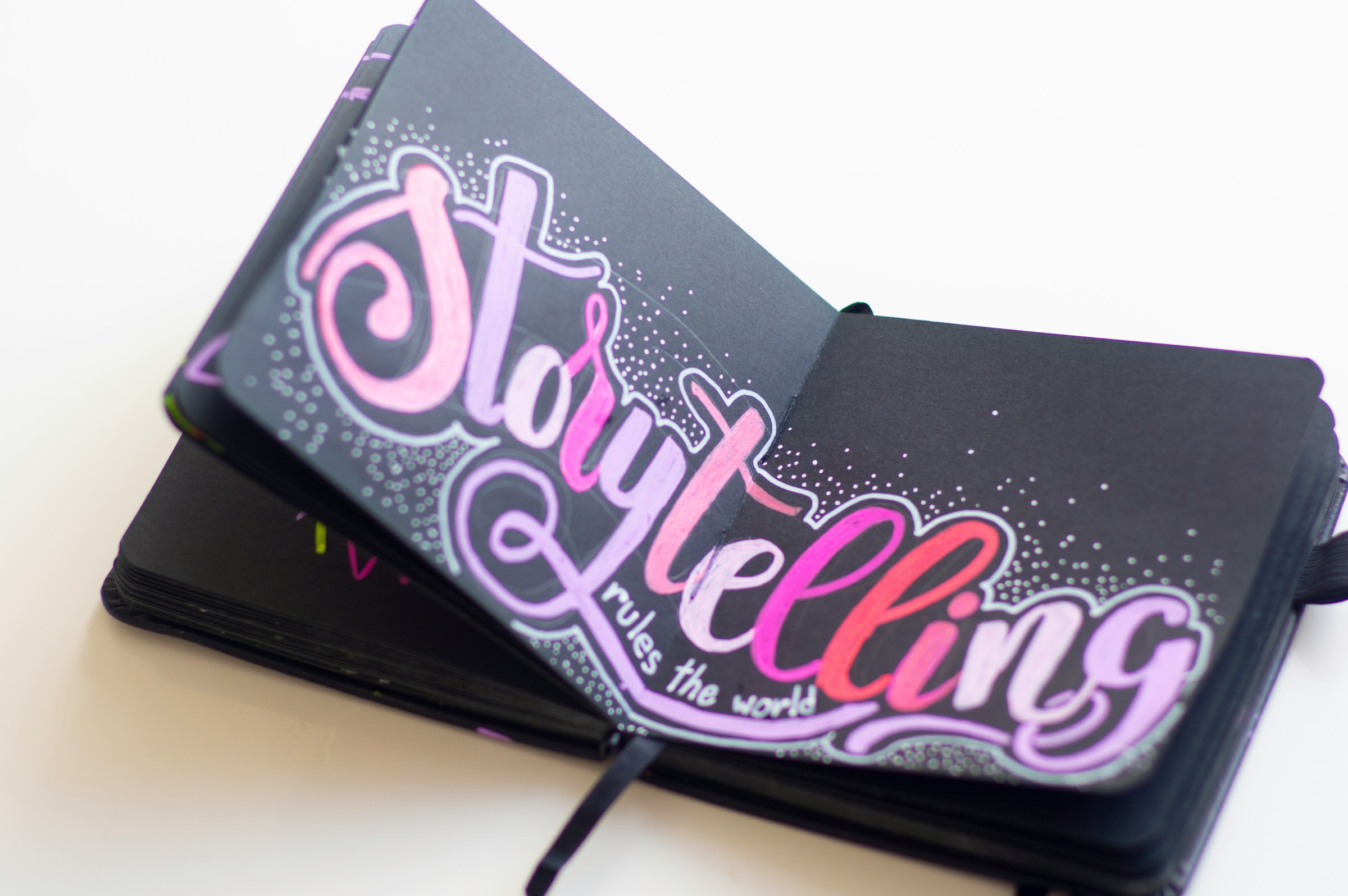
So how do you tap into all this storytelling power? Why do some stories seize our attention and take our emotions for a ride while others fall flat?
First, we should acknowledge that the term “good story” is generally subjective (as these reviews prove). There is no way to write a story everyone will enjoy.
You can, however, write a story that’s designed to engage the reader and create an emotional connection with the right audience. Almost every story that does that contains five key elements.
The Five Cs of Storytelling
Here’s what you need to tell a story that resonates:
Context - Context includes a specific setting and at least one character with a clear point of view or life philosophy. This is the jumping off point for your story. It’s where you ground your reader in the world of the “before” so they can appreciate the impact of the journey in the “after.” (And if you don’t know what that means, you will in a minute.)
Catalyst - This is a major event that motivates the main character to pursue a major goal. Many story structures refer to this as the inciting incident.
Complication - The character immediately runs into an obstacle as they pursue their goal. Someone or something acts in opposition to them, and this creates what’s known as a conflict. The conflict gets worse before it gets better. It doesn’t help that this external conflict exacerbates an internal conflict within the character, whether it’s a moral dilemma, identity crisis, or something else.
All this stuff combined makes up the complication.
Change - Something changes as a result of the complication. In most stories, multiple characters evolve, including the protagonist. Often, the main character must change in order to achieve what’s most important to them. That important thing might still be their initial goal, or their goal may have evolved along with them.
Consequence - This is the “after” I referenced earlier. What does the world look like as a result of the conflict? How have the characters changed? What’s the new normal?
A lot of people think the climax is the payoff a reader gets for sticking with the story. As important as the climax is, it’s really the consequence that gives the entire story a sense of meaning and purpose.
The five Cs work together to create a narrative arc that reflects universal human experiences: the unexpected events that forces us to make a tough decision, the dogged pursuit of the things that matter to us, the inevitable challenges that rise up against us, and gathering the courage to become worthy of the lives we want.
You can see that it’s a formula for tension and relatability. But it’s just the beginning. In order for all these components to leave an impression, you need to apply some strategy.
Must-Have Story Elements

Here’s a story that technically has all five of the Cs of storytelling:
Janet used to eat oatmeal with berries every morning (context), but then one day she ran out of berries (catalyst). She went to the grocery store, but they were out of berries, too (complication), so she decided to try Pop-Tarts (change). She loved them, and now she eats Pop-Tarts every morning (consequence).
I’m so bored right now. It’s not enough to have all the Cs. You have to find the Cs that resonate and present them so your audience instantly understands why they matter.
To do that, you need to think about all this stuff:
A Meaningful Story Concept
It doesn't matter if you’re writing a novel or telling a personal anecdote, you want to tell a story that demonstrates some kind of personal transformation. The challenges we face in life change us, and your audience wants to see that reflected in your story. (This is called a character arc, by the way.)
Now, that change can be big or small, depending on the genre or scope of your story. Your protagonist might experience a complete identity shift or they might learn that biting their classmates isn’t cool. In some genres, the protagonist doesn’t change at all, but their stubbornness impacts those around them and we still see them wrestle with the question of transformation.
However you tackle it, this evolution is what gives your story its meaning. When you brainstorm story ideas, ask yourself what the transformation will be for each one and why that transformation will resonate with your audience.
This is especially important if the story is about you. When we tell stories about ourselves, it’s very easy to fall into the trap of telling a story that’s just about the things that have happened to us or how we were right all along. Focus instead on what you did and how you changed.
DabbleU Academy Resource: Crafting Powerful Character Arcs (Five-part workshop)
Free to Everyone: Creating Character Arcs: Torment Your Hero in Eight Steps
A Character That Connects
Your protagonist is the reason your reader cares what happens in the story. All the swooning, nail-biting, and crying happens when an audience feels a personal connection to a character and is invested in their well-being.
This does not mean your protagonist must be perfect or even completely likable. Common misconception.
What’s more important is that you give your character motivations, desires, vulnerabilities, and flaws that are in some way relatable. These are the details that make them distinctly human so it’s easier for your reader to envision themselves in your protagonist’s shoes.
That’s not to say virtues don’t matter. Even a villain protagonist needs at least one admirable trait. The important takeaway is that your character’s inherent goodness should be part of a larger picture, one that contains darkness and light.
DabbleU Academy Resource: Quirks, Wounds, and Wants: Crafting Compelling Characters (Self-guided course)
Free to Everyone: The Character Development Worksheet You’ve Been Looking For
A Deliberate Structure
Another rookie mistake is to sit down and start laying out the story chronologically without much thought for narrative flow.
Every moment in your story should serve a specific purpose, like presenting a new and greater obstacle, demonstrating a critical change in the protagonist, or giving both character and reader time to slow down and reflect.
The way you position and pace these beats impacts the way your reader experiences the story. That’s what we’re talking about when we talk about story structure.
There are several established structures out there, and many of them, like The Hero’s Journey and Save the Cat!, are specifically designed to show character transformation. They’re essentially a more specific version of the five Cs of storytelling.
Others, like Freytag’s Pyramid and the Fichtean Curve, put greater emphasis on building tension. But to be clear, both character transformation and tension are important no matter which structure you use.
You might also opt to include flashbacks or alternating timelines if that makes sense for your story. You can even get all experimental, as long as it’s not going to confuse your target audience. What matters is that your structure is deliberate and has a clear beginning, middle, and end. That’s the difference between telling a great story and rambling through an anecdote.
DabbleU Academy Resource: Using Story Structure Without Sacrificing Creativity (Workshop)
Free to Everyone: Story Structure 101 (Workshop)
Conflict and Tension

Conflict arises when your character comes up against an opposing force. Now, that force doesn’t have to be deliberately oppositional. It could be bad weather or a really nice person who just happens to be dating the protagonist’s crush.
What matters is that it’s a force—something or someone that actively works against them. If your protagonist’s greatest obstacle is an unforgiving landscape, you probably want the landscape to represent something, like the terrifying power of nature or the will of the gods.
The antagonist (human or not, animate or inanimate) should also seem at least as mighty as your protagonist. It’s usually better if they’re stronger.
If you’re developing a fictional conflict, the battles you create for your protagonist should force them to confront their weaknesses and push them to change. If this is a nonfiction situation, make sure you understand why this specific conflict led to the transformation that came next.
You also want to make sure the following things are clear in your conflict:
- What your main character wants
- Why it’s so important to them
- What’s at stake if they fail
Don’t coddle your protagonist. Let them slip up, disappoint others, devastate themselves, get injured, experience loss… whatever fits your story. If this is a longer narrative (like a novella or novel), gradually increase the tension by introducing greater obstacles and higher stakes.
DabbleU Academy Resource: No Pain, No Plot: An Author’s Guide to Conflict (Three-part workshop and Q&A)
Free to Everyone: How Do You Write Conflict in a Story? Let’s Fight About It. (Article)
Strong Choices
Engaging characters are active. Sure, sometimes things happen to them, but they don’t simply endure. They act. They make big decisions, and those decisions lead to greater conflict, greater growth, and a story that leaves an impact.
As with many things we’ve discussed, the definition of a strong choice depends on your genre and audience. If you’re writing fantasy, a strong choice could mean marching right into the dragon’s lair. In romantic comedy, it might mean slipping a phone number into the hot neighbor’s mailbox.
And what if you’re writing about your own life and are limited by your actual decisions?
Make it clear why those decisions were major for you at the time they were made. There’s a reason you’re telling this story. Help your reader see why it matters.
This next section will help with that.
How to Tell a Story in an Impactful Way

There’s a difference between having a good story and telling a good story. Now that you’ve got all your ingredients together, you’ve got to learn how to present them so your audience immediately connects to your character and sees your story as meaningful.
Remember that crazy brain science we talked about at the beginning? How a well-told story enables you to replicate your brain activity in another person?
The tips below will help you do that.
Start Strong
Start with a hook—something that immediately engages the reader and compels them to keep reading.
There are a lot of strategies for crafting a strong hook. You could start with an unexpected statement, leap right into the conflict, immerse the reader in a fascinating setting, demonstrate your character’s most interesting trait, whatever. You’ll find more ideas here and great examples here.
However you approach your opening, think in terms of sparking curiosity. An effective hook makes your reader eager to know more. Why are these strangers fighting in a grocery store? Why did the government give everyone their own personal butler? What crazy thing is this character going to say next?
What question do you want your audience to ask?
Show, Don’t Tell
This is the number one rule of good storytelling. If this is the first time you’re hearing about it, it certainly won’t be the last.
“Show, don’t tell” means you want to immerse your reader in the moment so they can experience it themselves rather than simply telling them what it was like.
Showing: “She was pale and sweaty except for her raw, red nose.”
Telling: “She looked sick.”
As you can imagine, showing often involves the use of sensory details to immerse the reader in the story. Good dialogue counts, too, as it allows the reader to “hear” character voices. Vivid imagery activates the reader’s brain as if they were living through the moment themselves. Abstract ideas don’t have the same impact.
This is why the “show, don’t tell” rule makes it easier to engage an audience’s emotions than if we simply told them that a situation was sad or exciting.
“Show, don’t tell” is so important for good storytelling that DabbleU Academy has an entire course on it. If you’re not an Academy member, no worries. You can learn more about the rule here.
Stick to What’s Relevant
Both fiction and nonfiction storytellers can be guilty of including irrelevant information, whether it’s the fact that the bus was really crowded on the day of your big audition or the entire scene where your protagonist visits their grandmother.
Sometimes you don’t even know if something is relevant until you’ve completed your story.
So in your revisions, keep an eye out for anything that distracts from the actual story. When in doubt, ask yourself what an element or scene does to further or enhance the narrative. If you can’t come up with a good answer, cut it.
Build Tension
Make everything worse before you make it better. Resist the urge to resolve a conflict within a scene or two. Easy resolutions teach your audience that everything in this story has a quick fix and they don’t need to worry. That’s a great way to get them to disengage.
Instead, look for ways to create greater obstacles and higher stakes. Involve your protagonist’s strong choices in this process. Let them make mistakes that make the situation significantly worse and reveal the dangerous nature of their own shortcomings.
Finish Strong
Much like a strong hook, a good ending can take many forms.
It might be a powerful closing sentence that moves your audience to reflect on a theme. Maybe it’s an unexpected twist, a touching moment between two characters, or a closing image that shows how the world has changed.
No matter how you close your story, think about the main point you want to leave with the reader or how you want them to feel when the story is over. You won’t state the theme directly because that’s preachy. Instead, you’ll want to use your characters, images, or narrative voice to help the message land.
Sharpen Your Storytelling Skills

No one becomes a great storyteller overnight. Even the best writers continuously work to improve their skills. So be patient with yourself, enjoy the process, and do stuff like this:
Read - Read a lot, and read actively, noticing why a story works and what the author does to draw you in and keep you there. We learn so much by consuming the work of other writers. Even bad stories give us an opportunity to consider what we would have done differently.
Listen to stories - Live and recorded storytelling events like The Moth present a unique opportunity to experience a direct connection between storyteller and story receivers. You can hear the storyteller’s voice and witness the audience’s reaction to them. Notice which details get the biggest response.
Write a lot - The best way to get better at anything is to do a lot of it.
Get feedback - If you’re feeling bold, you can practice telling stories at open mics or storytelling events. You’ll learn pretty quickly what works and what doesn’t.
If you’d rather stick to storytelling on the page, build a community of fellow writers and beta readers who will be happy to give you feedback and workshop weak spots in your narrative.
DabbleU Academy is great place to meet people like this, but you can also access a free community in DabbleU Campus. We have great discussions, community-wide challenges, and loads more. You don’t even have to use Dabble Writer to join.
Finally…
Tell Your Story With Dabble Writer
Dabble Writer is a dedicated novel-writing tool that streamlines the story-writing process and comes with tons of features that help you hone your skills along the way.
.png)
The Plot Grid offers an easy way to map out your story structure. You can even add columns to track the progression of character arcs from scene to scene and to note how each scene contributes to the overall story.
Character Profiles help you go deep with character development, templates walk you through key storytelling strategies, and you can invite critique partners to provide feedback on a current project.
Try Dabble Writer for free for 14 days, and you’ll even get two weeks of access to DabbleU Academy. Click here to get started—no credit card required.
SHARE THIS:


TAKE A BREAK FROM WRITING...
Read. Learn. Create.

What's the difference between direct and indirect characterization? And is one better than the other? Here are the answers you've been looking for.
Always wanted to know the secret to telling a good story? This guide lays it all out for you.

Discover the best writing tools for everything from brainstorming and organizing to drafting, revising, and managing your time.